No products in the cart.
Return To Shop.png?sharp=1)


10 Questions to Ask Before Buying Custom Kitchen Cabinets
Creating a comfortable, functional kitchen often starts with the cabinets. Custom cabinets can be tailored to your exact layout and needs, but there are important construction and performance differences to understand. Ask these ten questions before you buy.
Table of Contents

1. Panel thickness — what thickness do you use?
Common panel thicknesses are 16 mm (≈0.63 in) and 18 mm (≈0.71 in). Thicker panels usually cost a bit more (roughly +~7% for 18 mm vs. 16 mm) but tend to be more durable — helping resist door warping and protecting countertops. When you review samples, confirm the panel construction so you know exactly what you’re buying.
2. Are the cabinets built as separate modules?
Cabinets manufactured as individual modules (separate units) typically offer better long-term stability and are easier to replace or service than one continuous run. The price difference is usually modest (around a few percent). Modular units are usually packed individually — you can often spot this before countertop installation.
3. What assembly method is used?
Small shops or on-site carpentry often rely on screws, rivets, or glue. Modern factories use dowels, cam connectors, and quick-install hardware to increase strength and load capacity while minimizing adhesive use — a more consistent and greener approach.
4. Is the back panel sealed on one side or both sides?
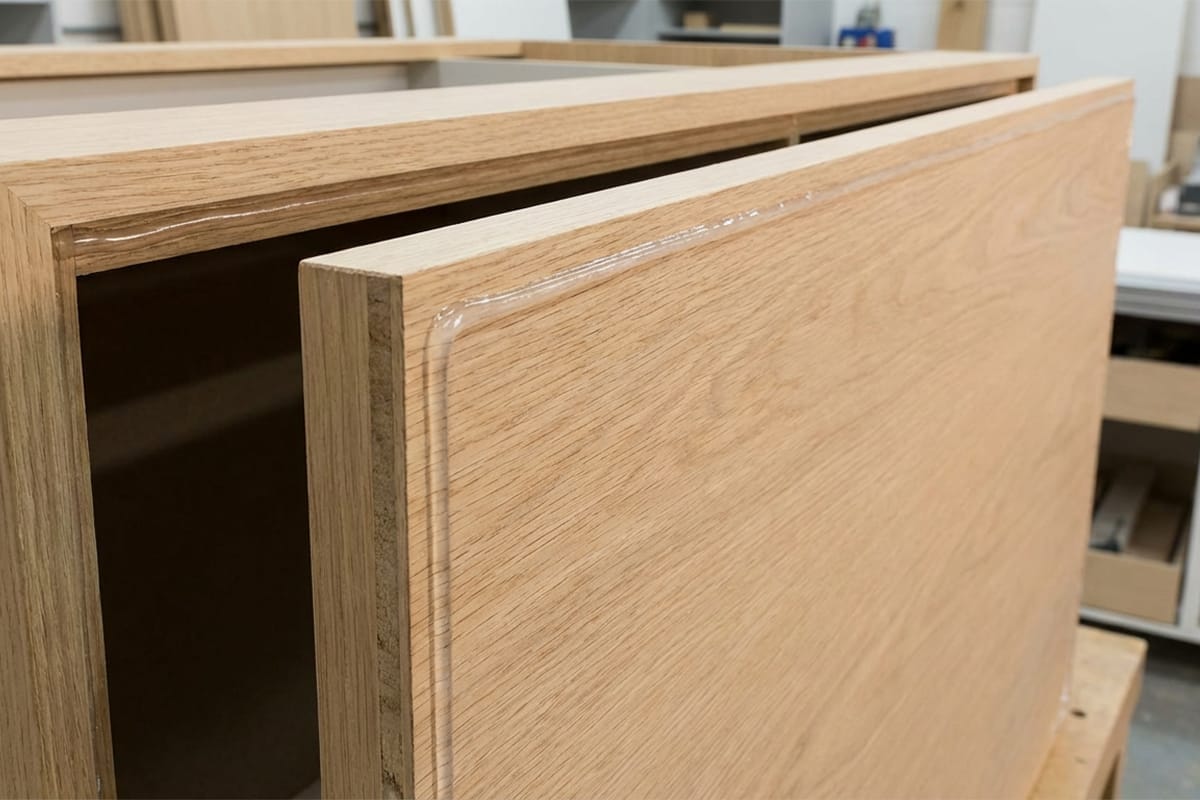
Some suppliers only veneer or seal the visible side of the back panel. Single-side sealing is more prone to moisture issues and possible emissions. For durability, ask for double-sided sealing or finished back panels.
5. Do cabinets include pest-proof and soft-close seals/edge banding?
Look for soft-close hinges/drawers and sealed edge banding that prevents grease, dust, and pests from entering. These details reduce noise, improve longevity, and usually add only a small percentage to cost.
6. How is the sink-base aluminum liner installed?
Ask whether the aluminum or waterproof liner in the sink cabinet is formed as a single piece or simply glued in. A one-piece formed liner gives much better waterproofing and helps prevent moisture damage.
7. What is the composition of the countertop (engineered stone)?
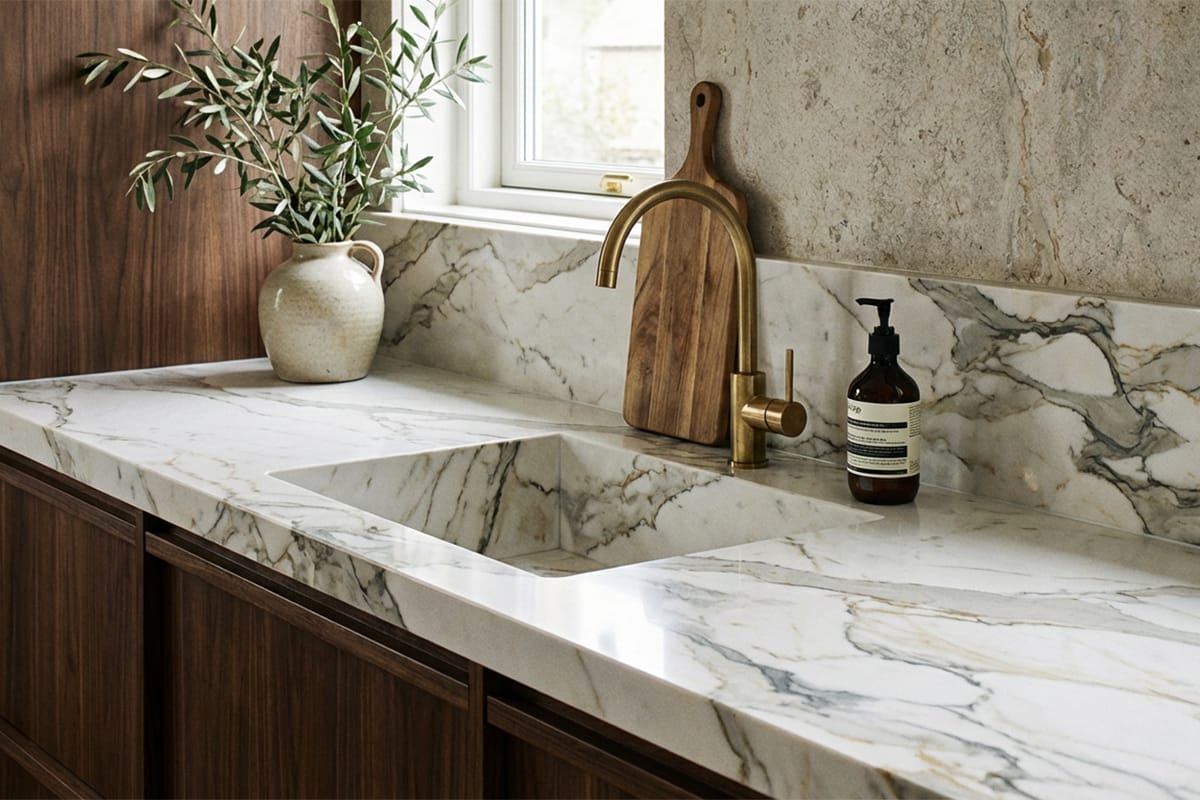
Countertops can be quartz (engineered stone), natural marble, granite, stainless steel, or other materials. Engineered quartz often provides the best balance of durability, stain resistance, and cost. Lower-cost surfaces may contain a high proportion of fillers (e.g., calcium carbonate) and can be more prone to cracking — ask about the resin content if the supplier provides it.
8. Is installation dust-controlled (low-dust or dust-free methods)?
On-site polishing and cutting can create dust and indoor air quality issues. Leading providers use factory-finished slabs or low-dust installation methods. If on-site cutting/polishing is necessary, schedule countertop work before final flooring and painting, or plan for additional cleanup.
9. Can the manufacturer provide finished-product test reports?
Request finished-product test reports that disclose formaldehyde and other emissions — not just raw material certificates. Ask for the report number and lab name so you can verify results if needed.
10. What warranty and after-sales support are offered?
Warranty length and service quality reflect the manufacturer’s confidence. Warranties typically range from 1 to 5 years; longer warranties often indicate stricter quality control. Confirm what’s covered (hardware, finishes, structural issues) and how service requests are handled.


About author

Related posts

Kitchen cabinet quotes can look similar at first but include very different products and services. One quote may include plywood cabinet boxes, finished end panels,... Continue reading

A knee drawer is a specialized vanity cabinet component designed to add storage while creating comfortable open space underneath a bathroom countertop. Knee drawers are... Continue reading

A 33-inch farmhouse sink is a common choice for a 36-inch base cabinet, but it is not a universal rule. The correct fit depends on... Continue reading

A kitchen cabinet filler is a narrow finished strip used to close or manage the space between a cabinet and a wall, appliance, corner, or... Continue reading

Choosing RTA cabinets involves more than comparing door styles or headline prices. You need to evaluate cabinet-box construction, door materials, available sizes, hardware, shipping, assembly,... Continue reading





Add comment