No products in the cart.
Return To Shop.png?sharp=1)



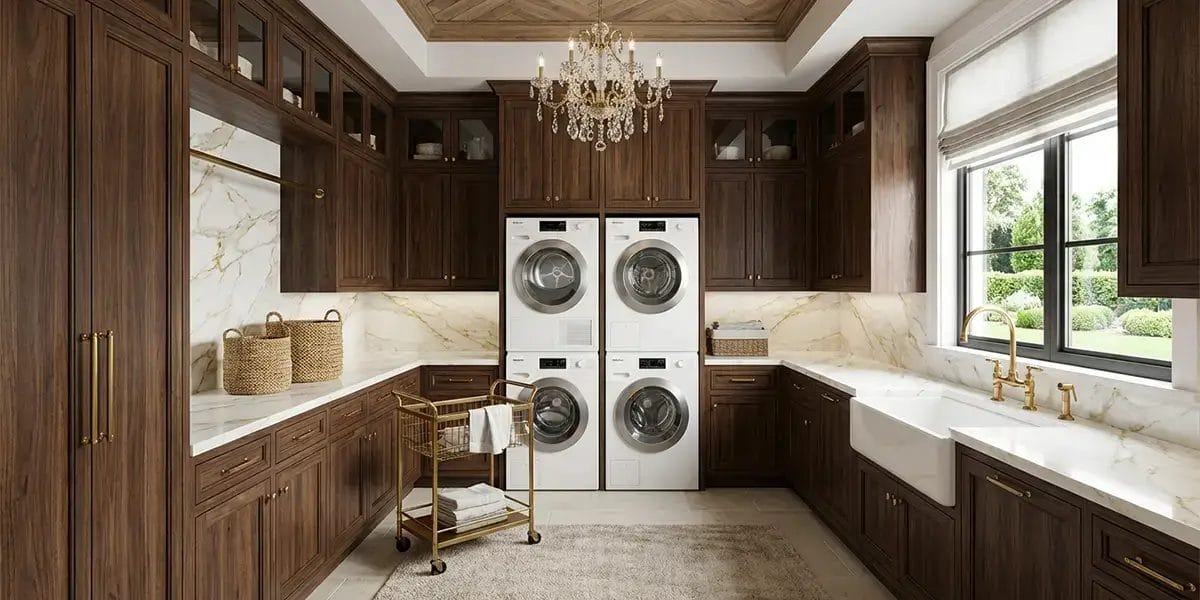
10 Modern Laundry Room Cabinet Designs
I’ve designed more laundry rooms than I can count, and if there’s one thing I’ve learned, it’s this:
a poorly planned laundry room will frustrate you every single week.
It doesn’t matter how beautiful the rest of the house is. If storage is awkward, cabinets are impractical, or space is wasted, the laundry room quickly becomes a mess you avoid rather than a space you enjoy using.
Modern laundry room cabinets aren’t about trends. They’re about making daily routines smoother, quieter, and less chaotic. Below are ten cabinet design approaches I often recommend to clients — not because they look good in photos, but because they actually work in real homes.
Table of Contents
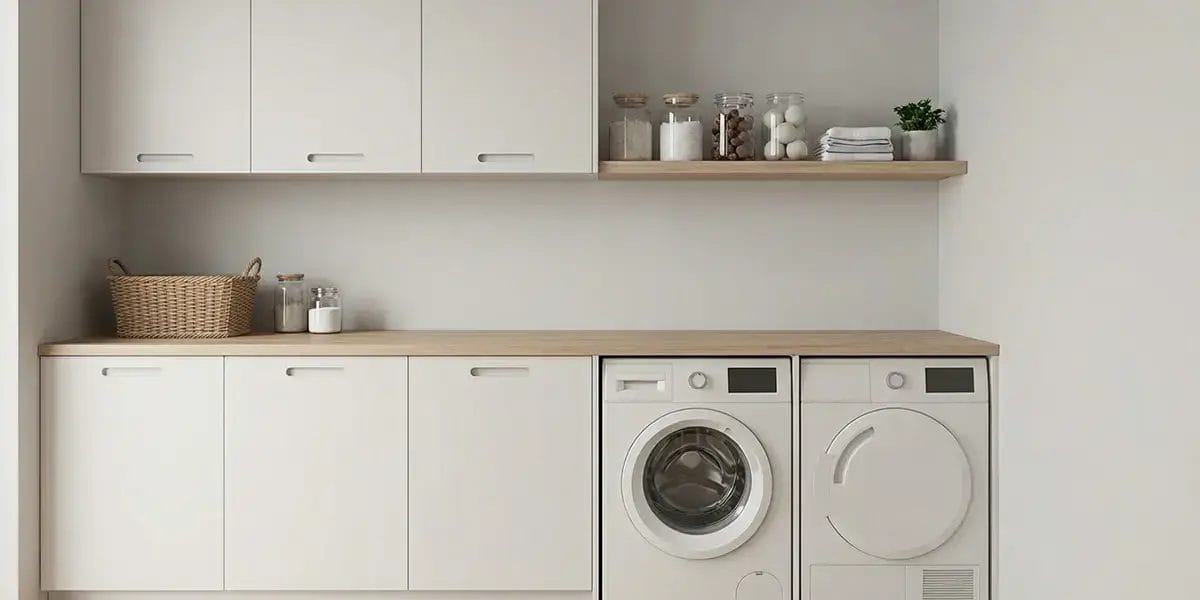
1. Minimalist matte cabinets
Matte cabinets are one of those choices that clients rarely regret. In real use, glossy finishes show every fingerprint, every water mark, every rushed grab before work. Matte surfaces are far more forgiving and visually calmer. Neutral colors like soft white, warm gray, or charcoal keep the room feeling clean without looking sterile.
Designer tip: if you want a laundry room that still looks tidy after a busy week, matte finishes are your friend.
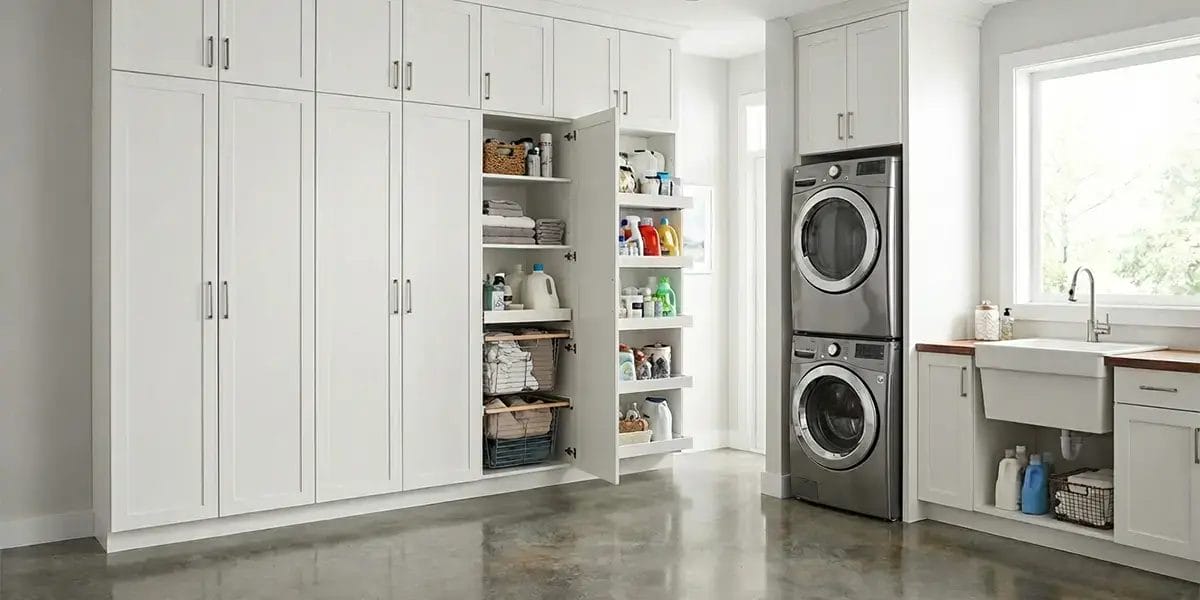
2. Floor-to-ceiling storage
When people tell me their laundry room feels cluttered, the issue is usually not “too many things” — it’s too little vertical storage. Floor-to-ceiling cabinets allow you to hide what you don’t need daily and keep the room visually quiet. Add pull-out shelves inside, and even high cabinets become easy to use.
Designer tip: this is one of the most effective upgrades you can make without increasing the room size.
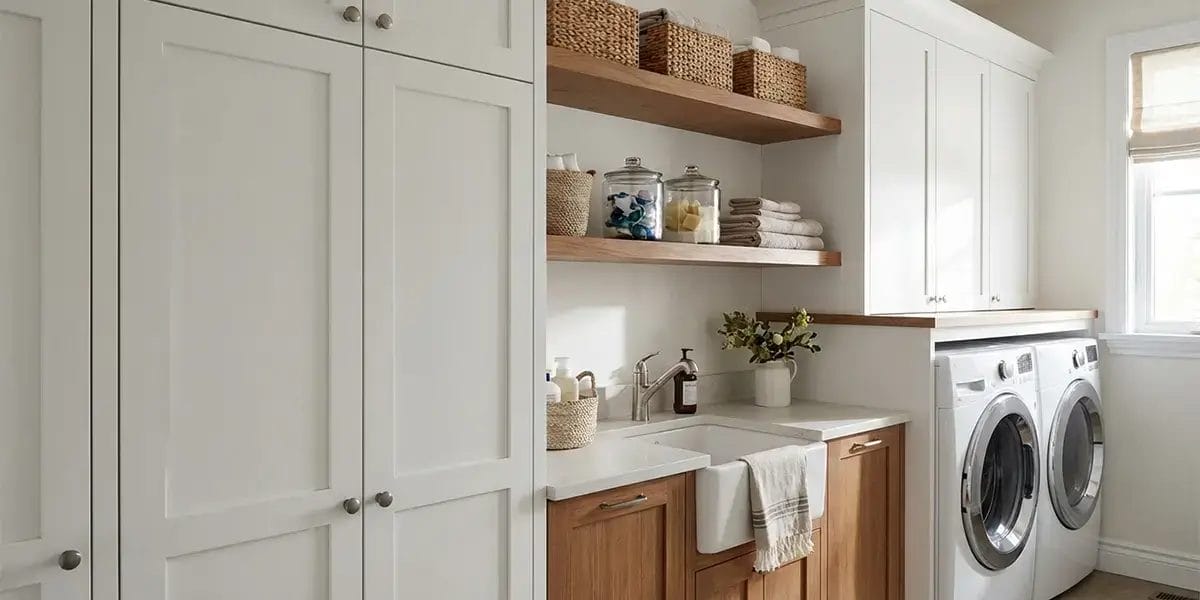
3. Open shelving combined with cabinets
I’m careful with open shelving in laundry rooms. Done wrong, it becomes a dust collector. Done right, it adds warmth and balance. I usually recommend open shelves only for items you touch often — baskets, towels, or glass jars — while everything else stays behind closed doors.
Designer tip: think “controlled openness,” not full exposure.
4. Integrated laundry baskets
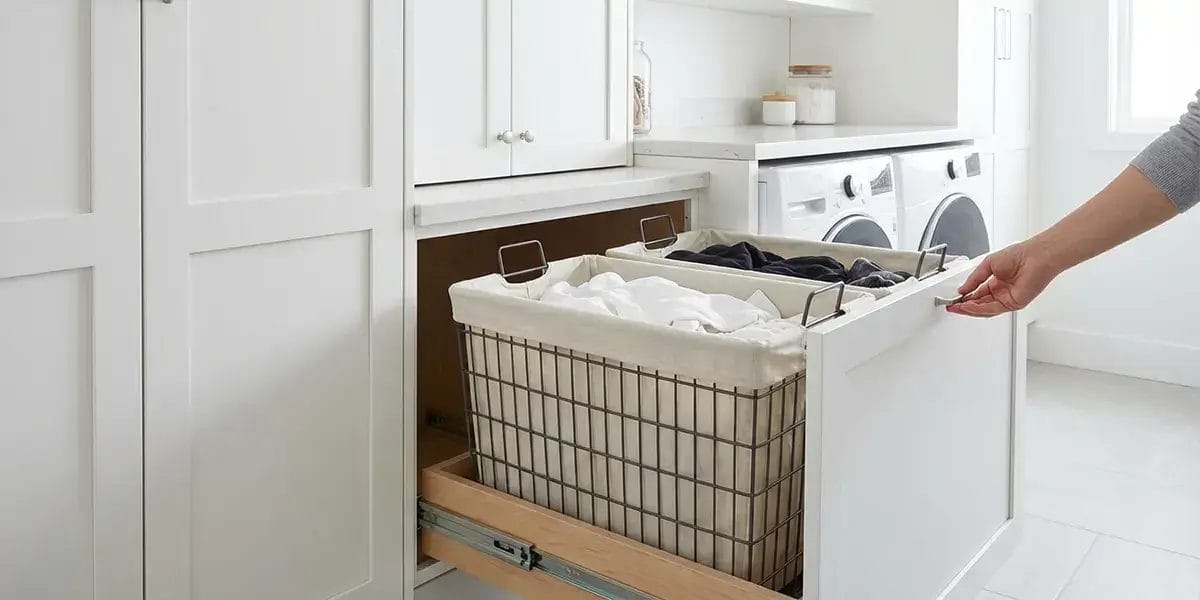
Built-in laundry baskets are one of those features clients don’t ask for — until they see them. Pull-out baskets keep dirty clothes out of sight and make sorting effortless. Multiple baskets are especially useful for families, saving time and mental effort on laundry day.
Designer tip: design for habits, not ideals. This helps people actually stay organized.
5. Compact cabinets for small spaces
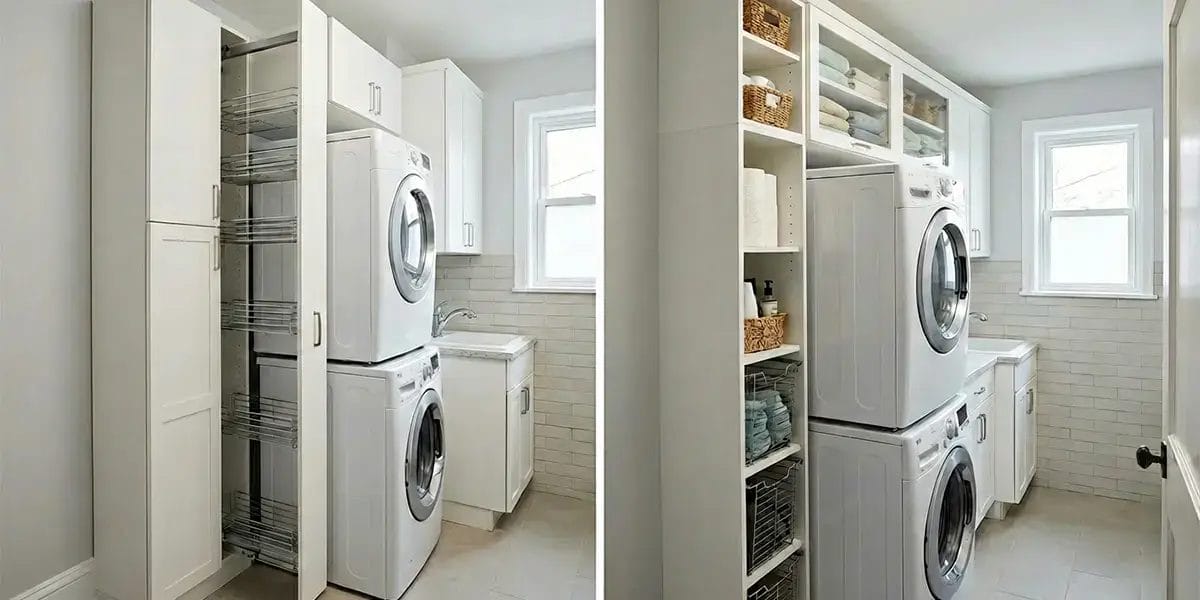
Small laundry rooms demand discipline in design. Oversized cabinets overwhelm the space and make it feel cramped. Slim cabinets, shallow depths, and smart corner solutions often work better than “more storage.”
Designer tip: in tight spaces, proportion matters more than capacity.
6. Two-tone cabinets
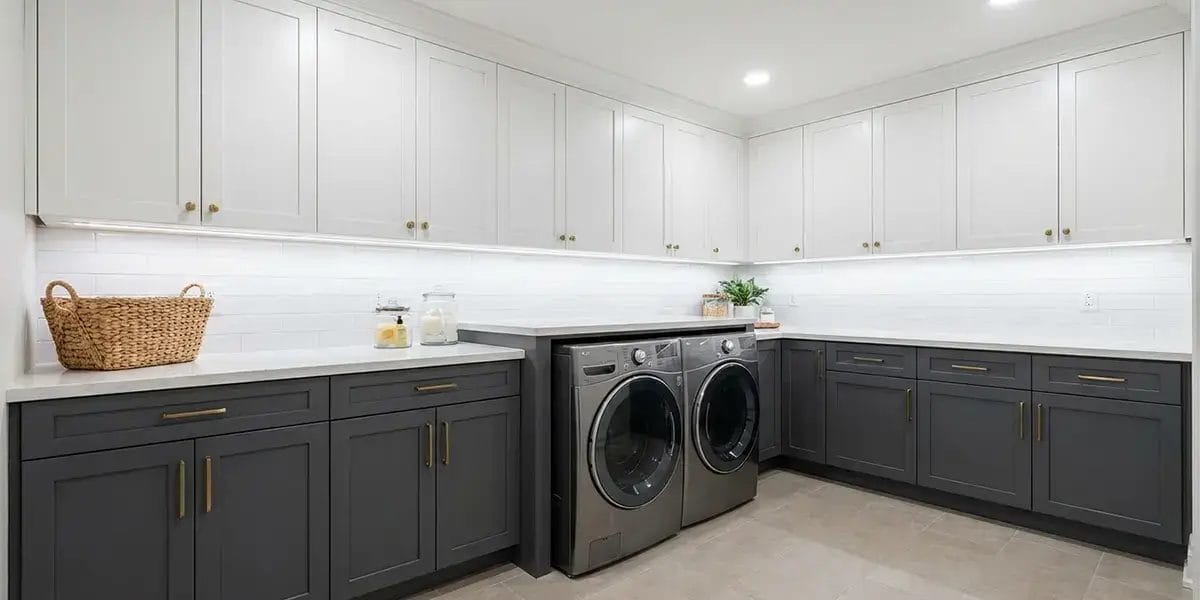
Two-tone cabinetry adds depth without visual noise. A darker base grounds the space, while lighter upper cabinets keep it feeling open. This approach works especially well in windowless laundry rooms that need a bit of visual lift.
Designer tip: contrast should feel intentional, not decorative for its own sake.
7. Hidden storage solutions
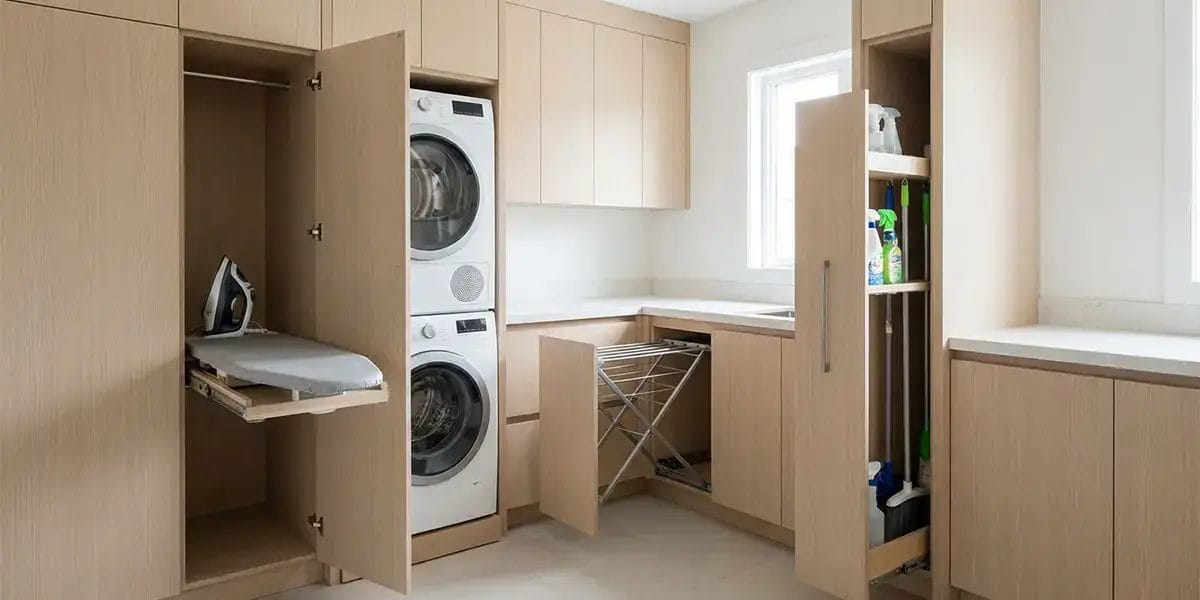
Laundry rooms require awkward tools — ironing boards, drying racks, cleaning supplies. Leaving them exposed ruins an otherwise clean design. Hidden storage keeps everything accessible without turning the room into a utility closet.
Designer tip: if you don’t see it, you don’t feel stressed by it.
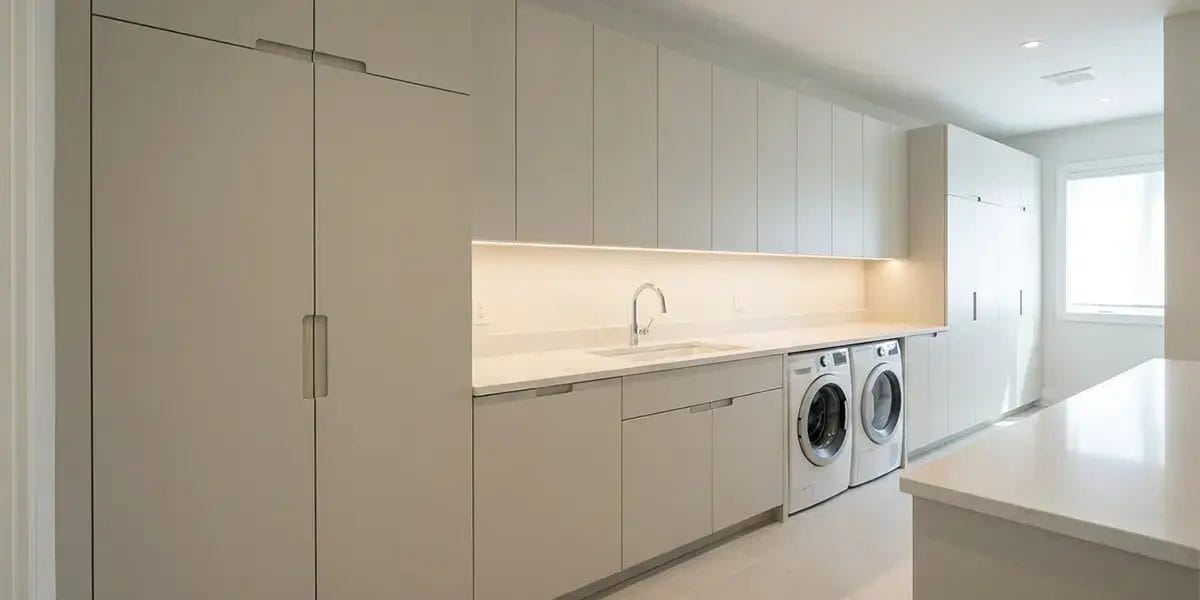
8. Wall-to-wall cabinetry
When storage needs are high, wall-to-wall cabinetry brings order. Instead of scattered cabinets, the room feels intentional and calm. Everything has a place, and clutter disappears naturally.
Designer tip: this works particularly well for busy households where efficiency matters more than display.
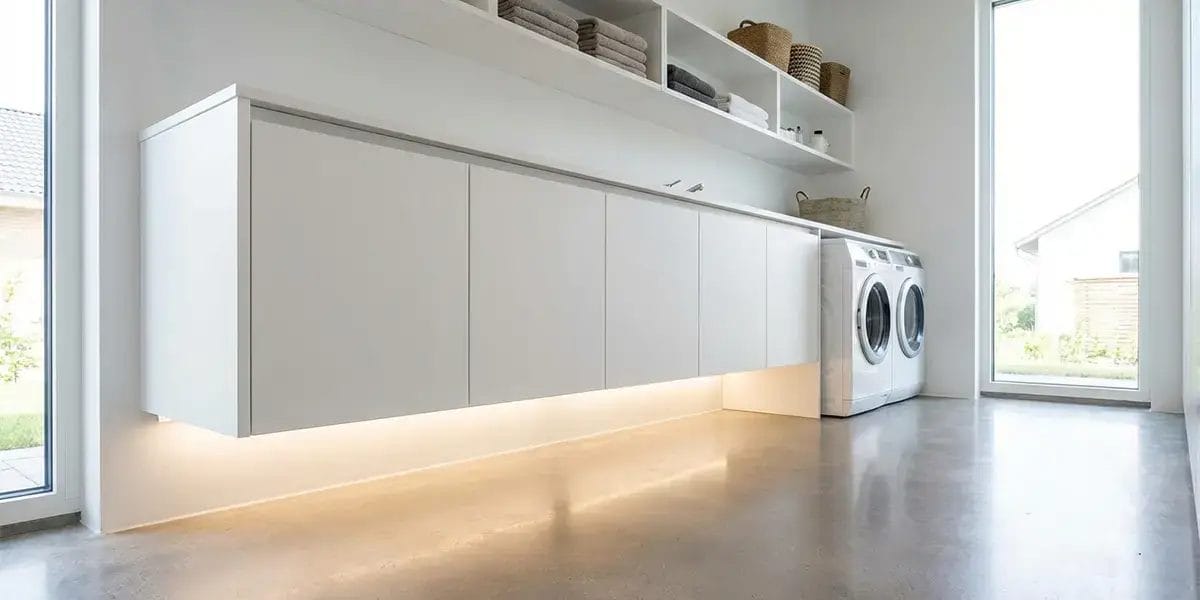
9. Floating cabinets
Floating cabinets aren’t just about looks. By keeping the floor visible, the room feels lighter and easier to clean. In smaller laundry rooms, this can make a surprising difference in how spacious the room feels.
Designer tip: visual space is just as important as physical space.

10. Customizable modular cabinets
Homes change, and so do routines. Modular cabinet systems allow layouts to evolve over time — adding storage, rearranging sections, or adapting to new needs.
Designer tip: flexibility is one of the most underrated aspects of good design.
Final thoughts from a designer
A well-designed laundry room doesn’t announce itself. It simply works quietly in the background, week after week. The best cabinet designs are the ones you stop thinking about because everything feels intuitive, organized, and effortless.
If your laundry room feels frustrating now, it’s rarely about size — it’s almost always about design choices. Get the cabinets right, and the rest of the space will follow.


About author

Related posts

Picture this. You are preparing a romantic dinner at home. The vegetables are in the refrigerator on one side of the kitchen. The cutting board... Continue reading

A kitchen is more than a place to cook. It is where everyday life happens. It is where coffee is made in the morning, meals... Continue reading

Have you ever opened a cabinet and couldn’t find what you needed—only to end up pulling everything out just to reach one item in the... Continue reading

Remodeling a kitchen can feel overwhelming.There are so many decisions, and honestly, it’s easy to get something wrong that you’ll regret later. But if you... Continue reading

If you’re planning a kitchen, you might be wondering:“Do I really need more drawers… or are shelves and pull-outs enough?” After years of working with... Continue reading





Add comment