No products in the cart.
Return To Shop.png?sharp=1)


Backsplash
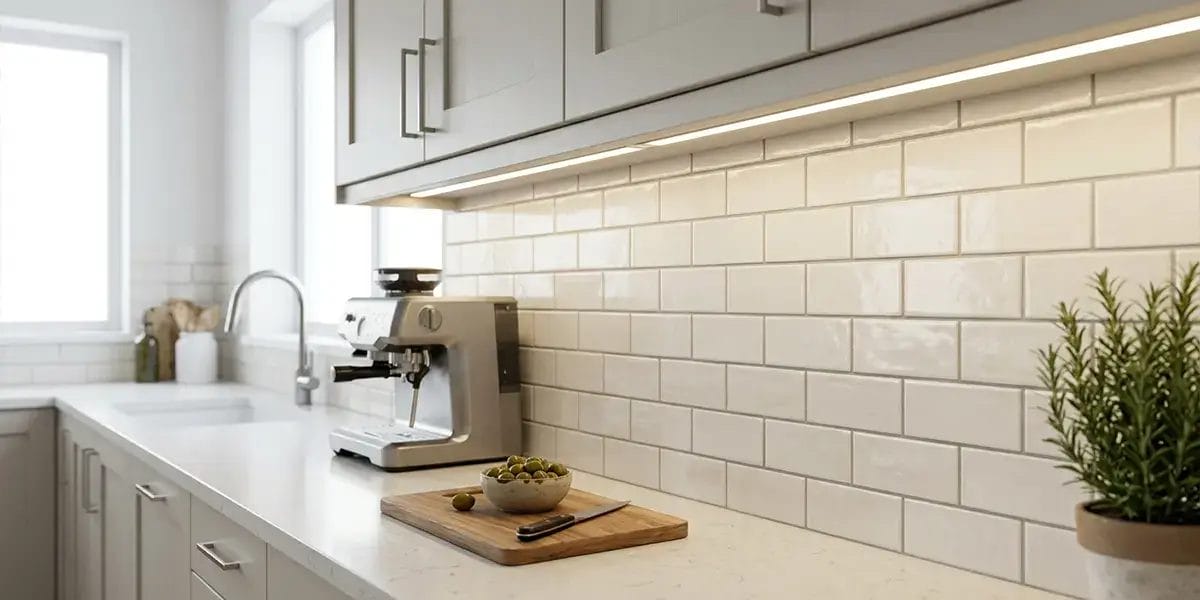
When people talk about a backsplash, they’re simply referring to the wall area between your countertop and upper cabinets. It’s there to protect the wall—but in real life, it ends up doing a lot more than that.
In most kitchens I’ve worked on, homeowners start thinking about backsplash pretty late in the process. And that’s usually where things go a little off. Because once your cabinets and countertops are in place, the backsplash is what visually “ties everything together.”
Tile is still the go-to for a reason. It’s easy to clean, holds up well to grease and water, and you have endless options—subway tile, mosaics, larger format pieces. If you want something safe and flexible, tile rarely disappoints. Stone and stainless steel show up too, but those tend to lean more toward a specific look—either more upscale or more modern.
Here’s the part I always tell my clients: your backsplash doesn’t have to match your countertop perfectly. In fact, trying too hard to match can make the kitchen feel flat. What you’re really aiming for is balance. If your countertop has a lot going on, keep the backsplash quieter. If everything else feels simple, that’s your chance to add a little interest.
And if resale is somewhere in the back of your mind, it’s usually smarter to stay with something timeless. Clean, easy-to-maintain finishes will always appeal to more people than bold trends that might not age well.
At the end of the day, a good backsplash should feel like it belongs there—not something you notice right away, but something you’d definitely miss if it wasn’t done right.


About author






Add comment