No products in the cart.
Return To Shop or
or  ,
,


Double Sink Bathroom Vanities: Choosing the Right Size & Layout
Double sink bathroom vanities are ideal for master or family bathrooms, improving functionality and easing morning routines. They allow multiple users to use the space at the same time.
This guide covers key factors like size, layout, plumbing, materials, and budget to help you choose the right vanity.
Table of Contents
Size Measurement and Space Requirements
Width
Use a tape measure to find the width of the available space for your double vanity. Keep in mind any nearby bathroom fixtures that need clearance, like a shower door or a bathtub, which may require about 30 inches of space. Add ½ to 1 inch on each side for the vanity top’s slight overhang.
PS: Double vanities typically range from 48 to 84 inches wide.
Depth
Measure the depth from the wall outward to determine how far the vanity will extend. Leave at least 30 inches of clear floor space for comfortable movement. Also, consider the depth needed to fully open drawers and cabinet doors.
PS: Most double vanities are 17 to 24 inches deep.
Height
Measure from the floor up to find the ideal height for your vanity. Take note of existing fixtures like faucets and outlets.
PS: Standard double vanities are usually between 30 and 36 inches tall.
The common sizes and suitable users are shown in the table below:
| Size | Description |
| 36 inches | Suitable for smaller bathrooms. Although it features a double sink configuration, the overall size is relatively compact, making it ideal for brief use by two people. |
| 48 inches | A common standard size that fits medium-sized bathrooms, offering ample countertop and storage space. |
| 60 inches and above | Ideal for spacious master bathrooms, providing enough room to ensure comfortable use of the double sinks. |
The specific specifications can be referenced in the diagram below.
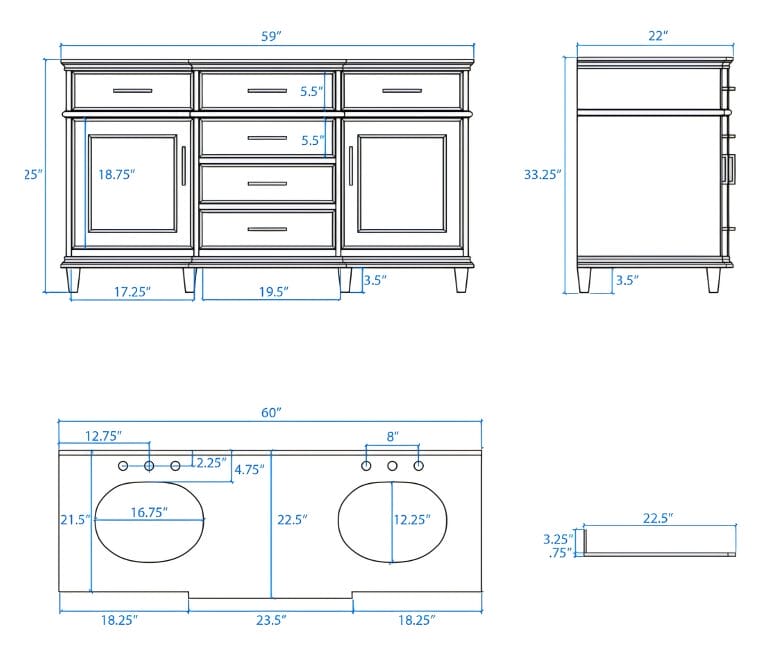
I choose one box specification from RaraRTACabinets for your reference.
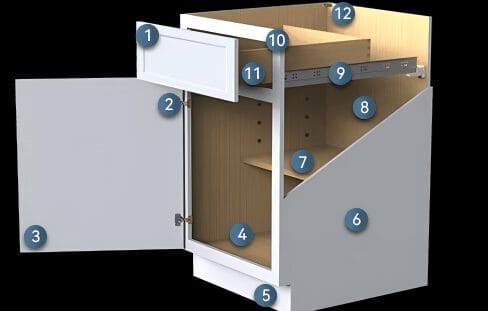
| ①5 Piece HDF Drawer Fronts | ⑦Adjustable 3/4″ quarter depth shelf |
| ②6-Way Adjustable European Style Hinge with Soft Close Feature | ⑧1/2″ Plywood Full Height Back Panel |
| ③5 Piece HDF Door Construction | ⑩3/4″ x 1 3/4″ Solid Wood Cabinet Face Frame |
| ⑤1/2″ Plywood, Toe Kick Panel Required | NO.11: 11/16″ Dovetail Drawer Box |
Layout Options
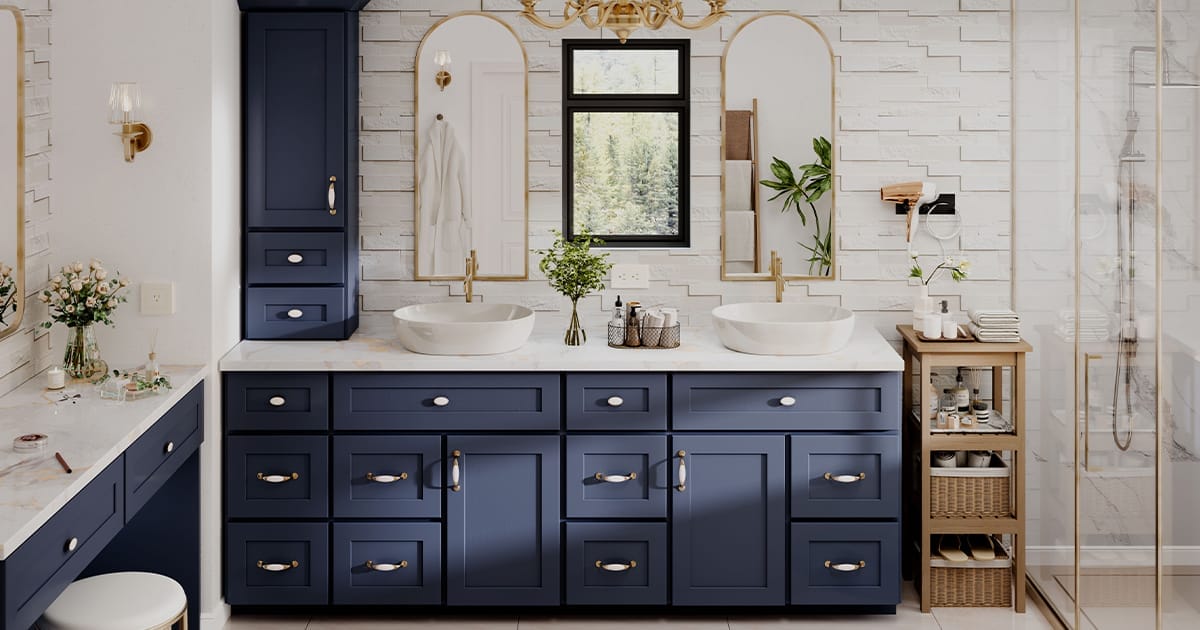
There are two layouts for a double sink bathroom vanity: one is side-by-side, and the other is divided storage layout.
Side-by-side sinks
Two sinks placed side by side with a symmetrical countertop layout, allowing two people to use it simultaneously. This design is simple and intuitive, suitable for most households and master bathroom layouts.
Divided storage layout
Storage areas are separated on either side or in the middle of the sink, leaving ample cabinet or drawer space in the center to enhance storage capacity. This layout is ideal for users who need more storage and helps to keep each user’s personal items separate.

| Layout | Characteristics |
| Side-by-side sinks | Two sinks placed side by side for simultaneous use. Simple and symmetrical design. |
| Divided storage layout | Separate storage zones beside or between sinks. Increases storage and organizes personal items. |
Plumbing and Drainage Considerations
The following are the installation steps, but since it is a double sink, special attention should be paid to the piping layout for both sinks and the depth of the cabinet.
- Turn off the main water valve to shut off the water supply.
- Remove the old sink and cabinet, disconnecting the water supply and drain pipes.
- Clean the installation area, ensuring the surface is clean and level.
- Assemble and install the cabinet according to the instructions, making sure it is level and secured to the wall.
- Connect the water supply lines, sealing threaded connections with plumber’s tape, and connect the valves to the faucet.
- Install the drain pipes and P-traps, using silicone or plumber’s putty to ensure a watertight seal.
- Turn on the water supply, check for leaks, and tighten connections to ensure proper drainage.
Finish by applying silicone caulk around the edges and clean up any excess material.
Materials of double-sink vanity, and coordination of countertop and mirror cabinet
I have selected some commonly used home styles for your reference. The materials can be substituted according to your needs and do not have to be the same as those shown.
| Style | Modern | Classic | Shaker |
| Countertop | Quartz | Marble | Marble |
| mirror | Frameless, adjustable brightness | Wood frame | Square wood frame |
| Cabinet material | plywood | Solid woods | plywood |
Budget and Installation Recommendations (Standard vs. Custom)
budget recommendations
Standard Vanity
Standard double-sink vanities available on the market, moderately priced, easy to install, suitable for quick replacement or upgrading of bathroom spaces.
Customized Vanity
Tailor-made according to space dimensions and personal needs, offering flexible design, enhanced storage, and aesthetics; higher cost and longer installation period.
I have provided a rough budget based on factors such as customization and countertop materials, but the final cost will depend on your location and brand choices.
| Item | Typical Cost Range | Marks |
| Vanity Cabinet (Stock) | $300 – $1,200 | Prebuilt sizes, limited finishes |
| Vanity Cabinet (Semi-Custom) | $1,200 – $3,500 | Customizable widths, finishes, hardware |
| Vanity Cabinet (Custom) | $3,000 – $10,000+ | High-end materials, bespoke design |
| Countertop (Laminate) | $50 – $250 | Per vanity, budget option |
| Countertop (Quartz/Granite) | $600 – $2,500 | Durable, popular for double sinks |
| Sinks (Each) | $50 – $450 | Porcelain, ceramic, metal options |
| Faucets (Each) | $50 – $1,200 | Basic to designer brands |
| Plumbing Labor | $150 – $800 | Depends on complexity and local rates |
| Carpentry/Installation Labor | $300 – $1,500 | Leveling, securing, trim work |
| Tile/Backsplash | $100 – $1,000+ | Material and square footage dependent |
| Mirror/Lighting | $100 – $1,200+ | Vanity lighting and mirrors add cost |
| Total Typical Project | $1,500 – $15,000+ | Depends on scope and customization |
It’s recommended to reserve 10%-20% of the budget for plumbing modifications and professional installation to ensure safety and long-term use. For affordable and stylish options, explore our RTA bathroom vanities — available in various colors to match your bathroom style.
Installation Recommendations
For Standard Vanity
- Advantages: Standardized structure, quick installation, lower cost.
- Notes: Accurately measure dimensions to ensure pipeline alignment; keep the cabinet level and ensure tight sealing at joints; test the water system to prevent leaks.
For Customized Vanity
- Advantages: Flexible dimensions and design, high space utilization, meets personalized requirements.
- Notes: Plan pipeline layout in advance and ensure precise cabinet fabrication; coordinate multiple trades for on-site adjustments; check sealing and stability after installation.
All in all, the standard type is suitable for limited budgets and quick installation needs, while the customized type is ideal for personalized and high-precision requirements. During installation, focus on pipeline layout and cabinet securing to ensure safety and durability.
Conclusions
Accurate measurement and evaluation are essential when considering a double sink bathroom vanity. Prepare a detailed checklist covering bathroom dimensions, clearance space, plumbing locations, storage needs, and usage habits. Combining this with size guidelines and layout options enables a clear assessment of suitability.
Additionally, annotated floor plans and storage examples aid in visualizing space utilization, ensuring both functionality and aesthetics. Choosing the appropriate double sink vanity enhances bathroom efficiency and provides greater comfort and convenience.


Related posts

If you’re planning a laundry setup on your balcony, one question matters more than anything else: What kind of cabinet will actually last—and not turn... Continue reading
If you’re planning a kitchen upgrade, installing a new sink might seem like a simple task. I’ve had many homeowners tell me,“It looks easy enough—I’ll... Continue reading
If your kitchen feels tight, cluttered, or just hard to work in—you’re not alone. I’ve worked with plenty of homeowners across the U.S., and honestly,... Continue reading
When planning a bathroom remodel, many homeowners focus on tile, lighting, or paint colors. But after working with bathroom designs for many years, I’ve learned... Continue reading

A wall mounted wine rack is more than just a storage solution. In many homes, it becomes a subtle design feature that adds personality and... Continue reading





Add comment