No products in the cart.
Return To Shop or
or  ,
,



How to Care for Kitchen Cabinets in Winter
The impact of winter climate changes on kitchen cabinets is often underestimated. Across the United States, climate conditions vary widely — from cold, dry northern regions to warm, humid southern and coastal areas. Under different environmental conditions, kitchen cabinets face very different challenges during the winter months.
To keep cabinets in good condition throughout winter, maintenance methods should be adjusted according to local climate characteristics. Below is a practical, region based guide to winter cabinet care for American homes.
Table of Contents
Wood Cabinet Care in Humid or High Temperature Variation Regions

In areas such as the southeastern United States, the Gulf Coast, and Pacific coastal regions — including Florida, Louisiana, and coastal California — winter air humidity often remains relatively high. Combined with noticeable day to night temperature fluctuations, wooden cabinets in these regions are more likely to absorb moisture, develop mildew, or experience localized swelling.
The primary focus in these climates is moisture control and consistent cleaning.
After daily use, cabinet interiors should be wiped down promptly. Items such as spices, cookware, and tableware should be completely dry before being placed back inside. Range hoods, stovetops, wall tiles, and countertops should be cleaned regularly and kept dry to reduce excess moisture in the kitchen environment.
Pull out baskets and drawers should be wiped with a dry cloth, or with a slightly damp cloth followed immediately by thorough drying. Any water stains on cabinet doors, handles, hinges, or other hardware should be removed as soon as they appear. When cleaning, mild and non corrosive cleaners are recommended to avoid damaging the protective finish on wood surfaces.
Wood Cabinet Care in Cold and Dry Regions with Central Heating

In the northeastern United States, the Midwest, and Rocky Mountain regions — including cities such as New York, Chicago, and areas of Minnesota — central heating is commonly used for extended periods during winter. While heating improves indoor comfort, it significantly lowers indoor humidity, making wooden cabinets more prone to cracking, warping, and surface fading.
In these regions, the key focus is maintaining balanced indoor humidity.
Applying wood care wax or conditioning oil designed for wooden surfaces on a regular basis can help prevent excessive drying. Using an indoor humidifier is also highly recommended to keep relative humidity within a comfortable range, ideally between 40 percent and 55 percent.
Cabinets should be positioned away from heaters, radiators, and fireplaces whenever possible. Prolonged exposure to direct sunlight should also be minimized, as excessive heat and dryness can accelerate surface cracking and finish deterioration. Keeping temperature and humidity levels stable around cabinets plays a critical role in preventing common winter related wood damage.
Winter Care Tips for Engineered Stone Countertops
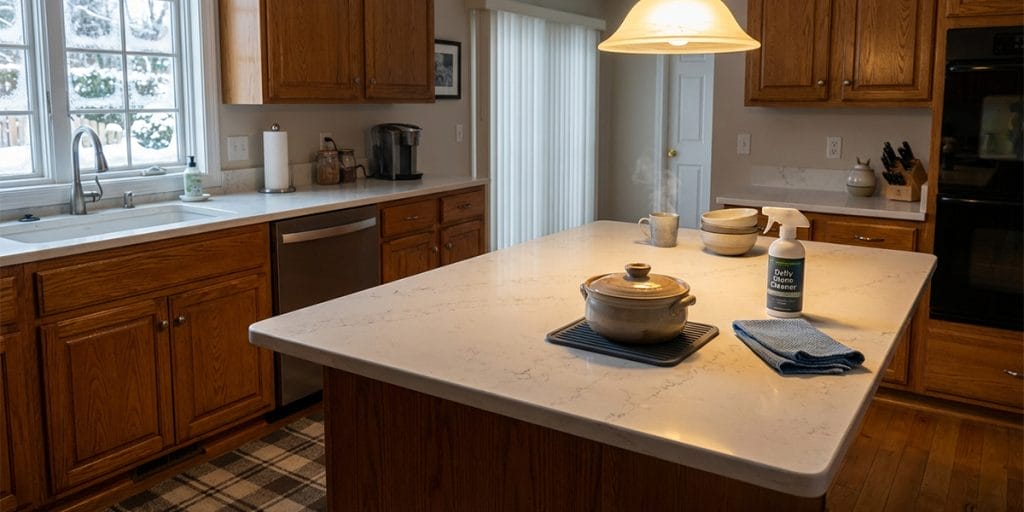
Engineered stone countertops are widely used in American kitchens. However, during winter — especially in homes with large temperature differences or frequent indoor heating — these surfaces may become more susceptible to cracking or staining if not properly maintained.
During daily use, cookware and tableware should be handled carefully to avoid impact damage. Hot pots, pans, and baking trays should always be placed on heat resistant pads rather than directly on the countertop surface. Spills from liquids such as soy sauce, red wine, coffee, vinegar, and other staining substances should be cleaned up immediately.
Heavy objects should be distributed evenly to prevent concentrated pressure on specific areas. Depending on usage frequency, waxing or surface maintenance every two to three months can help preserve the countertop’s appearance and extend its lifespan.
Winter Maintenance Advice for Stainless Steel Cabinets
Stainless steel cabinets are popular in modern American kitchens due to their durability and clean appearance, but they are not completely maintenance free.
Strong corrosive chemicals should be avoided, including paint removers, metal cleaners, heavy duty stove cleaners, or products containing strong acids or acetone. If accidental contact occurs, the surface should be washed immediately with mild soapy water and dried thoroughly.
Extremely hot cookware taken directly from a stove, oven, or microwave should not be placed directly on stainless steel surfaces. Heat resistant pads are recommended to prevent discoloration or warping. Sharp objects should never be used directly on countertops or cabinet doors, and all food preparation should be done on cutting boards to avoid scratching.
Salt residue, water stains, and seasoning spills should not be left on stainless steel surfaces for extended periods, as they may cause corrosion or spotting. In general, all countertop materials — including stainless steel, engineered stone, and laminate — should be kept dry to prevent discoloration, adhesive failure, or structural deformation.
Conclusion
Winter conditions vary greatly across the United States, and cabinet maintenance should never follow a one size fits all approach. Humid regions require careful moisture control, while cold climates with central heating demand protection against excessive dryness and cracking.
Regardless of location, maintaining cleanliness, protecting surfaces from heat, and practicing careful daily use are essential. With maintenance methods tailored to local climate conditions, kitchen cabinets can remain both durable and visually appealing throughout the winter season — while helping homeowners avoid unnecessary repairs and long term replacement costs.


Related posts

Receiving the keys to a new home is an exciting milestone yet it often brings an important and sometimes confusing question. What is the best... Continue reading

The kitchen is far more than a place for cooking meals. In many American homes it has become a central space for daily routines family... Continue reading

Kitchen cabinets play a vital role in both the function and visual identity of a kitchen. Among all cabinet components, cabinet doors are the most... Continue reading

The colors you choose for your home don’t just paint walls—they shape moods, create feelings, and influence how every day unfolds. In 2026, whole home... Continue reading

In modern home renovation projects, custom cabinetry has become a core element in both kitchen and bathroom planning. Choosing the right custom cabinet supplier is... Continue reading











Add comment