No products in the cart.
Return To Shop or
or  ,
,
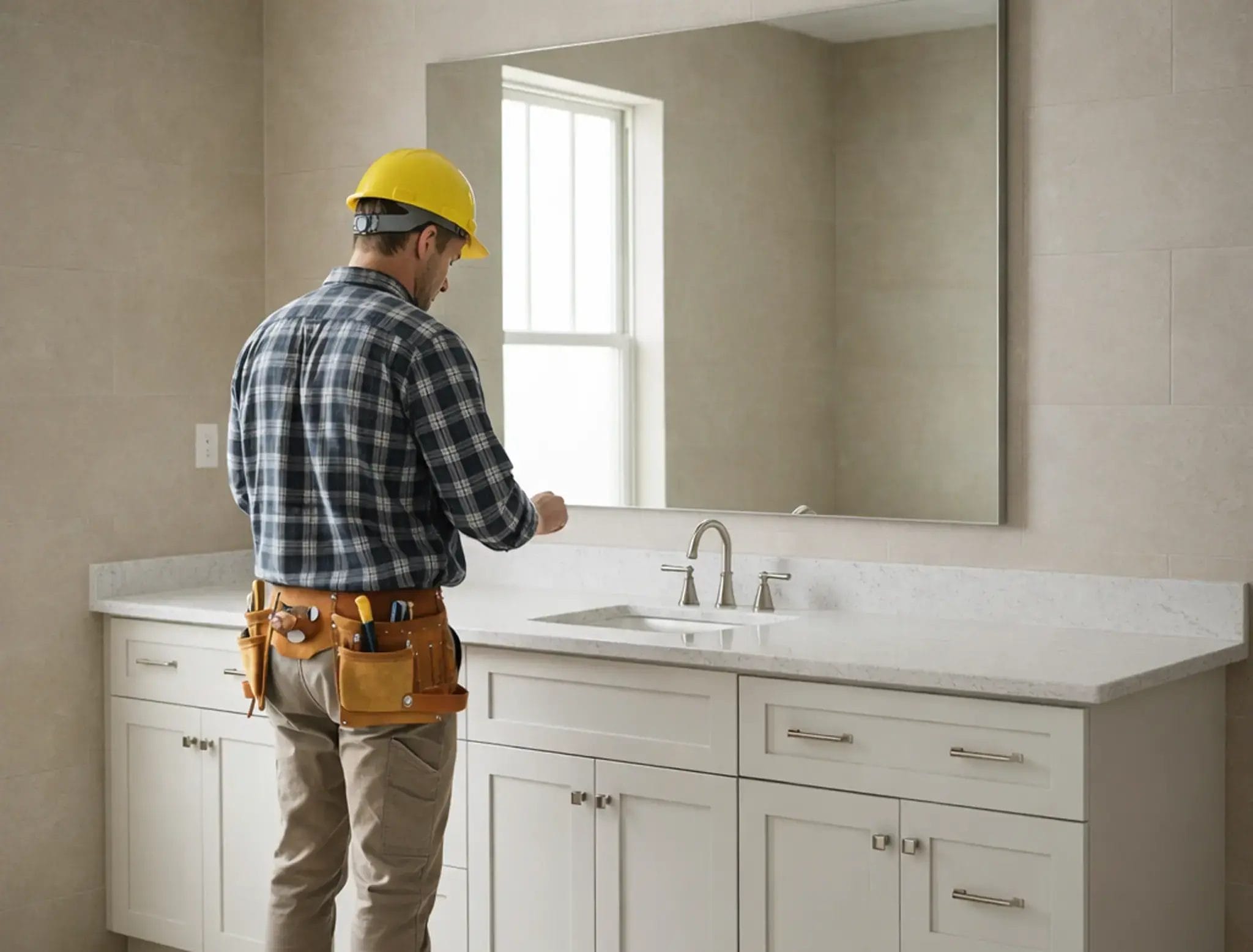


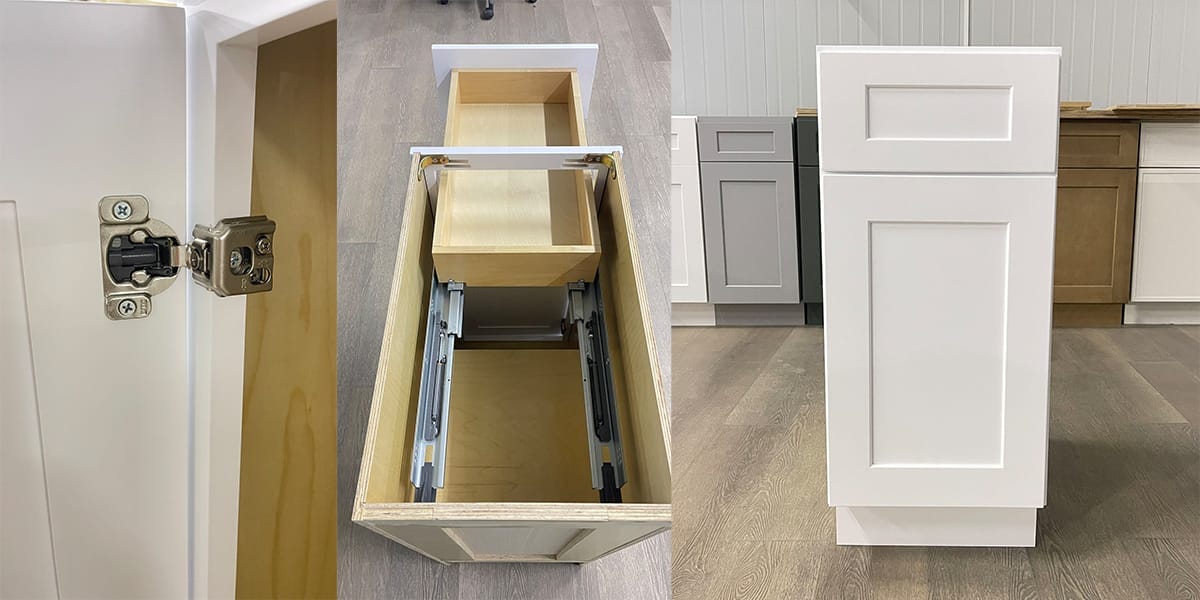
How to Fix Misaligned Cabinet Doors and Hinge Issues
After a few years, even the best kitchen cabinets can start looking a little off. Maybe a door hangs crooked, won’t close flush, gaps appear between doors, or you hear a little “clang” when closing it. These small annoyances can add up fast in a busy household — making your kitchen feel messy, trapping dust, or just making everyday tasks like cooking a bit more frustrating.
Having spent 20 years designing kitchen cabinets — and living the daily life of a homeowner myself — I know how common these issues are. The good news? Most of the time, with just a screwdriver, a bit of patience, and a few minutes per door, you can fix it yourself and make your cabinets feel almost new again. This simple, down-to-earth DIY guide will get you started.
Table of Contents
Why Cabinet Doors Get Misaligned
| Reason | Details |
|---|---|
| Hinge screws gradually loosen | Constant use, heavy items, or slamming doors can slowly loosen the screws holding the door in place, causing sagging or crooked doors. |
| Wear and tear / environmental changes | Over time, moisture, temperature fluctuations, and humidity (especially in kitchens) can warp wood doors or loosen metal hinges. |
| Cabinet box not perfectly level or square | If the cabinet wasn’t installed perfectly vertical or square, even correctly adjusted doors may appear misaligned. |
| Frequent heavy use | Slamming doors, overloading cabinets, or pulling hard can speed up misalignment. |
What You’ll Need
| Item | Why / When |
|---|---|
| Phillips-head or flat-head screwdriver (manual) | To adjust hinge screws — never use a power drill, which can strip screws easily. |
| Soft cloth + light lubricant (optional) | For cleaning and lubricating hinges if they feel stiff or squeaky. |
| Helper (optional) | For large or heavy doors — having someone hold the door steady helps when adjusting height (up/down). |
| Patience & small incremental adjustments | Make small tweaks — a quarter turn or less. Avoid over-adjusting and creating new misalignment. |
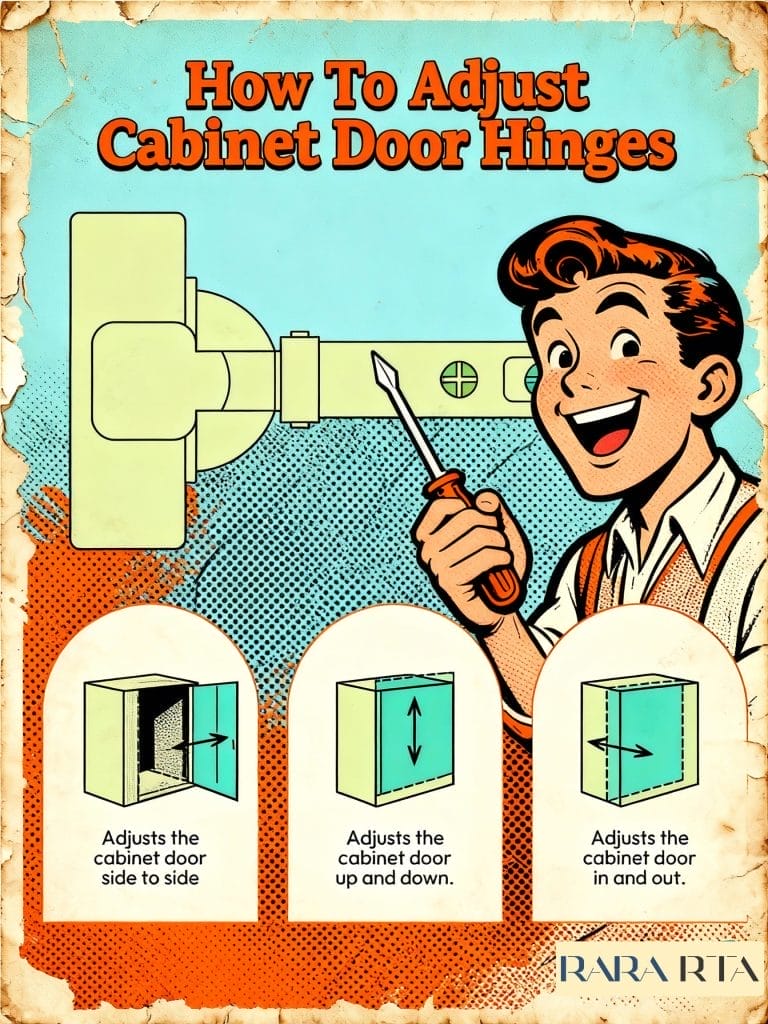
How to Adjust Cabinet Doors
1. Tighten Loose Screws First
Open each cabinet door and check the screws that mount the hinge to the door and to the cabinet box.
Often, simply tightening these screws (turning clockwise) fixes sagging or slightly crooked doors.
2. Adjust Vertical (Up / Down) Alignment
If one door sits higher or lower than its neighbor:
Slightly loosen the vertical mounting screws on the hinge plate inside the cabinet (do not remove them).
With the door closed, reposition it up or down until it looks level.
Retighten screws and double-check alignment.
3. Adjust Side-to-Side (Left / Right) Position
If gaps between doors (or between the door and cabinet frame) are uneven:
Locate the side-to-side adjustment screw — usually on the hinge arm near the front edge of the cabinet.
Turn slightly: clockwise moves the door toward the hinge side; counter-clockwise moves it away.
Make small adjustments on both top and bottom hinges until the gap is even.
4. Adjust Depth (In / Out)
If the door sits too far out or too recessed:
Locate the depth adjustment screw on the hinge arm, toward the back of the cabinet.
Turn slowly to move the door slightly inward or outward.
Recheck closure and alignment each time.
5. Test, Fine-Tune & Lubricate
After each adjustment:
Open and close the door several times.
Check alignment, spacing, and smooth closure.
If hinges feel stiff or noisy, clean with a soft cloth and apply a little light lubricant (especially in humid kitchens).
Quick Troubleshooting: Common Problems & Fixes
| Common Problem | Most Likely Cause | Solution |
|---|---|---|
| Door hangs crooked / lower than neighbor | Loose hinge screws or sagging hinge | Tighten screws; adjust vertical alignment if needed |
| Uneven gap between doors | Side-to-side misalignment | Adjust side-to-side screws on hinge arms |
| Door sticks out / doesn’t close flush | Depth misalignment | Adjust depth screw to bring door closer or push slightly out |
| Stiff, squeaky, or hard-to-close hinges | Dirt, dust, lack of lubrication, worn hinge | Clean hinge, apply light lubricant, replace hinge if worn |
| Repeated misalignment / loose screws | Worn screw holes, old hinge, heavy door | Use longer screws, add small shims behind hinge, or replace hinge |
My Little Truth
Honestly, after 20 years in kitchen cabinetry and running a household, I know how “small home maintenance” can feel never-ending. You twist screws, dust your fingers, and think, “Why am I doing this again?”
But here’s the thing: spending just a few minutes now to realign a cabinet door saves hours of frustration later. No fancy tools, no handyman — just a screwdriver, patience, and maybe a helping hand.
When the door closes smoothly, evenly, and quietly, there’s a tiny but real sense of satisfaction. It’s your kitchen, your space, your home. Taking care of it, bit by bit, is a way of showing love for your home.
Final Words
Misaligned doors and loose hinges may seem minor, but they affect your kitchen’s look and function every day. With a little know-how and simple tools, you can fix most issues yourself. Take five minutes, grab a screwdriver, and restore that “just-renovated” shine to your kitchen.
Pro Tip: Keep a small screwdriver in a kitchen drawer. Spot a sagging door? Fix it in minutes — before it starts driving you crazy.sagging, you can fix it in minutes before it becomes annoying.


Related posts

Receiving the keys to a new home is an exciting milestone yet it often brings an important and sometimes confusing question. What is the best... Continue reading

The kitchen is far more than a place for cooking meals. In many American homes it has become a central space for daily routines family... Continue reading

Kitchen cabinets play a vital role in both the function and visual identity of a kitchen. Among all cabinet components, cabinet doors are the most... Continue reading

The colors you choose for your home don’t just paint walls—they shape moods, create feelings, and influence how every day unfolds. In 2026, whole home... Continue reading
In modern home renovation projects, custom cabinetry has become a core element in both kitchen and bathroom planning. Choosing the right custom cabinet supplier is... Continue reading








Add comment