No products in the cart.
Return To Shop or
or  ,
,


Stainless Steel Kitchen Cabinets: 8 Pros and Cons
After designing kitchens for more than twenty years, I’ve noticed that stainless steel cabinets tend to spark strong opinions among homeowners. Some people absolutely love the clean, modern look, while others worry that the material might feel too cold or industrial for a family home.
If a client asked me whether stainless steel kitchen cabinets are worth considering, my answer would usually start with a simple truth: stainless steel is one of the most durable and hygienic materials you can use in a kitchen. But like any design choice, it also comes with trade-offs that are worth understanding before making a decision.
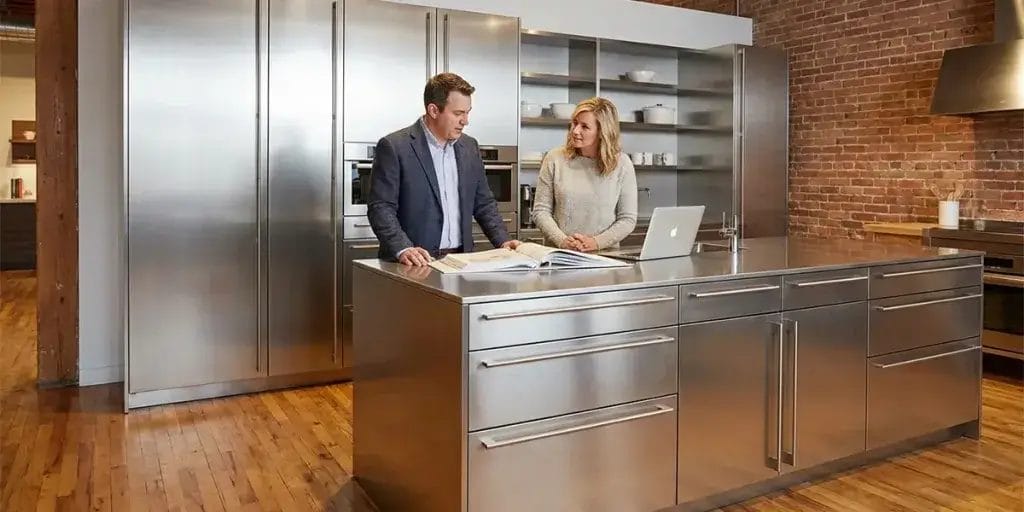
In most American homes, kitchen cabinets are still commonly made from wood or engineered wood panels. Stainless steel cabinets originally came from commercial kitchens in restaurants and hotels, where durability and sanitation are critical. Over time, however, they have gradually entered residential kitchens, especially in homes that favor modern, minimalist, or industrial design styles.
Today, stainless steel kitchen cabinets offer a combination of strength, functionality, and long-term reliability. Still, they may not be the perfect choice for every homeowner. Let’s take a closer look at the advantages and disadvantages so you can decide whether they fit your lifestyle and design preferences.
Table of Contents
What Makes Stainless Steel Cabinets Different?
Unlike traditional cabinetry, stainless steel cabinets use metal panels as both the structural framework and the visible surface. These panels are typically fabricated through industrial processes such as welding, stamping, and polishing.
Because of this manufacturing method, the finished cabinets inherit the core properties of stainless steel itself: corrosion resistance, structural strength, and excellent durability.
One thing I often tell homeowners is that a stainless steel kitchen tends to feel very precise and organized. The reflective surface interacts with light in a way that makes the room look clean and structured. For people who enjoy a professional-style cooking environment, this can be very appealing.
But before committing to this material, it’s important to understand both its strengths and its limitations.
8 Advantages of Stainless Steel Kitchen Cabinets
1. Exceptional Durability
Stainless steel is incredibly strong. Unlike wood cabinets, it won’t warp, crack, or rot when exposed to humidity. In busy kitchens where cooking happens every day, this durability can make a noticeable difference over time.
2. Seamless Countertop Integration
Many stainless steel countertop systems are fabricated as a single continuous surface. Without seams or joints, the countertop is less likely to crack or separate after years of use.
This also makes cleaning easier because there are fewer gaps where crumbs or grease can collect.
3. Outstanding Hygiene
One of the reasons stainless steel dominates commercial kitchens is hygiene. The material is non-porous, meaning liquids and bacteria cannot penetrate the surface.
For homeowners who care deeply about kitchen cleanliness, this is a major advantage.
4. Excellent Heat Resistance
Hot pans, baking trays, or cookware can usually be placed directly on stainless steel surfaces without causing damage. This makes the material extremely practical for people who cook frequently.
5. Strong Resistance to Stains
Tomato sauce, cooking oil, coffee, and other common kitchen spills can be wiped away easily. Because the surface does not absorb liquids, long-term staining is rarely a concern.
6. High Impact Strength
Stainless steel is far less likely to chip or crack than stone or ceramic surfaces. Even if cookware is accidentally dropped, the cabinet structure typically remains intact.
7. Easy Maintenance
One of the things many homeowners appreciate most is how easy stainless steel is to maintain. In most cases, a damp cloth and mild detergent are enough to keep the surface clean and shiny.
Unlike natural stone countertops, stainless steel does not require sealing or special treatments.
8. Environmentally Friendly and Recyclable
Stainless steel is fully recyclable, which makes it a more environmentally responsible option compared with some composite materials. At the end of its life cycle, it can re-enter the recycling stream rather than becoming construction waste.
Disadvantages to Consider
While stainless steel cabinets have many advantages, they are not the perfect fit for every home. As a designer, I always encourage homeowners to consider these potential drawbacks before deciding.
1. A Cooler Visual Appearance
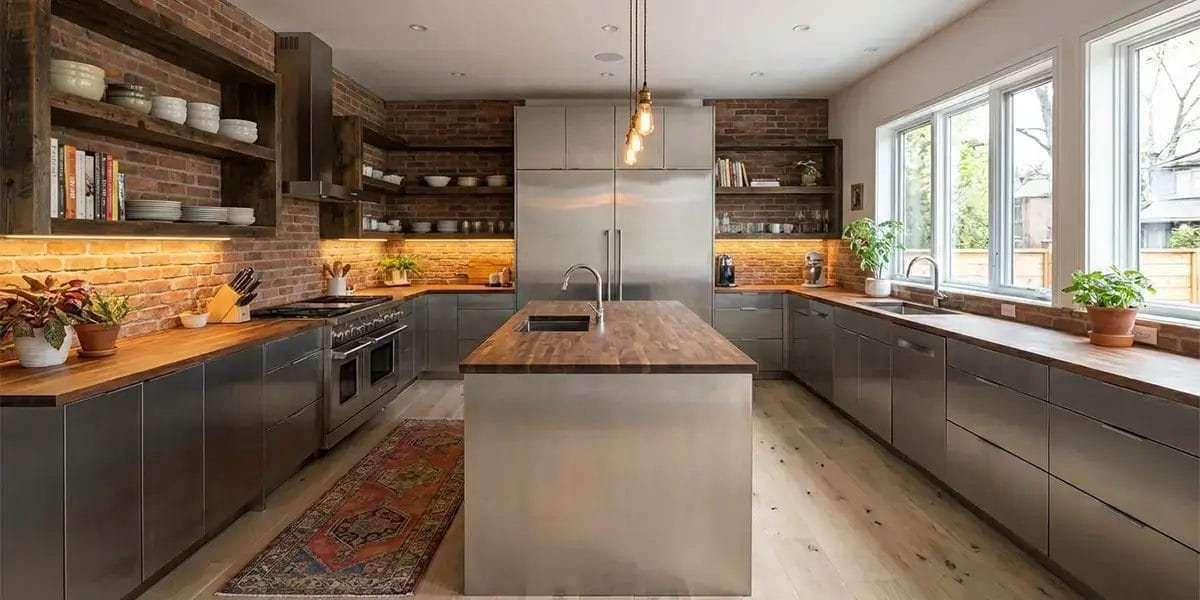
Stainless steel naturally creates a clean and modern look, but some homeowners feel it lacks the warmth of wood cabinetry. In kitchens designed for a cozy, traditional atmosphere, the material may feel a bit too industrial.
Fortunately, this can sometimes be balanced by incorporating warm elements such as wood flooring, lighting, or natural textures.
2. Surface Scratches Can Occur
Like many metal surfaces, stainless steel can develop scratches over time, especially if sharp utensils are dragged across the countertop.
These scratches usually do not affect performance, but they may become visible depending on the finish.
3. Quality Differences Between Manufacturers
Not all stainless steel cabinets are created equal. Lower-quality products may use thinner metal panels or lower-grade alloys, which can reduce durability.
Higher-quality cabinets typically involve better fabrication techniques and stricter quality control, which can increase the cost.
4. Noise From Metal Surfaces
When metal cookware contacts a stainless steel surface, the sound is more noticeable compared with wood or composite materials. In busy kitchens, this acoustic characteristic may take some getting used to.
Is Stainless Steel the Right Choice for Your Kitchen?
Whenever homeowners ask me whether stainless steel cabinets are a good investment, I usually turn the conversation toward lifestyle.
If you cook frequently, value durability, and appreciate a modern aesthetic, stainless steel can be an excellent long-term solution. The material handles heat, moisture, and daily use exceptionally well.
On the other hand, if you prefer a warm, traditional kitchen or are sensitive to small surface scratches, wood cabinetry may feel more comfortable.
Good kitchen design is rarely about choosing the “best” material overall. Instead, it’s about choosing the material that best supports how your household actually lives and cooks.
Final Thoughts
Stainless steel kitchen cabinets offer impressive durability, hygiene, and long-term performance. They are especially well suited to modern kitchens where clean lines, functionality, and low maintenance are priorities.
However, they also bring a distinct aesthetic and a few practical considerations that homeowners should evaluate carefully.
If the look and lifestyle fit your home, stainless steel can create a kitchen that remains functional, resilient, and visually consistent for decades. And in my experience as a designer, materials that age well often become the ones homeowners appreciate most over time.


Related posts

If you’re planning a laundry setup on your balcony, one question matters more than anything else: What kind of cabinet will actually last—and not turn... Continue reading
If you’re planning a kitchen upgrade, installing a new sink might seem like a simple task. I’ve had many homeowners tell me,“It looks easy enough—I’ll... Continue reading

If your kitchen feels tight, cluttered, or just hard to work in—you’re not alone. I’ve worked with plenty of homeowners across the U.S., and honestly,... Continue reading
When planning a bathroom remodel, many homeowners focus on tile, lighting, or paint colors. But after working with bathroom designs for many years, I’ve learned... Continue reading
A wall mounted wine rack is more than just a storage solution. In many homes, it becomes a subtle design feature that adds personality and... Continue reading






Add comment