No products in the cart.
Return To Shop.png?sharp=1)
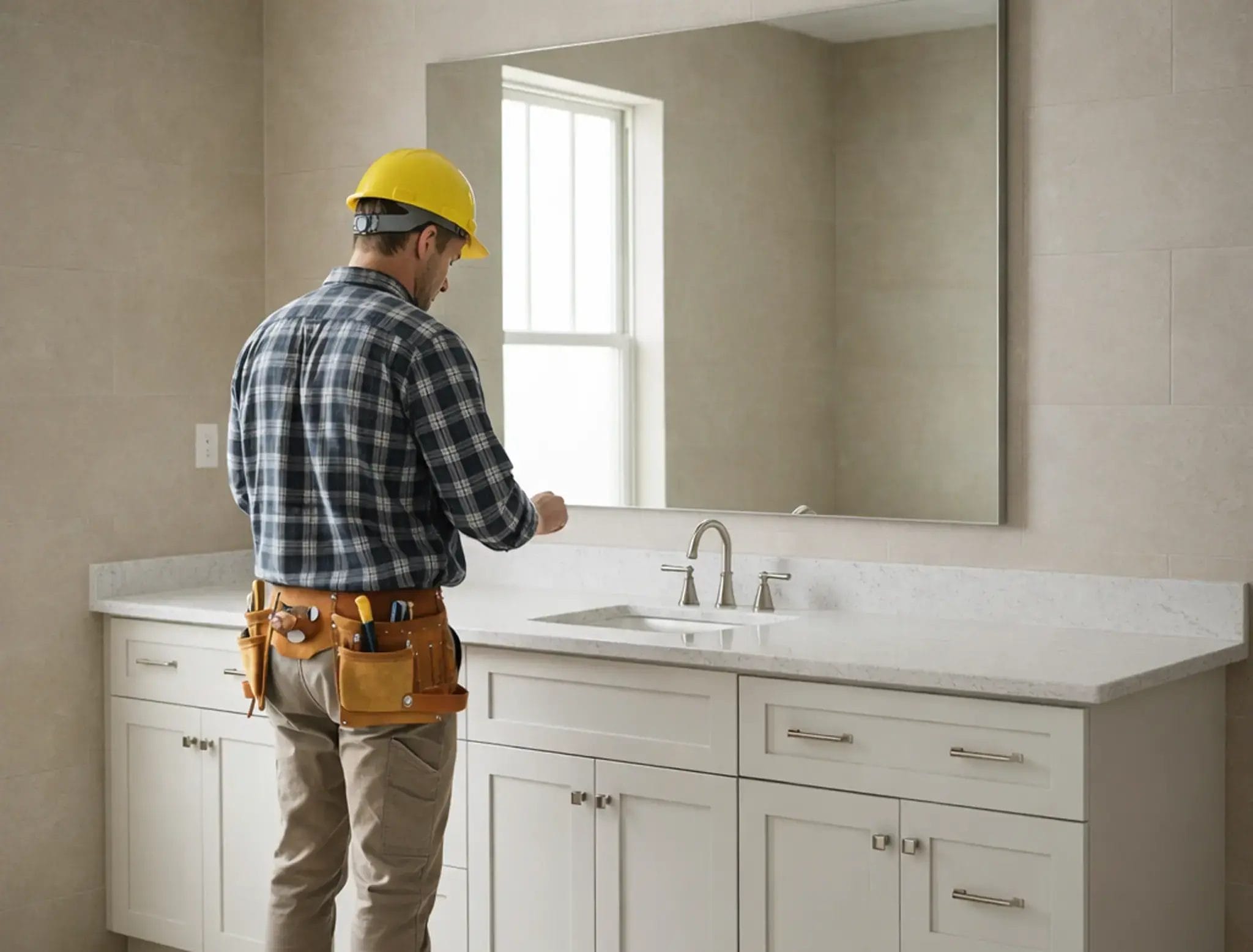



How to Choose the Right Bathroom Vanity Size
In modern American homes, the bathroom has quietly become one of the most demanding rooms in the house. On paper, it seems simple: a sink, a cabinet, a mirror. But anyone who has worked on real renovation projects knows the truth—bathrooms leave very little room for mistakes.
Over the years, one of the most common problems we see has nothing to do with plumbing or tile installation. It comes down to vanity size. Too wide, and the bathroom suddenly feels tight and awkward. Too deep, and doors or drawers start hitting everything in sight. Too small, and homeowners realize—usually a few weeks after moving in—that there’s nowhere to put daily essentials.
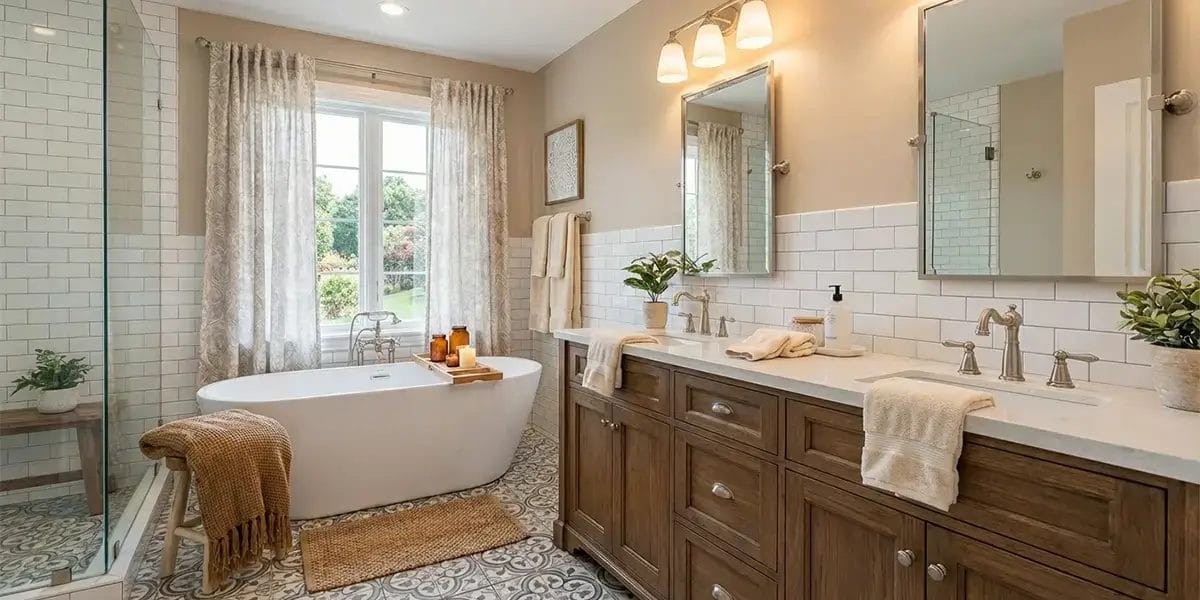
In the U.S., bathroom sizes vary widely. A half bath is often around 25–50 square feet (2.3–4.6 m²), while master bathrooms commonly range from 100–160 square feet (9–15 m²). With that kind of variation, choosing the right bathroom vanity size is less about following trends and more about understanding how the space is actually used.
This guide walks you through vanity types, standard dimensions, measurement tips, layout considerations, and common sizing mistakes—based not just on theory, but on what tends to work (and fail) in real homes.
Table of Contents
1. Understand Bathroom Vanity Types and Standard Sizes
Bathroom vanities generally fall into three categories: wall-mounted, freestanding, and modular. Each type serves a different purpose and comes with its own sizing logic.
Wall-Mounted Vanities
Wall-mounted vanities are popular in small bathrooms because they visually open up the space and make the floor easier to clean.
- Typical width: 24–48 inches (60–120 cm)
- Height: 16–24 inches (40–60 cm)
- Depth: 16–20 inches (40–50 cm)
A 24-inch single-sink vanity is often a smart choice for powder rooms. In narrow bathrooms under 40 inches wide (1 m), this size usually leaves at least 12 inches (30 cm) of walking clearance, which is about the minimum for comfort.

That said, this is also where expectations and reality sometimes clash. Many homeowners love the floating look, but forget that wall-mounted vanities require proper wall reinforcement and precise plumbing alignment. More than once, installations have stalled simply because the wall wasn’t ready to support the cabinet.
Mirrors paired with wall-mounted vanities are typically 28–32 inches (70–80 cm) high, which works well for most adults between 5’2″ and 5’9″ (160–175 cm).
Freestanding Vanities
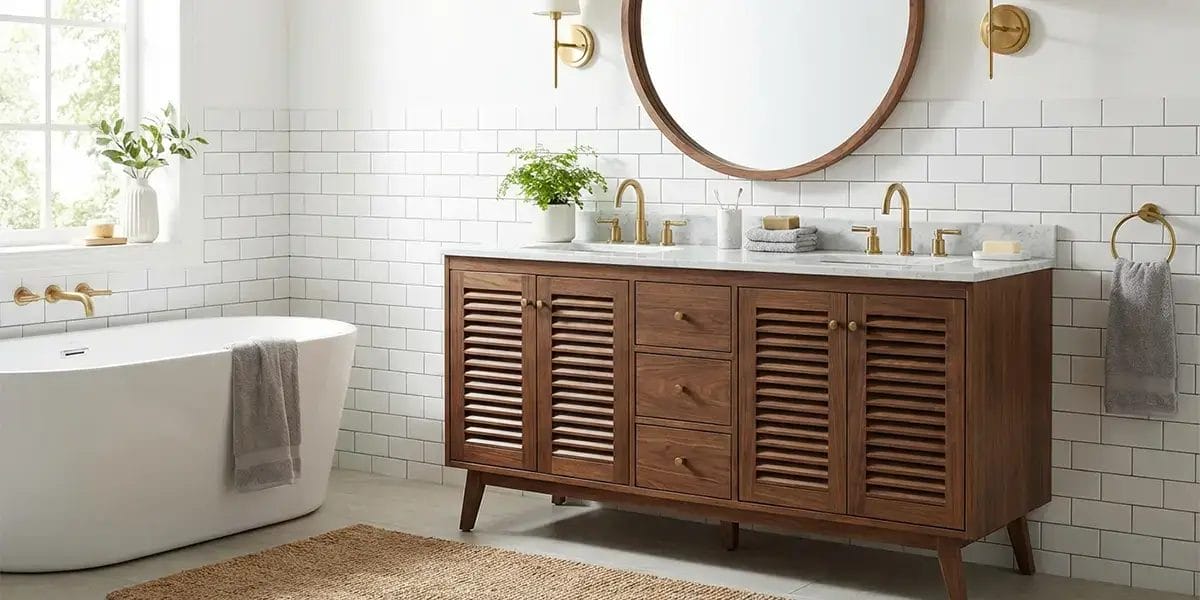
Freestanding vanities remain the most common choice in American homes, largely because they offer generous storage and are more forgiving during installation.
- Typical width: 32–60 inches (80–150 cm)
- Height: 32–36 inches (80–90 cm)
- Depth: 18–22 inches (45–55 cm)
In medium to large bathrooms, a 36–48 inch vanity strikes a good balance between storage and space efficiency. From a practical standpoint, freestanding units also handle imperfect walls better—which, in older homes especially, is more common than people expect.
In colder northern regions, slightly elevated freestanding vanities are sometimes preferred to reduce the risk of water damage from melting snow or minor flooding near entry bathrooms.

Modular Vanities
Modular vanities offer flexibility and customization by combining multiple cabinet units, mirrors, and side storage.
- Module width: 12–24 inches (30–60 cm)
- Height: 16–32 inches (40–80 cm)
- Depth: Around 18 inches (45 cm)
These systems work well in larger bathrooms or unusual layouts. While total widths can exceed 72 inches (180 cm), individual modules rarely go beyond 32 inches, helping the setup feel intentional rather than bulky.
2. Measure Your Bathroom Accurately
Accurate measurement is the foundation of choosing the right vanity size—and skipping this step is how most renovation headaches begin.
We’ve seen vanities ordered perfectly “on paper,” only to arrive on site and block a door by half an inch. Half an inch doesn’t sound like much—until the bathroom is finished and there’s nowhere to move the cabinet.
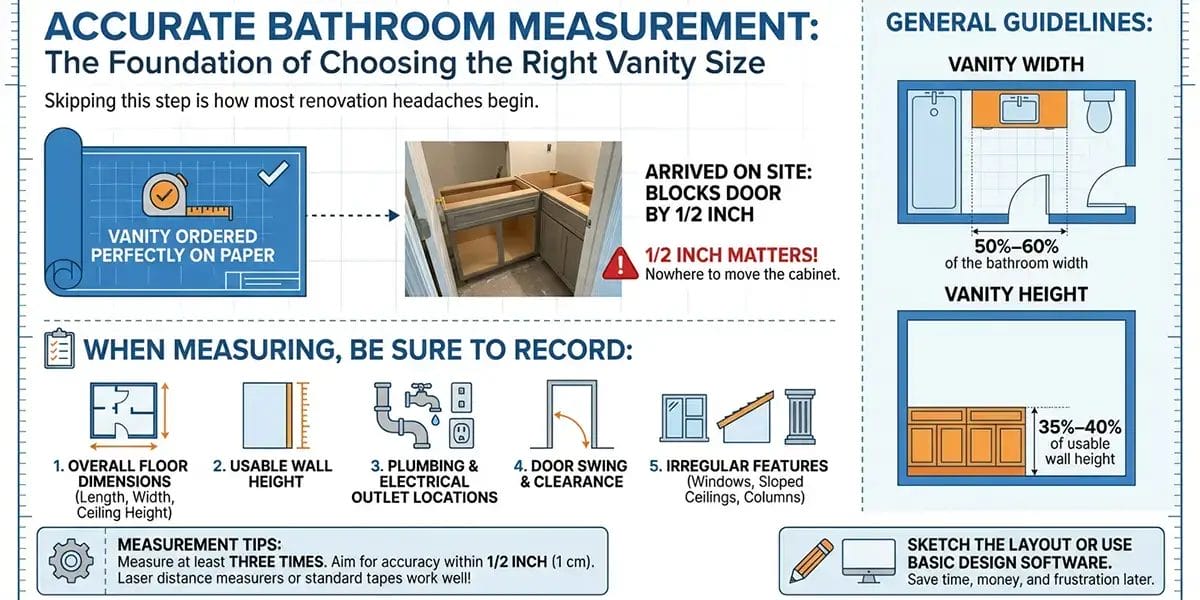
hen measuring, be sure to record:
- Overall floor dimensions (length, width, ceiling height)
- Usable wall height
- Plumbing and electrical outlet locations
- Door swing and clearance
- Irregular features such as windows, sloped ceilings, or columns
Once you have confirmed the vanity dimensions and plumbing locations, follow our step-by-step bathroom vanity installation guide for positioning, leveling, securing, plumbing connections, and final leak testing.
Measure at least three times, aiming for accuracy within ½ inch (1 cm). Laser distance measurers can help, but even a standard tape works well if used carefully.
General guidelines:
- Vanity width should take up 50%–60% of the bathroom width
- Vanity height should be about 35%–40% of usable wall height
Sketching the layout or using basic design software can save time, money, and frustration later.
3. Match Vanity Size to Function and Daily Use
Vanity size decisions often seem minor during planning, but they show up every single morning. Function should always guide your choice.
Storage Needs
- Single-user bathrooms: 20–24 inch vanity with 3–4 drawers
- Shared or family bathrooms: 32–40 inches with multiple drawers or shelves
- Large bathrooms: 48 inches or more, often with pull-out baskets or corner storage
In shared bathrooms, we hear the same comment again and again a few weeks after installation:
“I wish we had gone a little wider.”
Depth matters too. Vanities under 16 inches (40 cm) may look sleek, but they often struggle to hold taller bottles without tipping.
Mirrors and Accessibility
Most mirrors are 16–24 inches wide and 20–28 inches high, often with integrated lighting. Adjustable or tilting mirrors are especially helpful for children or elderly users.
For special needs:
- Children’s vanities: 20–24 inches high, with safety locks
- Wheelchair-accessible vanities: Around 28 inches high, with knee clearance underneath
Ventilation and Moisture Control
In humid or cold climates, rear ventilation helps prevent moisture buildup and mold inside cabinets. A practical rule of thumb is allowing about 3.5 cubic feet (0.1 m³) of storage per person.
4. Layout and Style Considerations
Vanity size should support both the bathroom layout and its overall style.
- In split wet/dry layouts, the vanity area typically works best when it occupies about one-third of the bathroom width
- Maintain at least 20 inches (50 cm) of clearance in front of showers and toilets
From a design perspective:
- Modern bathrooms favor clean lines and proportional sizing, such as a 36-inch wide vanity at 34 inches high, paired with a frameless mirror
- Farmhouse styles often use natural wood finishes and 18-inch depths to keep the space feeling open
- Dark cabinets add visual weight in larger bathrooms, while light colors help small bathrooms feel larger
Before finalizing, it’s always worth testing the layout with cardboard cutouts or digital tools to make sure drawers and doors won’t collide.
5. Recommended Vanity Sizes by Bathroom Type
| Bathroom Type | Typical Size | Recommended Vanity Width | Height | Depth | Notes |
|---|---|---|---|---|---|
| Half Bath / Powder Room | 25–50 sq. ft (2.3–4.6 m²) | 24–30 in | 32 in | 16–18 in | Compact, single sink, space-saving |
| Small Full Bath | 50–75 sq. ft (4.6–7 m²) | 30–36 in | 32–34 in | 18–20 in | Single sink, limited storage |
| Family Bathroom | 75–100 sq. ft (7–9 m²) | 36–48 in | 34 in | 20 in | Double sink or generous storage |
| Master Bathroom | 100–160 sq. ft (9–15 m²) | 48–72 in | 34–36 in | 20–22 in | Double sink, drawers, baskets |
| ADA / Accessible Bath | Varies | 28–34 in | 34 in | 20 in | Wheelchair clearance required |
| Children’s Bathroom | Varies | 20–24 in | 24–28 in | 16–18 in | Lower height, safety features |
Final Thoughts
Choosing the right bathroom vanity size isn’t about filling a wall—it’s about making everyday routines easier.
After working on enough bathrooms, one thing becomes clear: people rarely regret choosing a vanity that’s slightly larger or better planned. What they do regret is rushing the decision or relying on rough estimates instead of real measurements.
Take the time to measure carefully, think about how the bathroom is actually used, and plan for real life—not just how the space looks on day one. A well-sized vanity may not draw attention, but it quietly improves daily comfort for years to come.


About author

Related posts

Kitchen cabinet quotes can look similar at first but include very different products and services. One quote may include plywood cabinet boxes, finished end panels,... Continue reading

A knee drawer is a specialized vanity cabinet component designed to add storage while creating comfortable open space underneath a bathroom countertop. Knee drawers are... Continue reading

A 33-inch farmhouse sink is a common choice for a 36-inch base cabinet, but it is not a universal rule. The correct fit depends on... Continue reading

A kitchen cabinet filler is a narrow finished strip used to close or manage the space between a cabinet and a wall, appliance, corner, or... Continue reading

Choosing RTA cabinets involves more than comparing door styles or headline prices. You need to evaluate cabinet-box construction, door materials, available sizes, hardware, shipping, assembly,... Continue reading





Add comment