No products in the cart.
Return To Shop.png?sharp=1)


How to Organize a Small Kitchen for Maximum Storage
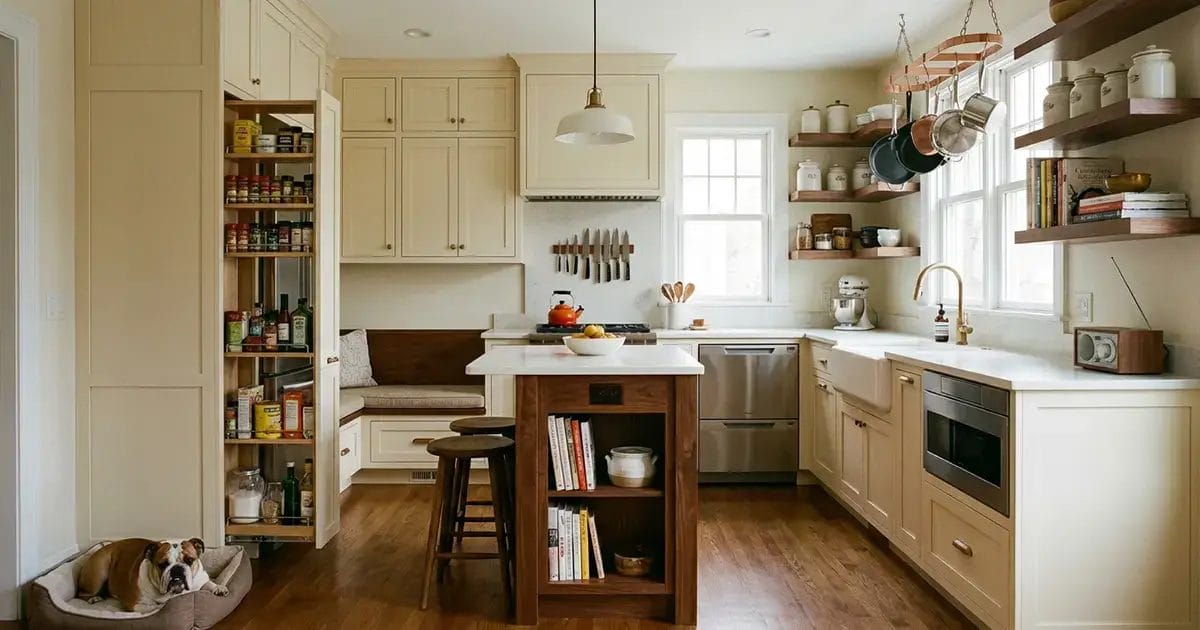
Although the kitchen is often only a few square meters in size, it carries an enormous responsibility in daily life. It supports three meals a day for the entire family while also accommodating seasoning bottles, small appliances, cookware, tableware, and cleaning supplies. When storage is poorly planned, even a clean kitchen can appear cluttered and chaotic. Effective kitchen organization is not about adding more items, but about using space wisely. The following practical tips can help you quickly build a kitchen that feels tidy, efficient, and comfortable for everyday use.
Table of Contents
1. Core Principles of Kitchen Storage

Before organizing any kitchen, it is essential to understand several fundamental principles. These guidelines form the foundation of a functional and long lasting storage system.
Plan storage zones logically
Every item in the kitchen should have a clear and reasonable place. Convenience is the key rule. Items should be stored close to where they are used, and heavier objects should be placed lower to reduce effort and improve safety.
For example, cooking seasonings are best stored near the stove so they are easy to reach while cooking. Cleaning supplies should be kept close to the sink, allowing quick access when washing dishes or wiping surfaces. Heavy items such as rice, cooking oil, and bulk ingredients should be stored in lower cabinets to avoid strain when lifting.
Group similar items together
Many households develop the habit of placing items wherever there is space. Over time, this leads to disorder and wasted time when searching for things. Grouping similar items together creates clarity. When every category has a defined area, both finding and putting away items becomes effortless. This habit also reduces visual clutter and encourages consistent organization.
Use uniform storage containers
Using containers with similar styles and colors helps balance the overall visual effect of the kitchen. Uniform containers prevent the space from looking chaotic even when shelves are visible. When purchasing storage boxes, jars, or baskets, choosing a consistent design creates a calm and cohesive appearance that makes the kitchen more pleasant to use.
Prioritize enclosed storage
Enclosed storage should take up the largest portion of a kitchen. Cabinets with doors hide visual clutter, block grease and dust, and make cleaning easier. With proper cabinet design, the kitchen can remain neat even during busy cooking sessions.
2. The Main Storage Force: Kitchen Cabinets
Cabinets are the most important element of kitchen storage. In most homes, they can hold more than ninety percent of all kitchen items when designed properly.
Cabinet layouts based on kitchen size
For small kitchens, base cabinets alone are often sufficient. This approach provides essential storage without making the space feel cramped. Linear or corner layouts are especially suitable for compact homes.
For medium sized kitchens, combining base cabinets with wall cabinets is highly recommended. This design maximizes vertical space and significantly increases storage capacity without sacrificing comfort.
For large kitchens, adding an island to the base and wall cabinet combination can greatly enhance both workspace and storage. An island can also serve as a secondary preparation area or casual dining space, making the kitchen more versatile.
Practical cabinet storage solutions
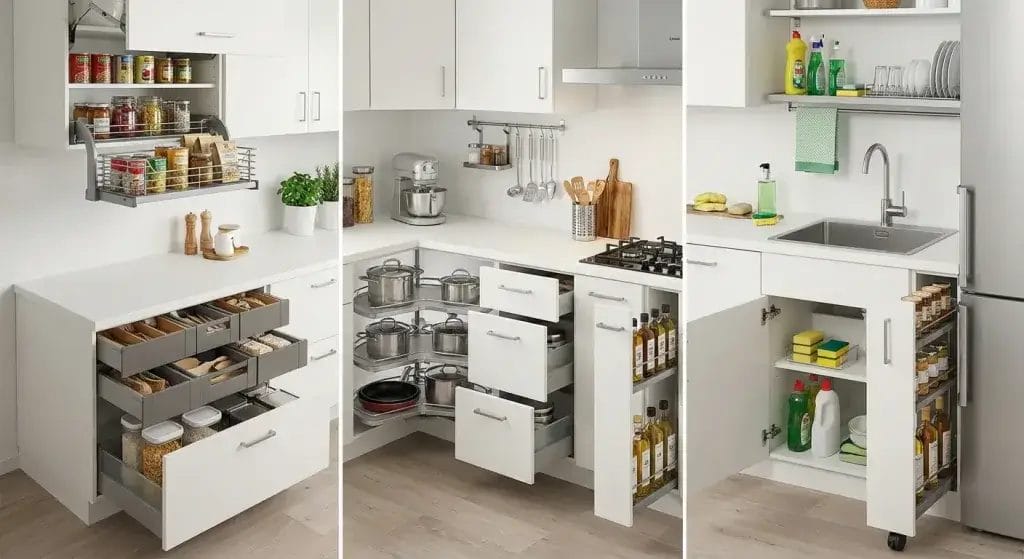
From both a usability and organization perspective, drawers are often more efficient than traditional cabinets. Base cabinets can include more drawers with internal dividers to help categorize items clearly. Even without built in dividers, adding modular storage boxes later can achieve the same effect.
Several smart storage accessories can further improve cabinet functionality.
Pull down baskets installed in upper cabinets allow easy access to items stored at higher levels. Instead of standing on a stool or stretching uncomfortably, users can simply pull the basket down smoothly.
Corner storage solutions are ideal for kitchens with corner layouts. Rotating corner racks make use of awkward spaces, while corner drawers provide clearer categorization and easier access.
Dedicated spice baskets can be designed in narrow gaps or near the stove. Keeping spices close to the cooking area improves efficiency and reduces countertop clutter. Mobile spice racks are also a flexible option and can be placed beside refrigerators or other narrow spaces.
Above sink shelves provide a convenient place for daily cleaning supplies. They also serve as a drying area for freshly washed dishes, keeping water contained and countertops dry. The space beneath the sink should also be utilized with simple shelving to store smaller items.
3. The Supporting Storage Player: Walls
Wall storage differs from cabinets because it is visible. For this reason, visual consistency and neatness are especially important.
Open shelves are the most common wall storage option. When wall cabinets are not installed, increasing the use of open shelving can fully utilize wall space and keep frequently used items within reach.
Hooks are a classic and practical addition to kitchen walls. Installing a row of hooks allows commonly used tools such as spatulas, ladles, scissors, and small pans to be hung neatly and accessed quickly.
Peg boards offer flexible storage with adjustable spacing. They are ideal for small items that otherwise lack a fixed place. Peg boards are best installed in areas with less cooking smoke, such as coffee corners or preparation zones, making cleaning easier.
Although the kitchen may be small, it involves countless details. True comfort comes from considering storage from multiple angles and creating a system that supports daily habits naturally. With thoughtful planning, even the smallest kitchen can become efficient, organized, and enjoyable to use.


About author

Related posts

Picture this. You are preparing a romantic dinner at home. The vegetables are in the refrigerator on one side of the kitchen. The cutting board... Continue reading

A kitchen is more than a place to cook. It is where everyday life happens. It is where coffee is made in the morning, meals... Continue reading

Have you ever opened a cabinet and couldn’t find what you needed—only to end up pulling everything out just to reach one item in the... Continue reading

Remodeling a kitchen can feel overwhelming.There are so many decisions, and honestly, it’s easy to get something wrong that you’ll regret later. But if you... Continue reading
If you’re planning a kitchen, you might be wondering:“Do I really need more drawers… or are shelves and pull-outs enough?” After years of working with... Continue reading





Add comment