No products in the cart.
Return To Shop.png?sharp=1)



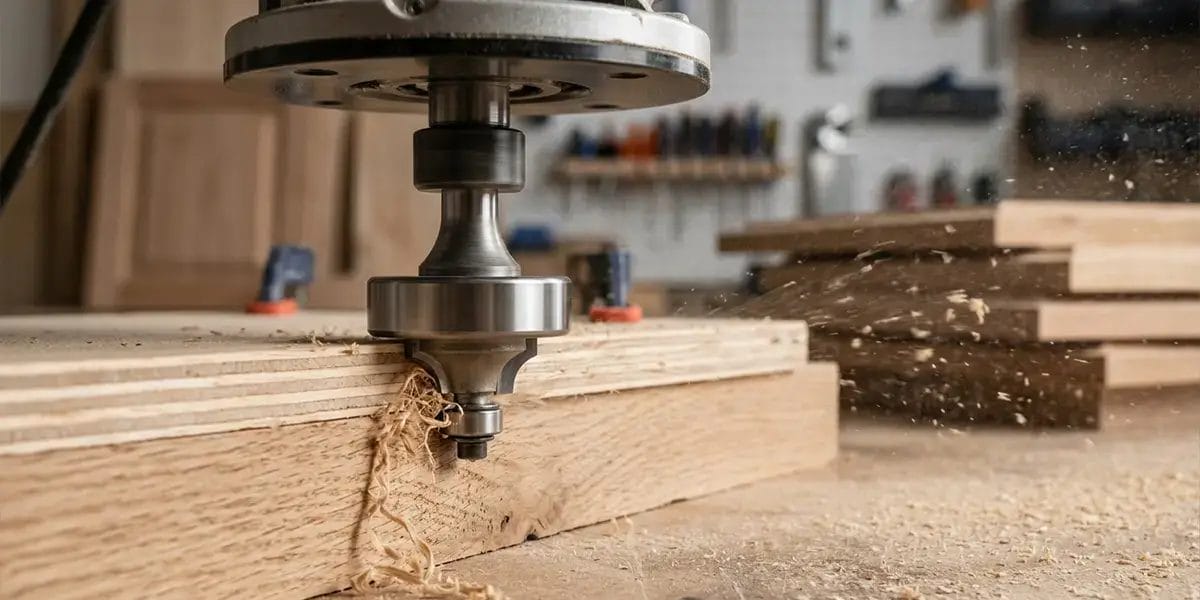
Ball Bearing Guide
A ball bearing guide is a small component you’ll find on certain router bits. Most homeowners don’t notice it, but it plays an important role in how clean and precise a cut turns out.
In simple terms, it’s a small wheel attached to the bit. As the router moves along the edge of a board or a template, that wheel follows the surface and keeps the cutting path steady. That’s what helps create smooth, consistent edges—especially on cabinet doors, trim pieces, or decorative profiles.
From a practical standpoint, this matters more for the person building the cabinets than for the person buying them. But it does explain why some cabinetry looks sharp and well-defined, while others feel a little rough around the edges. Good tooling—and using it correctly—makes a visible difference.
You might also hear that these guides can sit either above or below the cutting edge. That really comes down to how the piece is being shaped. For example, edge details and moldings are usually done one way, while deeper or more detailed cuts may require a different setup. Most of that happens in the workshop, not something you need to manage yourself.
If you’re shopping for cabinets, here’s the simple takeaway:
well-crafted edges and smooth finishes usually mean the manufacturer is using the right tools—and using them properly. Details like this are small, but they’re often what separate average cabinets from ones that feel truly well made.


About author






Add comment