No products in the cart.
Return To Shop or
or  ,
,


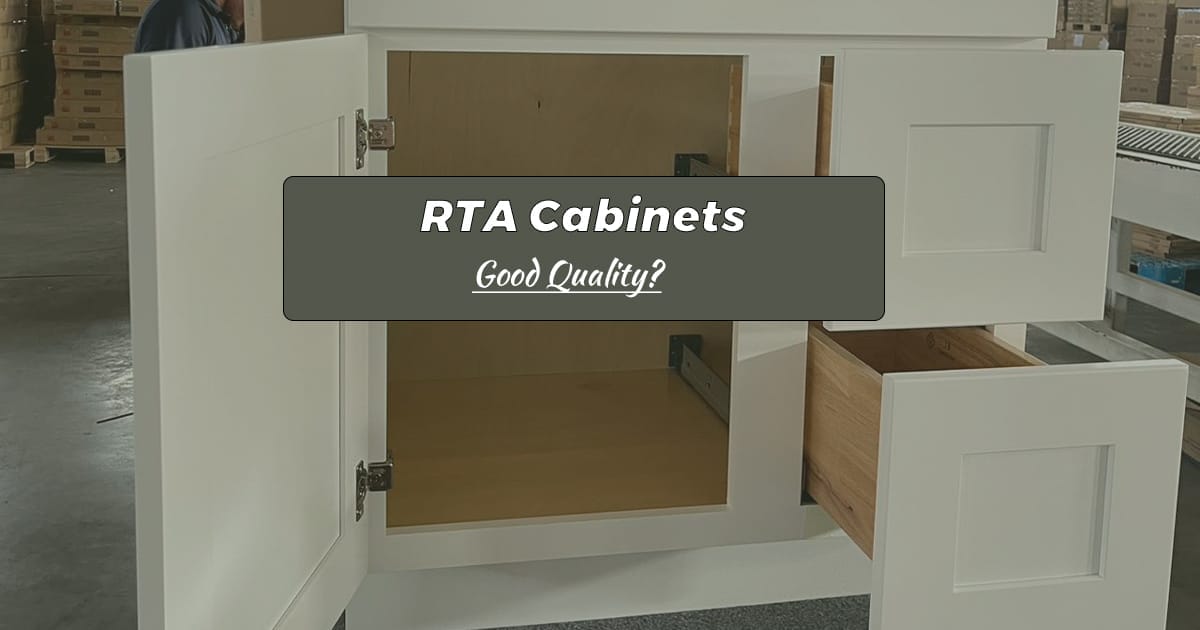
Are RTA Cabinets of Good Quality?
If you’re planning a kitchen refresh in the U.S.—whether you’re a busy mom managing household meals, a DIY-savvy guy eager to roll up his sleeves, or a design/renovation professional sourcing cabinetry for clients—then the question likely on your mind is: “Are RTA cabinets really up to snuff?” In other words: can a ready-to-assemble cabinet deliver the durability, aesthetics and performance of a higher-end fully assembled or custom unit? As a kitchen designer who’s worked with cabinetry across budgets, I’m here to walk you through what “good quality” means, how well RTA units can measure up, and how to turn that understanding into a stylish, functional kitchen.
Table of Contents
What Does “Good Quality” Mean in Kitchen Cabinets?
Before we judge RTA (Ready-to-Assemble) cabinets, let’s define what “quality” means in the cabinet world—because without that baseline, you can’t make a smart comparison.
From a designer’s vantage point, quality cabinets deliver two things: functionality (durability, smooth operation, resilience in a kitchen environment) and aesthetics (clean finishes, cohesive style, materials that age gracefully).
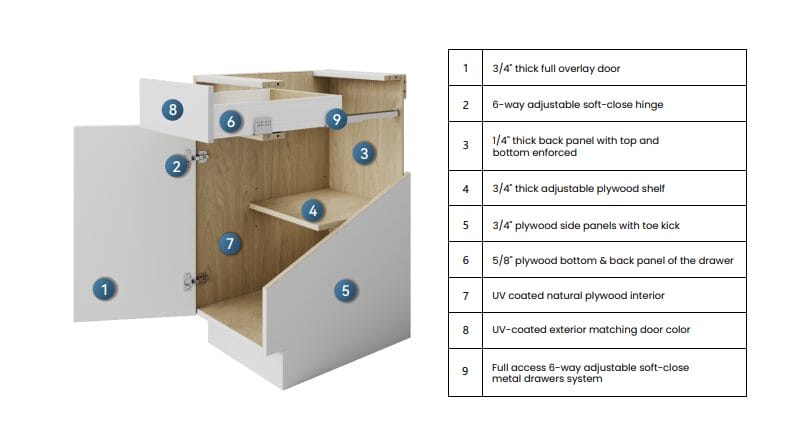
Key elements include:
- Cabinet box (carcass): thickness of sides, material (plywood vs particleboard vs MDF), quality of joints, back panel strength.
- Door/Drawer fronts: material, edge detail, finish, consistency of colour/grain.
- Hardware and mechanisms: soft-close hinges and glides, full-extension drawer slides, strong drawer boxes.
- Finish and installation: well sealed surfaces, proper alignment, minimal gaps, good match of style, colour and hardware.
- Suitability for kitchen environment: kitchens have heat, moisture, heavy use. So materials and construction must stand up.
When I say “good quality”, a cabinet should, when installed properly, look and feel robust, the hardware should glide smoothly, the finish should hold up, and the installation should align cleanly with the rest of the space.
How Good Is the Quality of RTA Cabinets Today?
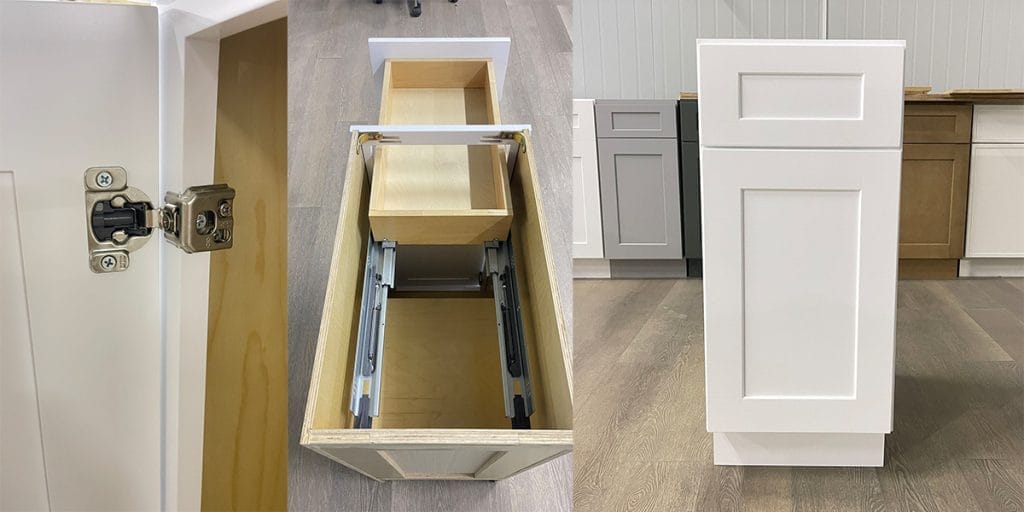
Now we come to the big question: how well do RTA cabinets measure up to that quality standard?
The Positive Side
The short answer: yes, RTA cabinets can reach very good quality—but it depends on the line and your selection. For instance, a helper article at The Spruce says:
“You can buy RTA cabinets that are every bit as strong and attractive as anything you find in a kitchen showroom.”The Spruce
And in a hands-on review:
“Seriously, these cabinets are heavy… the boxes are made of ½″ plywood… full overlay doors and frames. … I’m saving tens of thousands of dollars installing them myself!”MALLORY NIKOLAUS
On community forums, users report positive experiences:
“I had great experience … very happy with quality of cabinets from [RTA company]. Soft-close doors and drawers and plywood boxes.”Reddit
These tell us that when an RTA line uses high-grade materials (plywood boxes, premium hardware), and you install well, you can absolutely have a kitchen that looks and functions at a higher level. For reference, you can check some of the top kitchen cabinet brands to see which RTA lines
The Caution Side
But—and this is important—not all RTA cabinets are created equal. Inspection of forums reveals warnings:
“There are definitely good and bad RTA cabinets… If you go with RTA cabinets, stay away from particle board and anything badly built.”Houzz
Why the caution?
- Some low-cost RTA lines use particleboard or thin MDF for box construction, cheaper hardware, minimal finish quality. Learn more about why some RTA cabinets are so cheap.
- Installation can be trickier (since you’re assembling components onsite), so poor installation amplifies material shortcomings.
- Shipping, packaging and support are variable among vendors—some customers report damaged parts or poor instructions.
My Verdict as a Designer
Yes, RTA cabinets can absolutely be “of good quality.” But only if you select the right product, inspect the materials and ensure good installation. The label “RTA” itself is neither badge of low quality nor guarantee of excellence—it simply describes the format. What matters is the specs, the hardware, the vendor, and the installation execution.
Design, Style & Colour
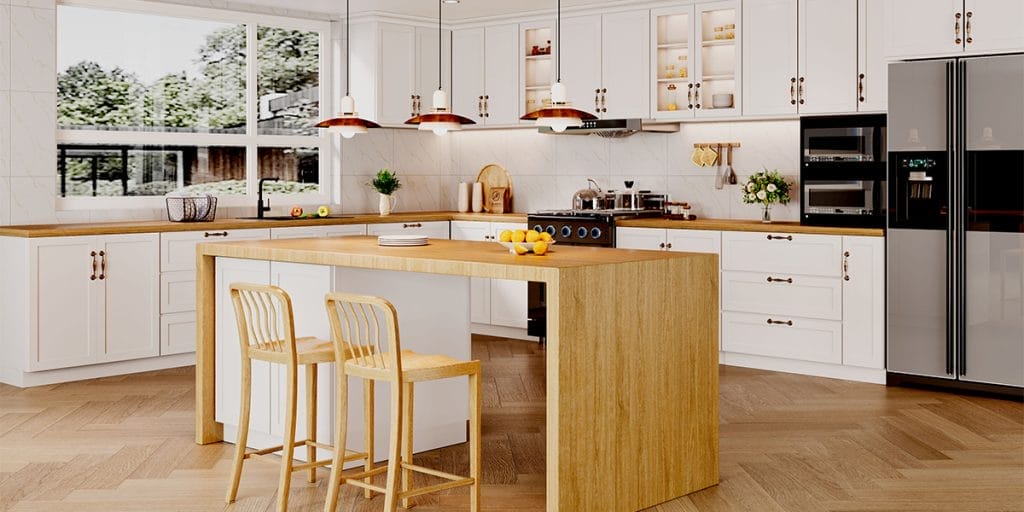
Let’s move beyond “Is it good enough?” to “How do you make it look great—and feel premium?” Because you’re not just buying storage—you’re designing a kitchen environment.
Style & Material Link
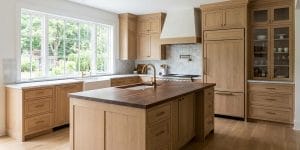
- If you select a top-tier RTA line with plywood boxes and solid-wood or veneered door fronts, you can go for wood textures (walnut, natural oak, warm maple) that bring richness and character—ideal for a warm, family-centric kitchen.
- If you’re aiming for a sleek modern look, you might choose a painted or lacquered finish, flat-panel designs, minimal hardware—here RTA works well especially when the make is good. You can explore modern vs. traditional kitchen cabinets to see which aesthetic fits your space best.
- Colour strategy:
- Bright whites or soft greys keep the space feeling clean and open—great for families with high traffic.
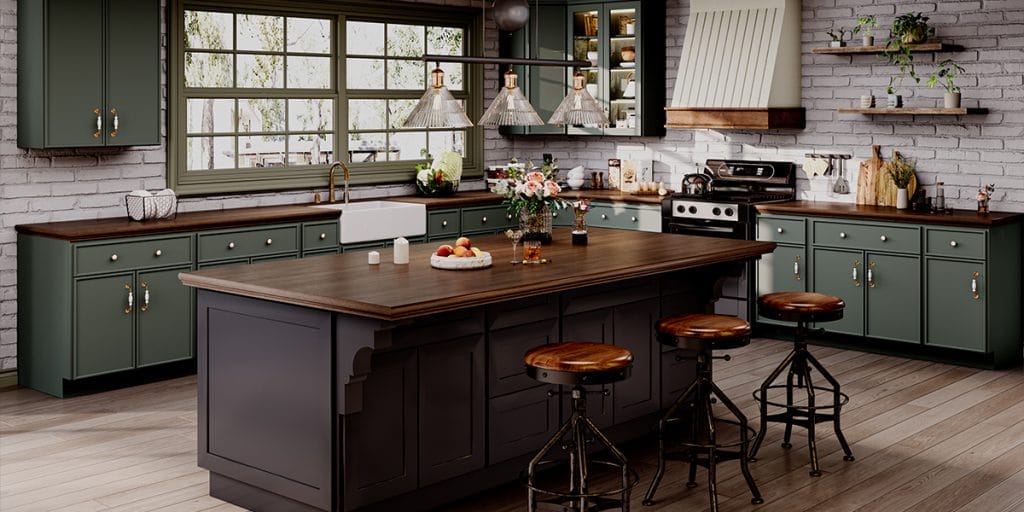
- Deeper tones (navy, charcoal, forest green) are trending and look high-end—but require quality construction so the finish holds up under wear. Check out our guide on the top 5 kitchen cabinet colors for more inspiration.
- Wood finishes in RTA are more impressive when the grain, texture and material feel genuine—this is where premium door fronts and construction matter.
Design Advice for Readers
- Use your savings: If you choose a high-quality RTA cabinet, you can redirect budget savings into standout features—premium countertop, designer lighting, custom backsplash or smart storage solutions.
- Divide and conquer: For example, treat the island as the “feature” zone—select a richer finish there; use a simpler finish on perimeter cabinets to keep cost down but visual impact high.
- Colour/Texture Contrast: Good quality construction allows you to play with contrasting materials—light upper cabinets, dark lower, or combine wood-tone lower with painted upper—to create depth and interest.
Renovation & Retrofit Advice
Now, how do you apply this understanding in a real remodel or retrofit scenario?
Retrofits and Refreshes
If your existing cabinet boxes are still solid (plumb, level, free of warping, good structure), you might simply refresh with new RTA door fronts, panels, hardware and finish. Here, RTA gives you an elegant update with drastically reduced cost versus fully custom rebuild.
Full Installations
For a full redesign:
- Choose a reputable RTA vendor and request detailed specs (box material, door material, drawer hardware, warranty).
- Ensure your site is prepared: wall/floor level, plumbing/electrical located, layout finalised. Following proper kitchen planning rules ensures your high-grade RTA cabinet will shine if installed well.
- Invest in proper installation—even for DIYers, make sure you understand the fit, use quality fasteners, plumb cabinets, adjust doors properly. A poorly installed premium RTA cabinet will still look mediocre.
Budgeting Tips
- Treat cabinet boxes + doors as the foundation of your budget.
- Choose high-quality specs where it counts (drawer slides, hinges, box material) within RTA.
- Let the remainder of your budget go into visible impact zones: countertop, backsplash, lighting, cabinet hardware—these often determine how “designer” the kitchen feels.
- Plan for maintenance: Even good quality cabinets need care—clean gently, check hinges/slides annually, avoid prolonged moisture exposure.
Key Takeaways & Next Steps for Readers
- RTA cabinets can be good quality—just be sure to assess material specs, hardware, vendor reputation and installation.
- If you’re a home-manager, DIY handyman or design professional, focus on materials (plywood vs particleboard), hardware (soft-close, full extension), and finish consistency.
- In your design thinking: quality construction enables better finishes, richer materials, bold colour or texture choices—and ultimately a kitchen your family will love and you’ll be proud to show.
- Practical checklist for next time you shop:
- Ask for box construction details (plywood? MDF? particleboard?).
- Check door/drawer front spec and hardware.
- Request sample door/finish to evaluate texture and finish quality.
- Prepare your site and installation accordingly—site prep matters.
- Plan your budget so you balance quality foundation + designer upgrades (lighting, hardware, countertop).
Whether you’re a mom orchestrating dinner prep, a weekend warrior tackling your own renovation, or an industry designer specifying cabinets for clients—this understanding of RTA cabinet quality gives you the tools to make confident choices. Good construction + smart design choices = a kitchen that isn’t just functional, but beautiful, durable and full of character.


Related posts

Receiving the keys to a new home is an exciting milestone yet it often brings an important and sometimes confusing question. What is the best... Continue reading

The kitchen is far more than a place for cooking meals. In many American homes it has become a central space for daily routines family... Continue reading
Kitchen cabinets play a vital role in both the function and visual identity of a kitchen. Among all cabinet components, cabinet doors are the most... Continue reading
The colors you choose for your home don’t just paint walls—they shape moods, create feelings, and influence how every day unfolds. In 2026, whole home... Continue reading
In modern home renovation projects, custom cabinetry has become a core element in both kitchen and bathroom planning. Choosing the right custom cabinet supplier is... Continue reading







Add comment