No products in the cart.
Return To Shop.png?sharp=1)


Base Skin
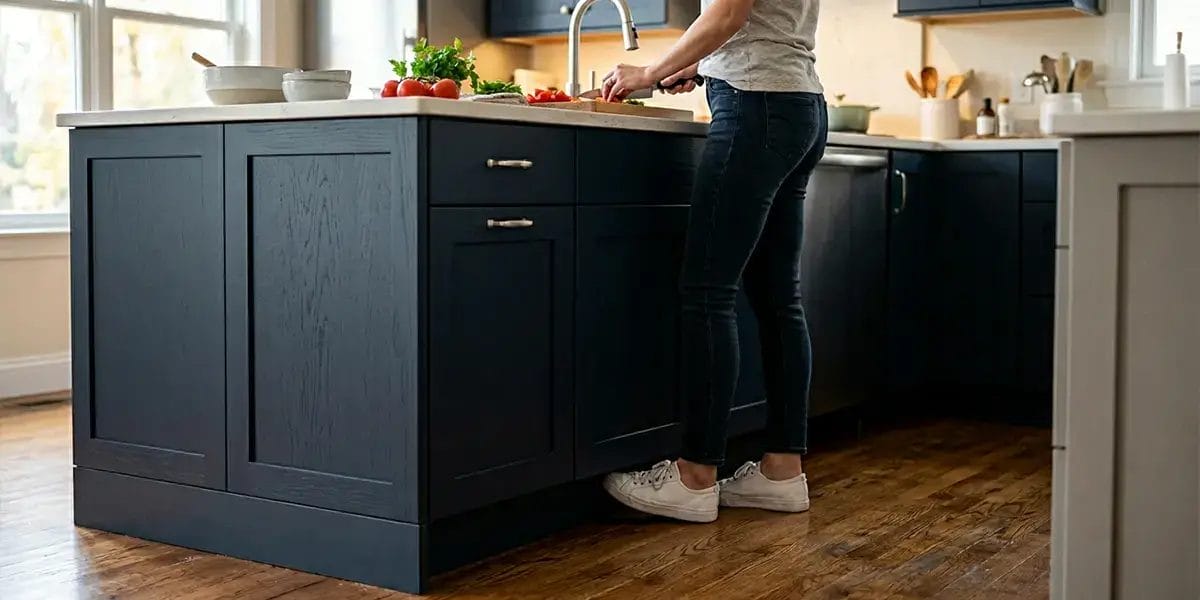
A base skin is the finished panel installed along the recessed bottom section of a base cabinet, near the floor. In many American kitchens, homeowners may also hear it called a toe skin or toe kick panel. While it’s a relatively small cabinet component, it plays an important role in both appearance and durability.
From a design perspective, the base skin helps create a clean, finished look across the bottom of the cabinetry. Instead of exposing gaps, unfinished cabinet edges, or leveling adjustments, the panel provides a smooth transition between the cabinet and the floor. Most cabinet manufacturers offer base skins in matching colors and finishes so the entire kitchen feels more seamless and custom-built.
Functionally, the base skin also helps protect the cabinet base from everyday wear. In busy family kitchens, the lower part of cabinets often gets bumped by shoes, mops, vacuum cleaners, or pet bowls. A properly installed base skin helps shield the cabinet structure from scuffs, dirt, and moisture over time.
In my experience designing kitchens for American families, this is one of those details people rarely think about during planning — but they absolutely notice when it’s missing or poorly finished. A mismatched or damaged base area can make even beautiful cabinets look unfinished.
When choosing cabinets, I usually recommend paying attention to three things:
- Finish consistency — the base skin should closely match the cabinet doors
- Material quality — plywood or durable MDF tends to hold up better over time
- Easy maintenance — smooth finishes are much easier to wipe clean
It may not be the centerpiece of your kitchen, but a well-finished base skin quietly helps the entire room feel cleaner, more polished, and more professionally built.


About author






Add comment