No products in the cart.
Return To Shop.png?sharp=1)


Bowing
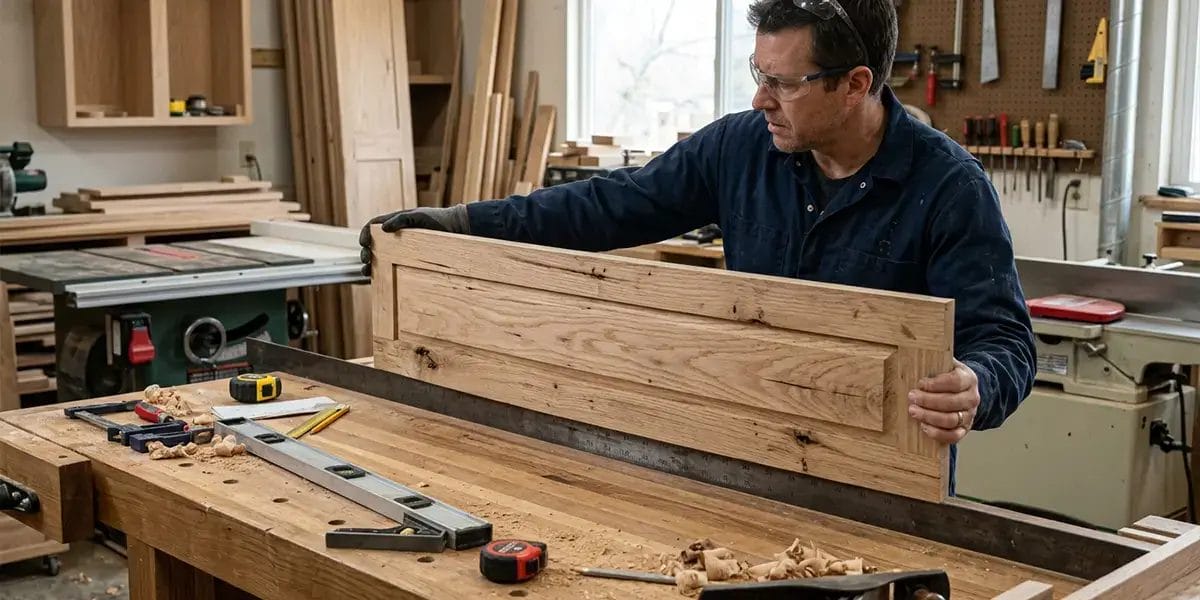
Bowing is when a wood board or cabinet part develops a gentle curve along its length instead of staying straight. In cabinet work, it is most often seen in long panels, shelves, doors, or trim pieces. A slight bow may not always seem serious at first, but it can affect how a cabinet looks, fits, and functions.
For homeowners, bowing matters because even a small curve can make doors not line up properly, create uneven gaps, or cause shelves to sit less securely. In a kitchen or bathroom, those small issues can become frustrating very quickly. A cabinet should feel solid, close cleanly, and look straight from day one.
Bowing usually happens when wood absorbs or loses moisture unevenly, or when a long piece does not have enough support. That is why material quality, storage conditions, and proper installation all matter. In the American market, where homes can face changes in humidity and temperature, this is especially important to keep in mind.
When shopping for cabinets, it helps to inspect long pieces carefully before installation. Look for straight lines, even gaps, and smooth surfaces. Good cabinetry should feel stable and balanced, not bent or stressed. If a board already shows visible bowing before it is installed, that is usually a sign to pause and evaluate the product more closely.
Bowing is a small word, but it can make a big difference in everyday use. In cabinet design, straight lines are not just about appearance — they are about quality, fit, and peace of mind.


About author






Add comment