No products in the cart.
Return To Shop.png?sharp=1)


Butcher Block
If you’re considering a warm, natural look for your kitchen, butcher block countertops are something I often recommend clients at least take a look at.
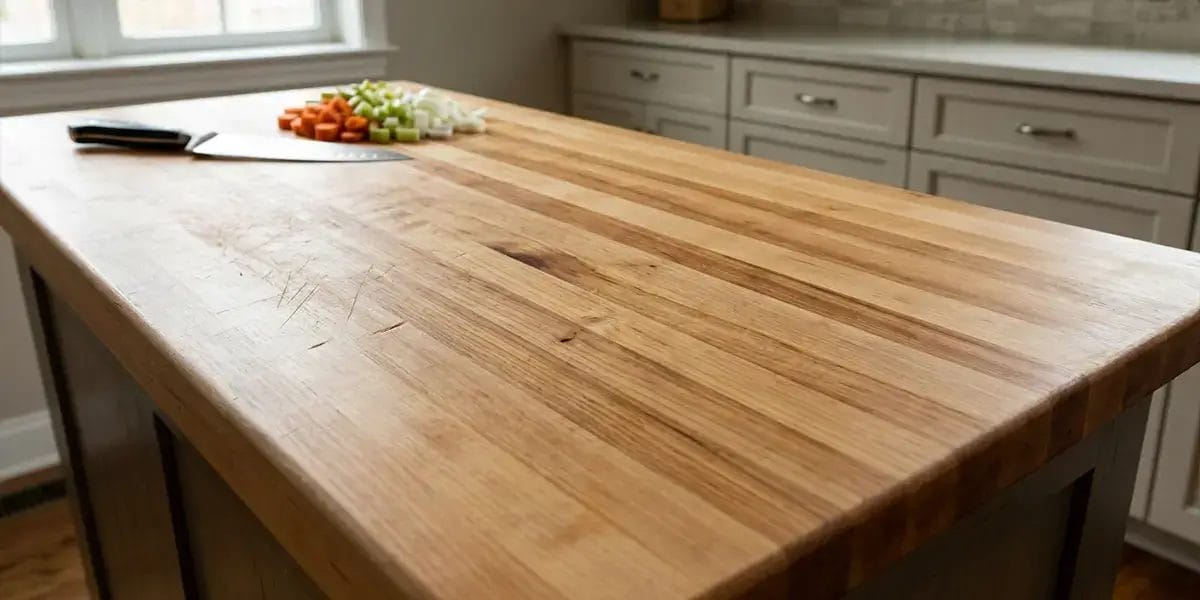
Simply put, a butcher block is a solid wood surface made by bonding pieces of hardwood together. It gets its name from traditional chopping blocks used in old butcher shops—thick, durable, and built to handle real use. Today, it’s a popular choice for kitchen countertops, islands, and even bathroom vanities if you want something softer than stone.
The Two Main Types You Should Know
Not all butcher blocks are the same, and this part really matters when you’re making a decision:
1. End Grain (Premium Option)
- Made by arranging wood pieces with the grain facing up
- Has a checkerboard look
- Extremely durable and “self-healing” for knife marks
- Higher cost, but built for heavy use
2. Edge Grain (Most Common Choice)
- Made from long strips of wood glued side by side
- Has a clean, striped appearance
- More affordable and widely available
- Great for everyday kitchen use
Why Homeowners Love Butcher Block
From a design standpoint, butcher block brings something stone just can’t:
- Warm, inviting feel (especially important in larger kitchens)
- Natural variation—no two tops look exactly alike
- Budget flexibility compared to quartz or marble
- Can be sanded and refinished over time
Common wood species in the U.S. market include maple, walnut, and sometimes teak—all chosen for their strength and food-safe qualities.
What You Need to Think About First
Now, here’s the honest part I always share before a client commits:
- Maintenance matters – needs regular oiling to prevent drying or cracking
- Not stain-proof – water, wine, or oil can leave marks if not cared for
- Softer than stone – it will show wear over time (some people love that, some don’t)
A Designer’s Practical Advice
If you love the look but are unsure about the upkeep, a smart approach is to use butcher block selectively—for example, on a kitchen island while keeping perimeter countertops in quartz.
It gives you that warmth where it matters most, without adding maintenance to your entire kitchen.
In the end, butcher block isn’t just about function—it’s about how a kitchen feels. If you want a space that feels lived-in, welcoming, and a little more personal, it’s a choice worth considering.


About author






Add comment