No products in the cart.
Return To Shop.png?sharp=1)



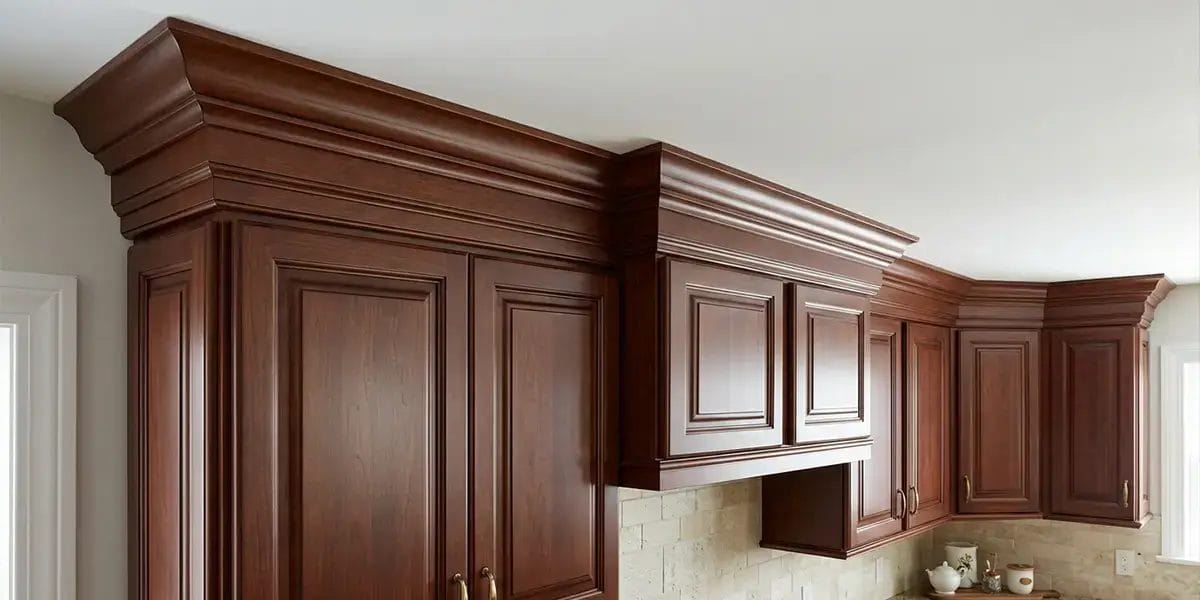
Crown Molding
Crown molding is a decorative trim installed along the top of wall cabinets, where the cabinet meets the ceiling. It creates a finished, built-in look and helps visually connect the cabinetry to the overall room design.
In the U.S. market, crown molding is especially common in traditional and transitional kitchens, but it’s also used in some modern designs to add subtle detail and elevate the overall appearance.
What does crown molding do?
1. Creates a finished look
Without crown molding, there is often a visible gap between the top of the cabinets and the ceiling. Crown molding closes that space and makes the cabinetry feel more complete and custom.
2. Enhances style and character
Crown molding adds depth and detail, which can make even simple cabinets feel more refined. The profile you choose can shift the style from classic to more contemporary.
3. Increases perceived value
Well-designed trim work is often associated with higher-end cabinetry and custom kitchens.
Common Styles
- Simple/straight profiles
Clean lines, often used in modern or transitional kitchens - Stepped or stacked molding
Multiple layers for a more substantial, custom look - Ornate profiles
Decorative curves and detailing, typical in traditional designs
What to consider
Ceiling height matters
In kitchens with standard 8-foot ceilings, adding crown molding may require a riser or stacked cabinets to avoid a cramped look. Taller ceilings offer more flexibility and proportion.
Match the cabinet style
Shaker cabinets usually pair well with simple or slightly stepped crown molding. Overly ornate trim can feel out of place.
Color consistency
Most crown molding is finished to match the cabinet color, creating a seamless appearance.
Designer’s Tip
If you want your kitchen to feel more “custom” without a full custom budget, crown molding is one of the easiest upgrades. Even a simple profile can make a noticeable difference.
It’s a finishing detail—but often the one that makes everything else look intentional.


About author






Add comment