No products in the cart.
Return To Shop or
or  ,
,


How to Choose the Right Bathroom Vanity (5 Smart Choices & 5 Mistakes)
When planning a bathroom remodel, many homeowners focus on tile, lighting, or paint colors. But after working with bathroom designs for many years, I’ve learned something important:
The vanity you choose will affect your daily life more than almost anything else in the bathroom.
You use it every morning.
You use it before bed.
It holds your essentials, supports the sink, and often becomes the visual centerpiece of the room.
Unfortunately, I’ve seen many homeowners fall in love with a vanity that looks beautiful in the showroom — only to regret the choice later.
Maybe it’s hard to clean.
Maybe the materials don’t hold up well in humidity.
Or maybe the design simply doesn’t work for everyday life.
If you’re shopping for a bathroom vanity, here are five smart choices — and five things I usually recommend avoiding. These tips can help you choose something that will stay practical, durable, and enjoyable for many years.
Table of Contents
Quick Buying Guide
| Choose | Avoid |
|---|---|
| Wall-mounted vanity | Bulky floor-standing vanity |
| Undermount sink | Vessel sink |
| Ceramic sink | Complex stone sink with seams |
| Solid wood or quality engineered wood cabinets | Low-quality PVC cabinets |
| Brass faucet | Zinc alloy faucet |
These simple choices can make a big difference in how your bathroom functions over time.
1. Choose Wall-Mounted Vanities
Avoid Bulky Floor-Standing Cabinets
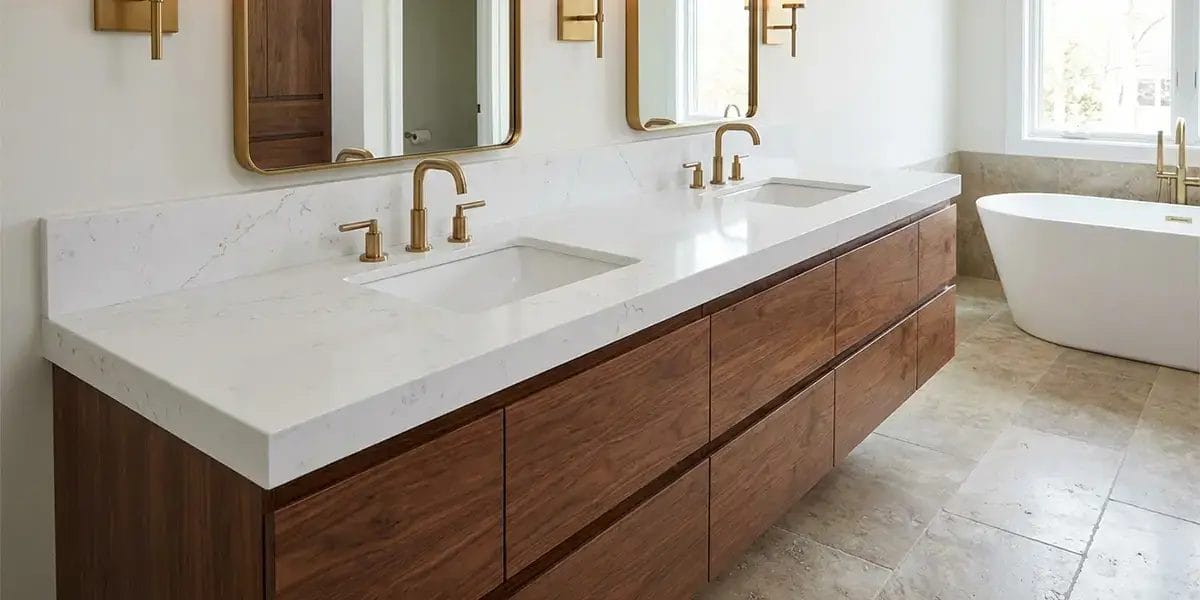
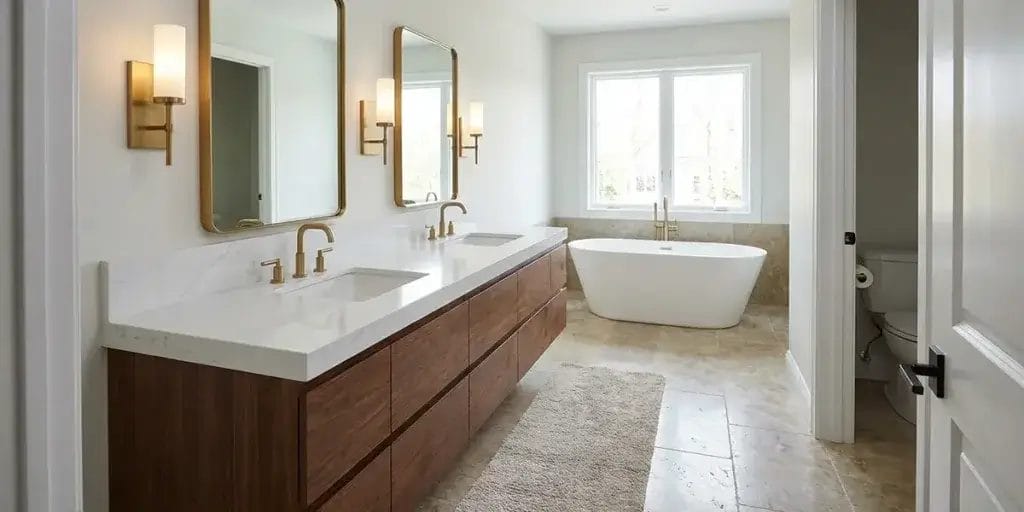
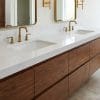
If your wall structure allows it, a wall-mounted vanity is often the better option.
Traditional floor-standing cabinets sit directly on the floor. Over time, moisture from cleaning, humidity, and splashing water can damage the cabinet base. I’ve seen many cabinets begin to swell or develop mold at the bottom.
Wall-mounted vanities help prevent this problem.
They also create a lighter, more open look, which is especially helpful in smaller bathrooms. Another benefit homeowners quickly appreciate is easier cleaning. Without cabinet legs blocking the floor, it’s much simpler to mop and keep the space hygienic.
Sometimes the best design choice is simply the one that makes everyday life easier.
2. Choose Undermount Sinks
Avoid Vessel Sinks for Everyday Use
Vessel sinks can look very stylish in photos. Many homeowners love the modern, artistic appearance.
But in real homes, they often create extra cleaning work.
Because the sink sits on top of the countertop, water and soap residue tend to collect around the base. Over time, this area can become stained or develop mildew.
An undermount sink offers a much more practical solution.
With this design, the sink is installed beneath the countertop. That means water, toothpaste, and debris can simply be wiped directly into the basin.
For families, busy households, or anyone who prefers a low-maintenance bathroom, undermount sinks are usually the better long-term choice.
3. Choose Ceramic Sinks
Avoid Complicated Stone Sink Designs
Ceramic sinks have remained popular in American homes for decades, and there’s a reason for that.
They are:
• Durable
• Easy to clean
• Resistant to stains
• Affordable
Even after years of daily use, a well-made ceramic sink usually still looks bright and clean.
Some modern stone sinks look impressive, but they often include seams or sharp angles where pieces are joined together. These areas can collect dirt over time and make cleaning more difficult.
When it comes to something you use every single day, simplicity often works best.
4. Choose Solid Wood or Quality Engineered Cabinets
Avoid Low-Quality PVC Cabinets
Cabinet material is one of the most important factors in vanity durability.
Some budget vanities use PVC cabinets. While these materials are marketed as waterproof, they often lack structural strength and may not hold up well over time.
A better investment is solid wood or high-quality engineered wood that meets environmental standards such as CARB P2.
These materials offer better:
• Strength and stability
• Long-term durability
• Indoor air quality
Bathrooms naturally experience humidity, so choosing the right cabinet material helps ensure the vanity stays strong and beautiful for years.
5. Choose Brass Faucets
Avoid Cheap Zinc Alloy Faucets
The faucet might seem like a small detail, but it’s one of the most frequently used parts of the entire vanity.
Brass faucets are widely recognized as one of the most reliable choices for residential bathrooms. They offer excellent corrosion resistance and tend to last much longer than cheaper alternatives.
Some inexpensive faucets are made from zinc alloy. While they may look similar at first, they often corrode more quickly and may develop discoloration or leaks over time.
Choosing a solid brass faucet helps ensure better durability and more consistent water quality.
Final Thoughts
A bathroom vanity isn’t just a piece of furniture. It’s something you interact with every single day.
The right choice should make your routine simpler, cleaner, and more comfortable.
If you remember only a few things when shopping for a vanity, keep these principles in mind:
• Prioritize easy cleaning
• Choose durable materials
• Avoid designs that create unnecessary maintenance
Making thoughtful decisions now can save you years of frustration later.
And when everything works the way it should, a well-designed bathroom becomes something you quietly appreciate every day.
Frequently Asked Questions
Are wall-mounted vanities strong enough?
Yes, when properly installed into wall studs or structural supports, wall-mounted vanities are very secure and commonly used in modern bathrooms.
Are vessel sinks harder to maintain?
In many cases, yes. The exposed seam around the sink base can collect water and soap residue, which requires more frequent cleaning.
What is the most durable bathroom vanity material?
Solid wood and high-quality engineered wood are widely considered the most reliable cabinet materials for residential bathrooms.


Related posts

If you’re planning a laundry setup on your balcony, one question matters more than anything else: What kind of cabinet will actually last—and not turn... Continue reading
If you’re planning a kitchen upgrade, installing a new sink might seem like a simple task. I’ve had many homeowners tell me,“It looks easy enough—I’ll... Continue reading

If your kitchen feels tight, cluttered, or just hard to work in—you’re not alone. I’ve worked with plenty of homeowners across the U.S., and honestly,... Continue reading
A wall mounted wine rack is more than just a storage solution. In many homes, it becomes a subtle design feature that adds personality and... Continue reading
Glass cabinets have become an increasingly popular choice in modern home design. Their transparent surfaces bring a sense of lightness and elegance that traditional solid... Continue reading






Add comment