No products in the cart.
Return To Shop or
or  ,
,


10 Key Details to Check During Kitchen Cabinet Installation
I originally planned to create an illustrated guide, but later realized that there are already plenty of similar visuals online. In most cases, cabinets are installed by professionals anyway. What homeowners really need to focus on is whether the key details are handled properly. So what should you pay attention to during cabinet installation and which details truly matter?
Table of Contents
1. Preparation and Surface Protection
Before installation begins, the area must be thoroughly cleaned. The floor should be covered with cardboard or protective sheets to prevent damage to the cabinets, tiles, or grout during handling and installation.
2. Install Wall Cabinets Before Base Cabinets
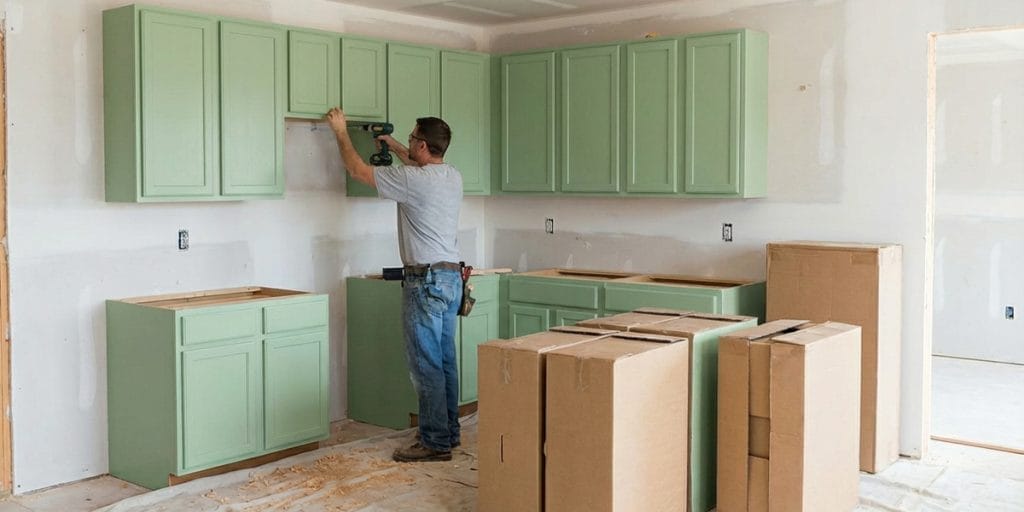
Wall cabinets are usually installed first. Since they are mounted higher, this makes the process easier for installers. If base cabinets are installed first, dust and debris from drilling for the wall cabinets may fall onto the countertop, creating extra cleaning work.
3. Drilling and Safety Around Plumbing and Electrical Lines
Installing wall cabinet rails requires drilling with an electric hammer. If you are unsure about the routing of water or electrical lines, it is best to consult the site supervisor in advance. This helps avoid drilling into wires or pipes, which could lead to serious safety issues or water damage.
Many homeowners also ask whether base cabinets require drilling. In most cases, they do not. Only site built cabinets made by carpenters may require fastening into the wall. Factory made custom cabinets typically do not need wall drilling at the base.
4. Hanging Brackets and Adjustment Space
Wall cabinets are usually mounted using hanging brackets. These brackets allow for left and right adjustment thanks to elongated holes. This design helps compensate for minor measurement differences and also makes it easier to avoid embedded pipes or cables in the wall.
5. Ensure Cabinets Are Securely Engaged with the Brackets
Once the brackets are installed, the wall cabinets can be hung directly. At this stage, you should check whether the cabinets are firmly secured. Make sure they sit flush against the wall and that the hooks fully engage with the brackets rather than hanging loosely.
6. Cleaning Dust During Base Cabinet Installation
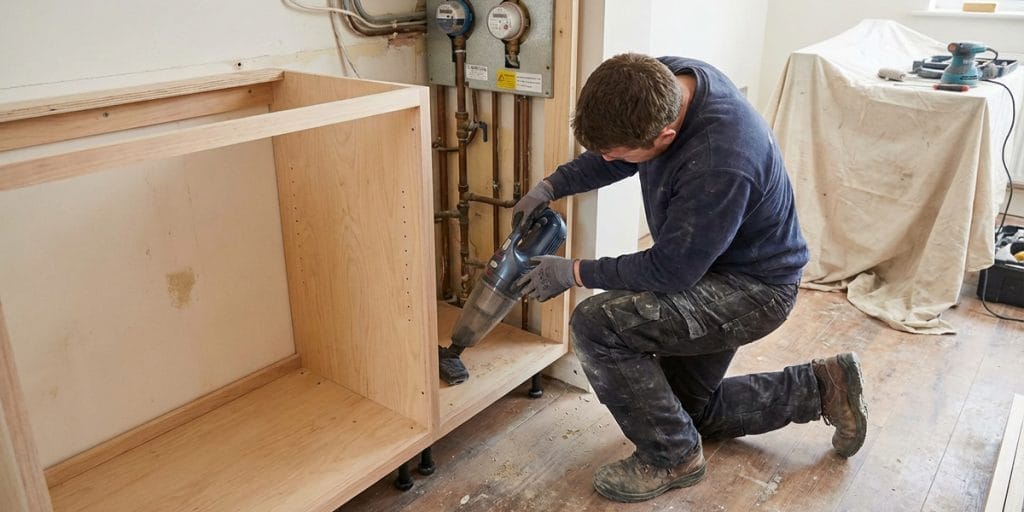
When installing base cabinets, it is a good idea to clean the tops of items such as electrical meters or water manifolds, as well as the floor. Drilling creates a lot of dust, and cleaning it promptly reflects the professionalism of a good installer. After all, home renovation is a major investment for homeowners.
7. Detachable Hinges for Easier Installation
When ordering custom cabinets, try to choose detachable hinges. During installation, the installer can remove the cabinet doors first and reinstall them later, which makes the process more efficient and reduces the risk of damage.
8. Openings for Ducts, Wiring, and Gas or Heating Components
There are often many components running through the bottom of base cabinets, such as exhaust ducts and backdraft dampers for integrated cooktops, electrical boxes, gas pipes, wiring, or even water manifolds for floor heating systems. Openings are required for these elements. After cutting, the edges must be finished with a U shaped sealing strip, and the edges should be secured with adhesive. When two cabinets sit side by side, using sealing strips on both panels may cause interference. In such cases, aluminum foil tape can be used instead to neatly seal the edges.
9. Leveling the Cabinets and Adjusting the Legs
Once the base cabinets and end panels are in place, the cabinet legs should be adjusted for height. Some installers use the tile lines on the wall as a reference, which usually works well since tiles are typically laid level. However, the best approach is to fine tune the legs and then confirm everything with a spirit level to ensure the cabinets are perfectly even.
10. Final Door Alignment and Hinge Adjustment
After all cabinet doors are installed, the hinges should be finely adjusted so that the doors align properly, both horizontally and vertically, with consistent gaps. Once this step is complete, the cabinet installation is essentially finished. You can then schedule the installation of appliances such as the range hood, cooktop, dishwasher, sterilizer, and water purifier to gradually complete the kitchen.
That said, if you want the installation to go smoothly and ensure long term peace of mind, much of the outcome is decided before work even begins. After learning about the installation process, many people ask how to choose the right cabinet brand. I usually suggest evaluating options based on product quality, shipping reliability, and after sales service.
These are the ten installation details that homeowners should pay the most attention to. Hopefully, this guide will help you better supervise and inspect your kitchen cabinet installation with confidence.


Related posts

An ideal laundry room is not just neat but also highly efficient and comfortable to use. By adding functional features improving lighting and optimizing layout... Continue reading

Transforming a laundry room does not have to be complicated or expensive. With a few thoughtful DIY ideas and practical adjustments, you can turn even... Continue reading

Bathrooms are one of the most frequently used spaces in any home, serving both functional and personal comfort needs. Beyond basic hygiene, a well designed... Continue reading

Have you ever stood in your kitchen feeling completely overwhelmed by clutter. You install wall to wall cabinets, yet storage still feels insufficient. Items stored... Continue reading

Upgrading your bathroom doesn’t always require a full remodel. In many cases, replacing the vanity alone can completely transform the space. If you’ve chosen a... Continue reading










Add comment