No products in the cart.
Return To Shop or
or  ,
,


Standard Kitchen Cabinet Size Chart (Base / Wall / Tall / Vanity)
As someone who’s spent over 20 years designing kitchens — and as a mom who’s spent her fair share of evenings cleaning up after cooking disasters — I can tell you: one of the most overlooked but crucial steps when remodeling a kitchen is getting the cabinet sizes right. If the cabinets are too shallow, too deep, too tall or too narrow, your dream kitchen quickly turns into a frustrating daily struggle. So today I want to walk you through the standard cabinet sizes used across the U.S., explain what they really mean, and help you choose wisely for your own home — without guesswork or regrets.
Table of Contents
Why Standard Sizes Matter
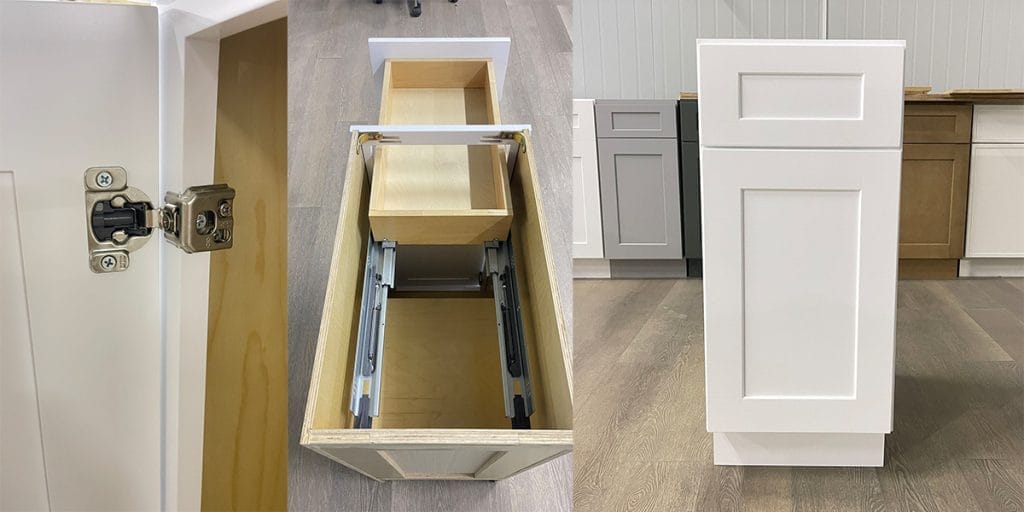
Most stock and semi-custom cabinets in the U.S. follow common dimensions. Using standard sizes helps ensure your cabinets fit perfectly with countertops, appliances (sinks, dishwashers, ovens), and typical kitchen layouts. As a kitchen designer and homemaker, I recommend using these standard measurements as a baseline — you can always customize, but it’s important to understand how changes affect ergonomics, workflow, and usability.
This table and guide provide a solid reference for planning your kitchen or bathroom remodel. Whether you choose Pre-Assembled cabinets for convenience or RTA cabinets for cost savings, always double-check measurements against your space, appliances, and countertop selections to ensure a perfect fit.
Standard Cabinet Dimensions at a Glance
Here’s a quick reference for U.S. standard cabinet sizes, including base, wall, tall, and vanity cabinets. Use this guide when planning your kitchen or bathroom remodel.
Base Cabinets (Floor Cabinets)

Ethereal White Micro Shaker Base Cabinet with 2 Doors
Original price was: $642.06.$481.55Current price is: $481.55.
Base cabinets are the foundation of your kitchen. They sit on the floor and usually support the countertop.
| Feature | Standard Size | Notes |
|---|---|---|
| Box Height | 34.5″ | Standard height without countertop |
| Finished / Total Height | ~36″ | With 1–1.5″ countertop thickness |
| Depth | 24″ standard; shallow 18″ or 21″ | Island bases sometimes 24–30″ deep |
| Width Options | 9, 12, 15, 18, 21, 24, 27, 30, 33, 36, 42, 48 (occasionally 54″) | Standard toe-kick ~3.5″; most common widths 24–36″ |
Tip: Make sure to measure walking/work aisles — at least 36″ for a single run and 42–48″ between two runs or an island.
Wall / Upper Cabinets
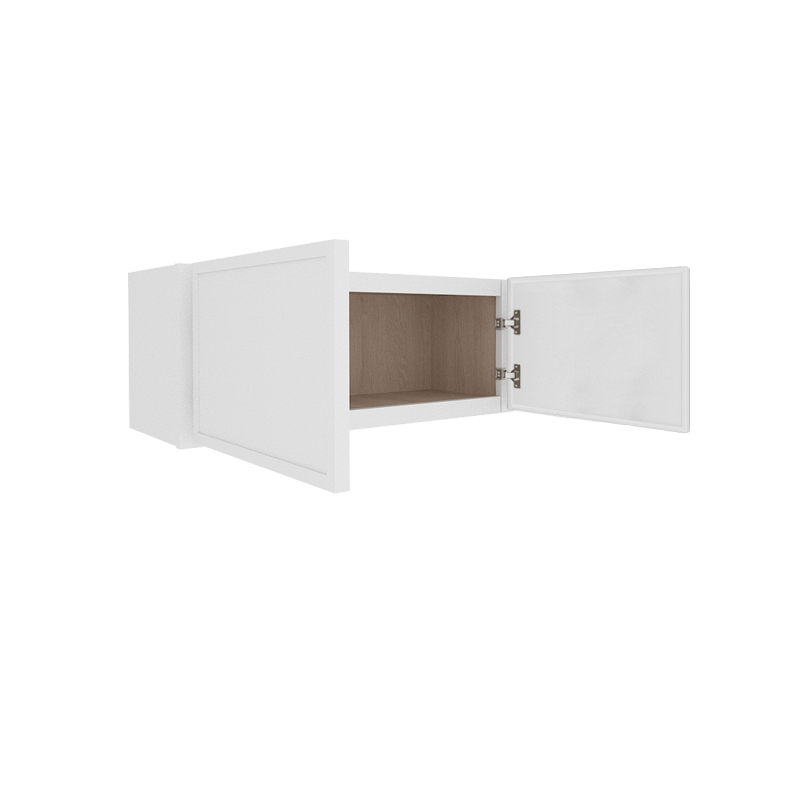
Ethereal White Micro Shaker Wall Cabinet with 2 Doors
Original price was: $269.21.$201.91Current price is: $201.91.
Wall cabinets are mounted above the countertop. They provide easy access storage for dishes, glasses, and pantry items.
| Feature | Standard Size | Notes |
|---|---|---|
| Height | 30″, 36″, 42″ | 36″ is very common in modern kitchens |
| Depth | 12″ standard; also 15″, up to 24″ for deep storage/over-fridge | Keep 15–20″ clearance from countertop (18″ typical) |
| Width Options | 9, 12, 15, 18, 24, 30, 36 | Choose width to match appliances and layout |
Tall / Pantry / Utility Cabinets

Ethereal White Micro Shaker Tall Pantry Cabinet with 2 Doors
Original price was: $999.21.$749.40Current price is: $749.40.
Tall cabinets maximize vertical storage and are perfect for pantries, brooms, or utility areas.
| Feature | Standard Size | Notes |
|---|---|---|
| Height | 84″, 90″, 96″ | Choose to match ceiling height |
| Depth | 12″, 18″, 24″ (24″ most common) | Often divided into upper/middle/lower sections |
| Width Options | 12, 15, 18, 24, 30, 33, 36 | Full-height pantry cabinets usually 24″ wide |
Bathroom Vanity Cabinets
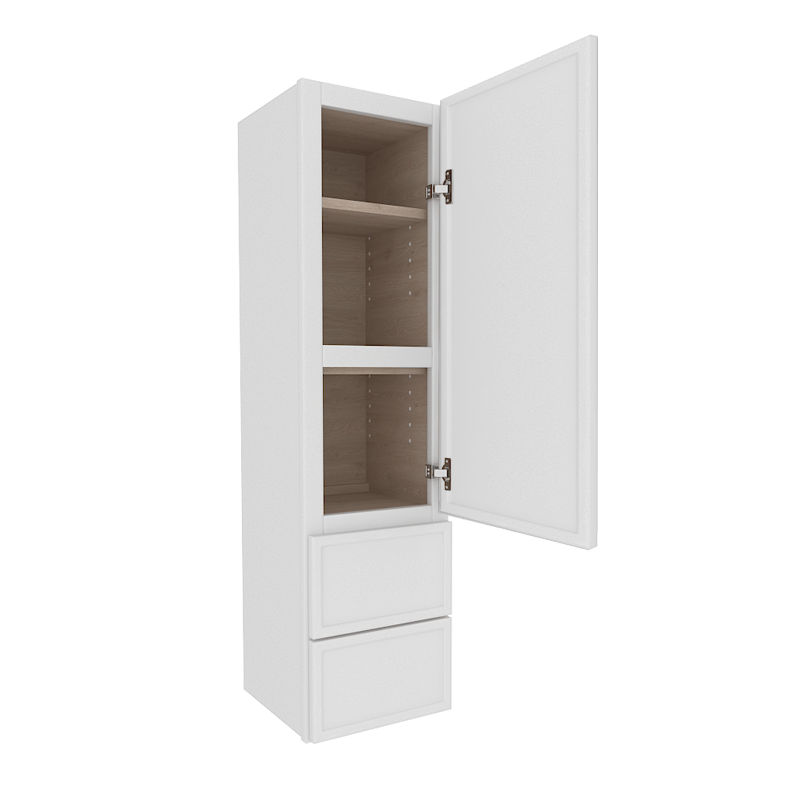
Ethereal White Micro Shaker Vanity Countertop Linen Cabinet
Original price was: $454.26.$340.70Current price is: $340.70.
Vanity cabinets support the sink and provide bathroom storage. Height can vary depending on sink type.
| Feature | Standard Size | Notes |
|---|---|---|
| Height | Traditional: 30″; Modern/Comfort: 32″, 34″, 34.5″ | Comfort height ~36″ for ADA or modern kitchens |
| Depth | 18–21″ (some 24″) | Depends on sink type (undermount, vessel, or integral) |
| Width Options | 18, 24, 30, 36, 48, 60, 72 | Double sinks often 60–72″ wide |
Other / Specialty Cabinets
This category includes appliance cabinets, sink bases, or custom units.
| Feature | Notes |
|---|---|
| Size | Varies widely |
Quick Notes
- Countertop thickness: Typical stone or quartz is 1–1.5″; laminate is thinner.
- Width increments: Many manufacturers use 3″ increments (9–48″), though some offer fractional sizes.
- Clearances: Minimum 36″ for single run aisles; 42–48″ for two-person kitchens.
- Manufacturer variance: Always confirm exact box and finished dimensions with the supplier — IKEA, Home Depot, RTA, and custom shops may differ.
Using This Guide for Your Kitchen or Bath
- Measure your space carefully: wall-to-wall width, floor-to-ceiling height, distance to appliances. Use the standard width increments (3-inch steps) to plan cabinets so they fit without awkward gaps.
- Check appliance and sink specs: standard base cabinet depth (24″) works well with most standard appliances and countertops. If you choose deeper cabinets, you may struggle to reach items at the back unless you use pull-out trays.
- Watch ceiling height: tall/pantry cabinets (84″, 90″, 96″) are designed around common ceiling heights (8 ft, 9 ft, 10 ft). If your ceiling is lower, adjust accordingly.
- Plan for toe-kick space: base cabinets are mounted with a recessed toe-kick (about 4–4.5″ high), so you can stand close to the counter without kicking your toes.
- Combine cabinet types for balance: for example, base + wall + tall cabinets create storage variety; vanity cabinets sized appropriately for bathrooms help save space.
Expert Tips from 20+ Years of Kitchen Design
- Don’t just “fill the wall” — think workflow.
A wall full of deep 24″ cabinets may give storage space, but everyday items become hard to reach. Use a mix: shallow upper cabinets for daily dishes, deeper base or tall ones for pots, pans, or seldom-used items. - For small kitchens, go shallow or pull-out.
If space is tight, shallow base cabinets (21–22″) or even drawer-based cabinetry can be a lifesaver — less wasted space, easier reach. - Consider tall cabinets for pantries, not just storage.
Having a 90–96″ tall pantry with pull-out shelves or built-in pantry organizers is a godsend for busy moms — everything from canned food to small appliances gets a home. - For bathrooms, match vanity cabinet size to sink and room size.
Too deep or too wide vanity cabinets in a small bathroom can block doors or make the space feel cramped. Use the smaller-depth vanity option to keep flow smooth. - When in doubt, use standards — but know when to customize.
Stock cabinet sizes work well in most U.S. homes and match common appliance & countertop sizes. But if you have unusual space (e.g., extra-tall ceilings, narrow pass-throughs), custom sizing may be worth it — just know the trade-offs.
Common Mistakes (And How to Avoid Them)
| Mistake | Why It Happens | How to Avoid It |
|---|---|---|
| Choosing too deep base cabinets | Assuming “deeper = more storage” | Stick to 24″ depth unless you plan pull-outs |
| Ignoring clearance for island/cabinets doors | Forgetting door swing or appliance space | Always leave at least 40–48″ aisle width |
| Overlooking toe-kick / ergonomic height | Not considering how you stand and work | Confirm you keep standard 34.5″ base box + 4″ toe-kick |
| Installing overly tall cabinets with low ceilings | Trying to maximize storage without measuring | Measure ceiling — choose 84″ or 90″ instead of 96″ if needed |
Final Thoughts: Start with Standard Sizes
Standard cabinet dimensions are more than just numbers — they’re the foundation of a kitchen that works efficiently, fits appliances and countertops, and feels comfortable to use daily. As a designer and a mom, I’ve seen how even small deviations can make a kitchen feel clunky or awkward.
So before you start picking colors or deciding on finishes, start with measuring your space, appliance specs, and daily habits. Use the standard size chart as your baseline. Then tweak intelligently — for storage needs, comfort, or styling.
Your kitchen is where life happens: cooking, cleaning, family gatherings, even those late-night snack raids. Get the foundation right, and everything else — from storage to style — will fall into place beautifully.


Related posts

Receiving the keys to a new home is an exciting milestone yet it often brings an important and sometimes confusing question. What is the best... Continue reading

The kitchen is far more than a place for cooking meals. In many American homes it has become a central space for daily routines family... Continue reading
Kitchen cabinets play a vital role in both the function and visual identity of a kitchen. Among all cabinet components, cabinet doors are the most... Continue reading

The colors you choose for your home don’t just paint walls—they shape moods, create feelings, and influence how every day unfolds. In 2026, whole home... Continue reading
In modern home renovation projects, custom cabinetry has become a core element in both kitchen and bathroom planning. Choosing the right custom cabinet supplier is... Continue reading







Add comment