No products in the cart.
Return To Shop or
or  ,
,



How to Create an Organized and Efficient Laundry Room
After working on countless homes over the years, I’ve noticed something interesting about laundry rooms. No matter how big or small the space is, most of them end up looking and feeling the same: crowded, cluttered, and oddly stressful. And it’s rarely because homeowners don’t care. More often, it’s because the laundry room is treated as an afterthought rather than a space that supports daily life.
The truth is, a well designed laundry room doesn’t need to be large or luxurious. It just needs to be planned with intention. When storage, workflow, and real habits are taken into account, this often ignored room can quietly become one of the most efficient spaces in the home.
Table of Contents
Start With the Walls, Not the Machines
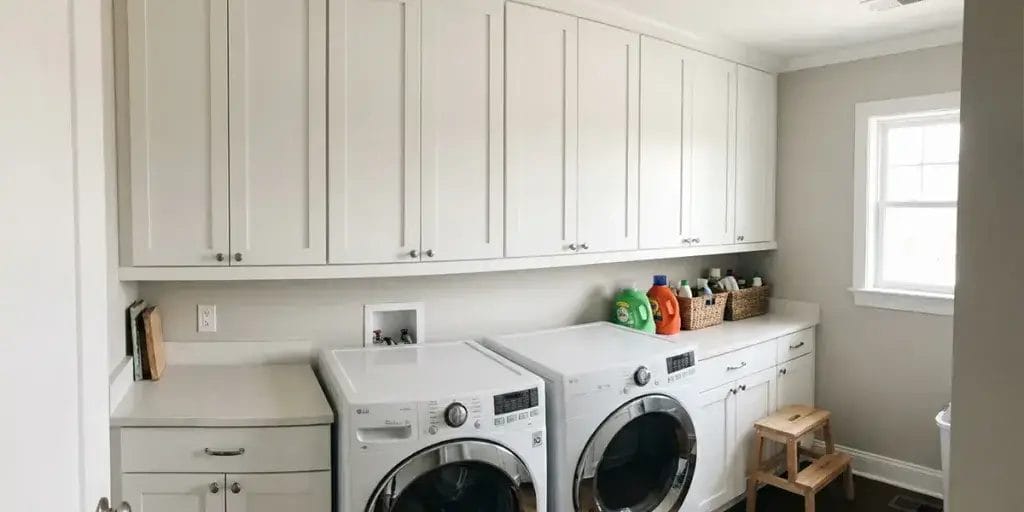
In most laundry rooms I’ve worked on, the real problem isn’t the washer or dryer. It’s everything that ends up piled around them. Detergent bottles, stain removers, baskets, random cleaning supplies — they all need a place to go. When they don’t have one, chaos follows.
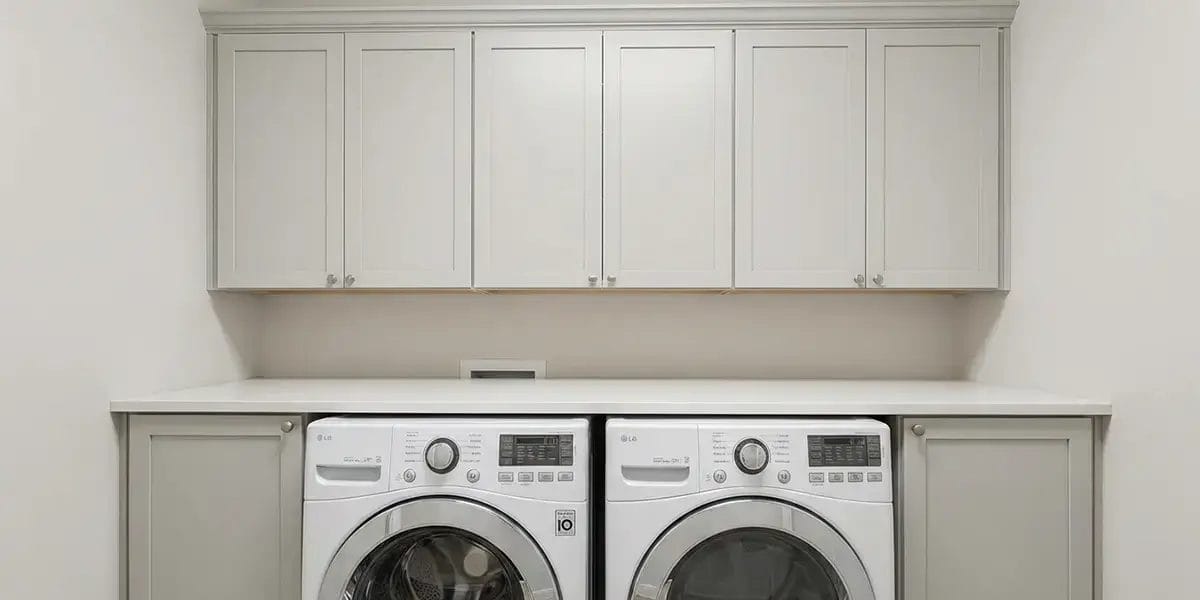
That’s why I almost always start with vertical storage. A simple row of cabinets above the washer and dryer can change the entire feeling of the room. These cabinets don’t need to be deep or bulky. In fact, I usually recommend keeping them relatively shallow, around ten inches. That’s enough space for everyday supplies without making them hard to reach.
Once the doors are closed, the room immediately feels calmer. It’s a small move, but the psychological effect is real. Visual clutter disappears, and suddenly the space feels manageable again.
In fact, a popular YouTube creator recently used our RTA cabinets to transform her laundry room. The result is both neat and visually appealing, showing how simple, well-planned vertical storage can completely change the space. You can check out her full makeover here.
If there’s nothing blocking the upper wall — no windows, vents, or awkward plumbing — I strongly prefer taking cabinets all the way to the ceiling. This maximizes storage and eliminates that dusty, forgotten strip on top of standard cabinets that no one enjoys cleaning. Wall mounted cabinets work just as well, as long as they’re properly secured. A small step stool is a fair trade for the extra storage, especially in homes where supplies tend to accumulate over time.
Let the Countertop Do the Heavy Lifting
Once storage moves upward, the countertop finally gets to do its job. This surface should be more than a decorative strip between appliances. In real life, it becomes a folding station, a sorting area, and sometimes even a temporary holding zone for clothes that need special care.
I always encourage clients to choose a countertop material that can handle moisture and heat without constant worry. Laundry rooms are working spaces. They need to tolerate damp clothes, warm fabrics, and the occasional spill without showing wear too quickly.
A well placed counter also improves workflow. Clothes come out of the dryer, get folded immediately, and then move on to their next destination. When that sequence feels smooth, laundry becomes less of a chore and more of a routine.
Open Shelves: Beautiful, But Be Honest With Yourself

Open shelving can look fantastic in a laundry room, especially when styled well. It keeps frequently used items within easy reach and gives the space a lighter, more open feel. I’ve seen open shelves work beautifully in many homes.
I’ve also seen them turn into dust collectors within a few months.
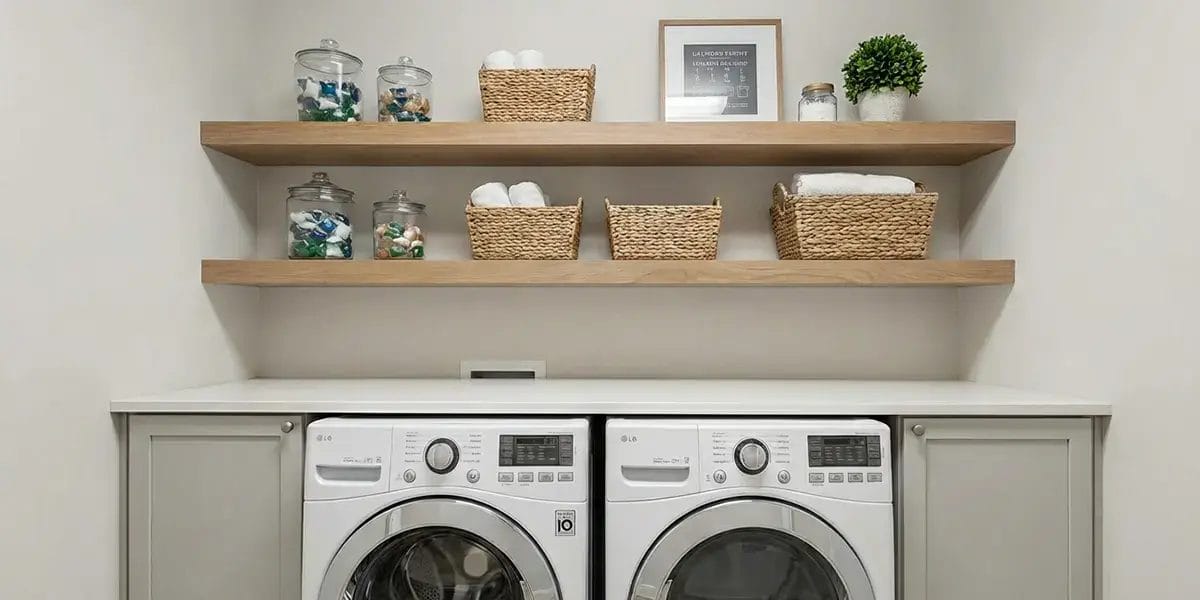
The key is honesty. If you enjoy keeping things neat and don’t mind regular wiping, open shelving can be a great choice. Decorative containers, glass jars, or even a small plant can add warmth and personality. But if maintenance tends to slip in busy weeks, closed cabinets are often the more forgiving option. Good design should support real habits, not fight against them.
Don’t Waste the Space Under the Machines
One of the most overlooked opportunities in a laundry room is the space beneath the washer and dryer. Slightly raising the machines allows room for built in drawers, which are incredibly useful. These drawers are perfect for laundry bags, extra hangers, or cleaning cloths, and they reduce the need to bend down constantly — something clients appreciate more as time goes on.
In tighter spaces, rolling baskets are another smart solution. They make sorting laundry easier and keep everything mobile. Instead of piling clothes in corners, each category has a clear place, and the room stays visually cleaner.
Use the Narrow Spaces Everyone Forgets
Those slim gaps beside appliances or on adjacent walls often get ignored, but they can be surprisingly functional. A narrow shelving unit, a few sturdy wall hooks, or a mounted rack can store irons, drying racks, and cleaning tools without taking up valuable floor space.
If room allows, a fold down hanging rod is one of my favorite additions. It’s simple, discreet, and incredibly useful for air drying delicate garments. Clients often tell me this small feature ends up being one of the most appreciated parts of the room.
Think in Zones, Not Just Furniture
When upper storage, counters, lower drawers, and side spaces are planned together, the laundry room stops feeling like a collection of parts. It becomes a system. There’s a place for dirty clothes, a place for supplies, and a place for garment care. Each step flows naturally into the next.
Lighting and ventilation play a bigger role than many people expect, especially since laundry rooms are often tucked into basements or utility areas. Bright, even lighting makes the space more pleasant and practical, while proper ventilation protects materials and keeps the room comfortable.
A Little Personality Goes a Long Way
Function always comes first, but that doesn’t mean the space has to feel cold. A bold paint color, patterned tile, or a simple piece of artwork can completely change the mood. When a room feels inviting, people take better care of it — and that includes laundry rooms.
Design for How You Actually Live
One thing experience teaches you quickly is that no two households use their laundry room the same way. Some families wash daily. Others let it pile up for the weekend. Some need child safe storage. Others prioritize accessibility for aging family members.
There’s no need to do everything at once. Start with the one thing that causes the most frustration. Add a cabinet. Install a shelf. Improve lighting. As that problem disappears, the next solution becomes obvious.
During planning, remember that washers and dryers are heavy machines. Proper clearance and structural support matter more than aesthetics. Moisture resistant materials like laminate cabinetry, quartz countertops, and mold resistant paint hold up far better over time. In homes with children or pets, cleaning products should always be stored in locked cabinets or placed well out of reach.
Modern technology can also be worth planning for. Extra outlets, thoughtful wiring, and compatibility with smart appliances make the space easier to use now and more adaptable in the future. Energy efficiency should not be overlooked either. Good dryer ventilation, efficient appliances, and smart lighting choices reduce long term costs and everyday friction.
Final Thoughts From the Field
After years of designing laundry rooms, I’ve learned one simple rule: the best spaces aren’t perfect, they’re practical. When everything has a clear place and the room works with your daily rhythm, laundry stops feeling like a burden.
You don’t need luxury finishes or complicated layouts. You just need a space that supports how you live. When that happens, even the most routine household tasks can bring a small but genuine sense of order and calm.


Related posts

Transforming a laundry room does not have to be complicated or expensive. With a few thoughtful DIY ideas and practical adjustments, you can turn even... Continue reading

Bathrooms are one of the most frequently used spaces in any home, serving both functional and personal comfort needs. Beyond basic hygiene, a well designed... Continue reading

Have you ever stood in your kitchen feeling completely overwhelmed by clutter. You install wall to wall cabinets, yet storage still feels insufficient. Items stored... Continue reading
Upgrading your bathroom doesn’t always require a full remodel. In many cases, replacing the vanity alone can completely transform the space. If you’ve chosen a... Continue reading

There is a wide variety of bathroom vanity cabinet materials available on the market today. In addition to well-known options such as solid wood, multi-layer... Continue reading









Add comment