No products in the cart.
Return To Shop or
or  ,
,
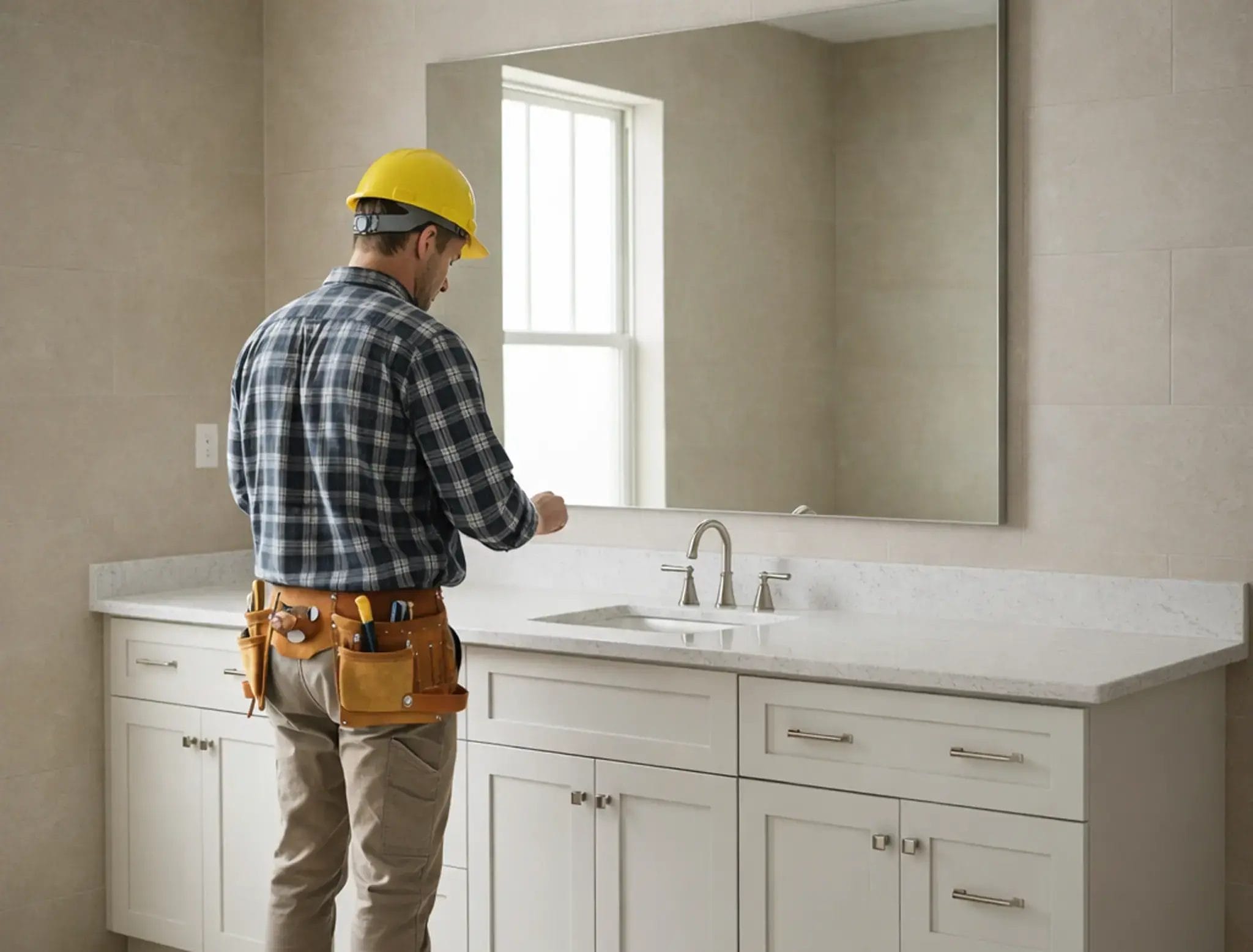



Shaker vs. Slab Kitchen Cabinet Doors
If you’ve ever stood in a showroom surrounded by cabinet doors, wondering, “Shaker or Slab… which one should I choose?”—you’re not alone. Over three decades of designing kitchens across the U.S., I’ve learned one critical truth: the right cabinet door isn’t about trends, nor price tags—it’s about your lifestyle.
Whether you’re a busy mom, a homemaker dreaming of a cozy kitchen, or someone planning a major renovation, your needs are unique. Some of you crave warmth and timeless charm, others want sleek simplicity, and most want a kitchen that feels like home—every single day.
In this guide, I’ll walk you through the practical, aesthetic, and functional differences between Shaker and Slab doors, sharing real-world insights, professional observations, and design strategies that I’ve developed over 30 years. Think of this as sitting at your kitchen table with me, coffee in hand, talking through the decisions that will make your space both beautiful and livable.
Table of Contents
1. Understanding the Styles: First Impressions Matter
Shaker Cabinet Doors
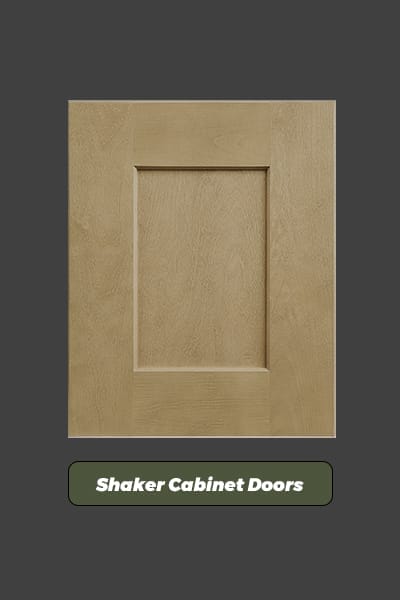
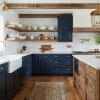
Shaker doors are the epitome of American timelessness. Constructed with five pieces—four frame pieces plus a central flat panel, Shaker doors combine simplicity, symmetry, and versatility.
Why they work:
- Clean, balanced lines
- Fit traditional, farmhouse, transitional, and even modern kitchens
- Create warmth and a sense of “home”
Ideal for you if:
- You want a kitchen that won’t feel outdated in five or ten years
- You value subtle texture and layers
- You want a space that’s cozy and inviting
Designer insight:
I often see homeowners choose Shaker because it feels safe and familiar. But the real art is matching Shaker proportions to cabinet height and kitchen scale. Oversized frames in a small kitchen can feel heavy; delicate frames in a large kitchen can look underwhelming. Scale matters. For more insight into its lasting appeal, explore why Shaker cabinets have stood the test of time.
Slab Cabinet Doors
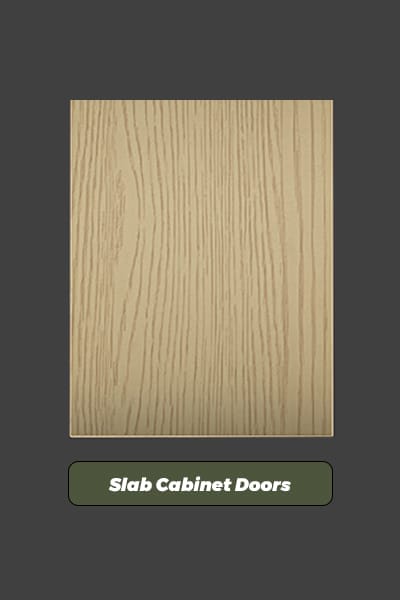
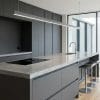
Slab, or flat-panel doors, are a single continuous panel with no frames or recesses.
Why they work:
- Minimalist, modern, and clean
- Ideal for contemporary, Scandinavian, and Japanese-inspired kitchens
- Lines are crisp and visually uncluttered
Ideal for you if:
- You love a modern, streamlined aesthetic
- You want surfaces that are simple to wipe clean
- You want a light, fresh, airy feel in the kitchen
Designer insight:
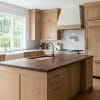
Slab doors are deceptively simple. I’ve seen Slab kitchens look cold if color, material, or hardware isn’t chosen carefully. Warm wood veneers, matte finishes, or a mix of textures can make a Slab kitchen feel inviting, not stark.
2. Cost & Construction: More Than Just Looks
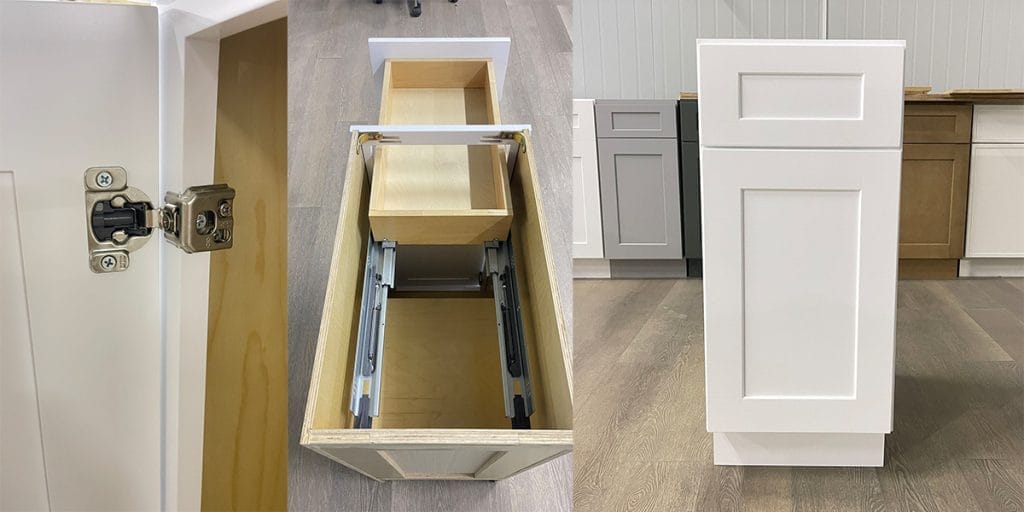
Understanding why prices differ requires looking at construction methods and materials.
Shaker Doors
Shaker doors involve cutting, joining, and finishing multiple pieces—a process requiring precision craftsmanship.
Typical U.S. pricing (per door):
- Mid-range: $80–$150
- High-end solid wood: $150–$300+
Designer insight:
The joinery of Shaker doors gives a subtle texture that adds depth to a kitchen. But real wood can expand and contract with humidity. In Florida or coastal areas, I often recommend engineered wood with high-quality finishes to maintain stability. If you’re working within a budget, here are some helpful tips for choosing more affordable cabinets to make your Shaker look achievable without overspending.
Slab Doors
Slab doors are simpler: a single piece of MDF, wood veneer, or solid wood, planed and finished.
Typical U.S. pricing (per door):
- Mid-range: $60–$120
- High-end veneer: $120–$250+
Why some Slab doors are expensive:
- Premium North American walnut or European veneers
- Matte or anti-fingerprint finishes
- Custom staining or finishing
Designer insight:
Slab’s simplicity is a strength—but to achieve a high-end feel, material selection is critical. A cheap flat-panel can feel flat and uninspired; a well-chosen wood veneer elevates the entire kitchen.
3. Cleaning & Durability: What Really Matters
Cleaning Ease
| Feature | Shaker | Slab |
|---|---|---|
| Cleaning difficulty | ★★★☆☆ | ★★★★★ |
| Dust accumulation (frame lines) | Slightly more | Minimal |
| Fingerprint visibility | Medium | High (gloss finishes) |
| Family-friendly | Yes | Yes (matte recommended) |
Practical insight:
If your kitchen sees heavy cooking or kids, Slab wins for easy wipe-downs. Shaker doors aren’t hard to maintain—modern finishes make cleaning simple—but they do require attention to frame edges. A weekly wipe is usually enough.
Durability
| Feature | Shaker | Slab |
|---|---|---|
| Warping resistance | ★★★★☆ | ★★★★★ |
| Real wood behavior | Expands/contracts with humidity | Stable, minimal change |
| Lifespan | 10–20 years | 10–20 years |
Designer insight:
Slab’s one-piece design minimizes the risk of joint separation or warping. Shaker, in real wood, needs careful finishing. In high-humidity climates, I often recommend high-quality veneer or painted Shaker to combine aesthetic and durability.
4. Real U.S. Kitchen Examples
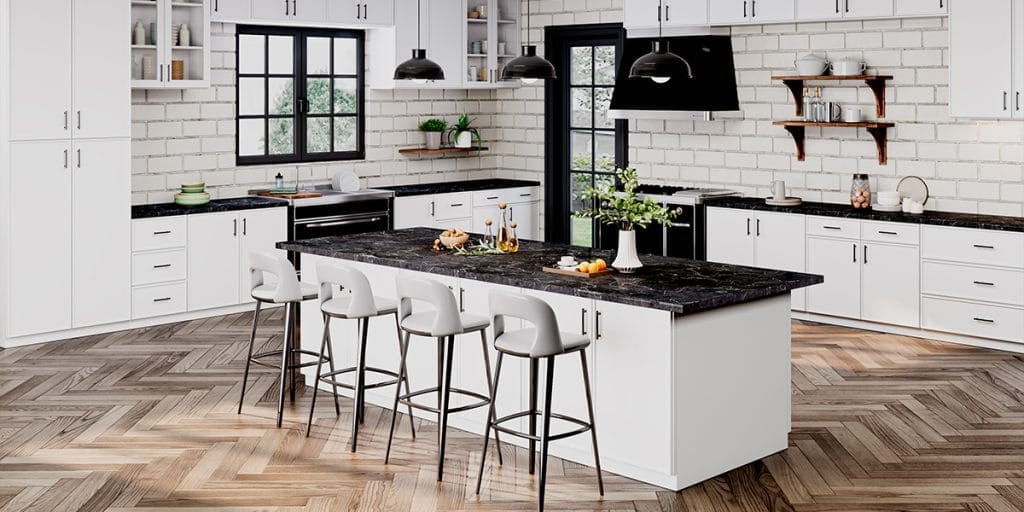
NYC Modern Apartment (Slab): Deep gray Slab doors + black hardware → compact city kitchen feels sleek, clean, and open.
Texas Family Open Kitchen (Shaker): White Shaker + Quartz countertops → timeless, warm, family-friendly, blends with the home’s style.
California Contemporary Mix (Upper Slab + Lower Shaker): Creates a balanced design—upper cabinets feel minimal, lower cabinets add texture—trendy but not cold.
Florida Vacation Home (Walnut Slab): Walnut Slab doors + large windows → natural, relaxed, resort-like feel perfect for a vacation home.
Designer insight:
I love mixing styles. It allows homeowners to have visual interest without overwhelming the space. Upper Slab cabinets simplify cleaning and visual flow, while lower Shaker adds warmth and approachable texture. If you want to dive deeper into the art of choosing the right cabinets, combining function and style is always the key.
5. Choosing What Fits Your Lifestyle
Shaker is right for you if:
- You want timeless, cozy design
- You enjoy subtle texture and line details
- You prefer farmhouse, transitional, or classic styles
Shaker doors age gracefully—they’re a long-term investment in comfort and style.
Slab is right for you if:
- You love clean, modern visuals
- You want surfaces that are easy to maintain
- Your home is Mid-century, Modern, or Scandinavian
Slab makes a kitchen feel modern and fresh—instantly rejuvenating your space.
Mixing Shaker + Slab:
- Adds visual interest without being overwhelming
- Great for different upper/lower cabinet colors or styles
- Provides a professional, balanced design
My experience shows this works exceptionally well for family kitchens—functional and beautiful.
6. Final Thoughts
Choosing cabinet doors isn’t about trends—it’s about how you live in your kitchen every day.
- Shaker: warmth, timeless charm, reliability
- Slab: modern, sleek, easy maintenance
The best choice? The one that feels right for your life, your family, and your home.
FAQ
Q1: Are Shaker doors hard to clean?
A: Slightly more than Slab, but modern finishes make maintenance easy—weekly wipes suffice.
Q2: Which is more durable?
A: Slab is slightly more stable. Shaker can shift slightly with humidity, but with quality finishing, longevity is similar.
Q3: Can Slab doors work in traditional homes?
A: Yes—warm wood veneers or matte finishes allow Slab to blend beautifully.
Q4: Which is more expensive?
A: Shaker is generally pricier, but high-end Slab can exceed Shaker in cost.
Q5: Can I mix Shaker and Slab without it looking odd?
A: Absolutely. Coordination of colors, hardware, and line weight creates professional, stylish kitchens.


Related posts

Receiving the keys to a new home is an exciting milestone yet it often brings an important and sometimes confusing question. What is the best... Continue reading

The kitchen is far more than a place for cooking meals. In many American homes it has become a central space for daily routines family... Continue reading
Kitchen cabinets play a vital role in both the function and visual identity of a kitchen. Among all cabinet components, cabinet doors are the most... Continue reading
The colors you choose for your home don’t just paint walls—they shape moods, create feelings, and influence how every day unfolds. In 2026, whole home... Continue reading
In modern home renovation projects, custom cabinetry has become a core element in both kitchen and bathroom planning. Choosing the right custom cabinet supplier is... Continue reading







Add comment