No products in the cart.
Return To Shop or
or  ,
,


Toe Kick or Brick Base: Choosing the Right Kitchen Cabinet Foundation
Although the area beneath kitchen cabinets is often overlooked, the choice between a cabinet toe kick and a brick built base has a clear impact on both visual appeal and everyday usability. Cabinets are essential in any kitchen, and the component that connects them to the floor deserves careful consideration. Some homeowners feel that toe kicks are not practical enough and are difficult to maintain, while others prefer the perceived solidity of a brick built base. When faced with this decision, it is worth understanding the characteristics of each option.
Table of Contents
Definition and role of the cabinet toe kick
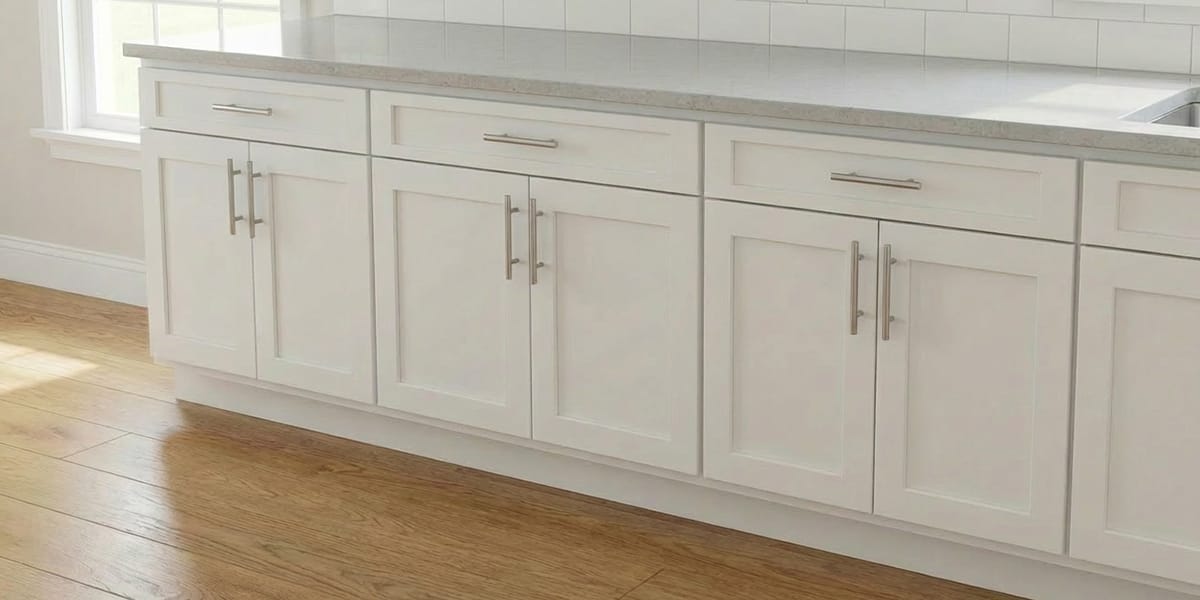
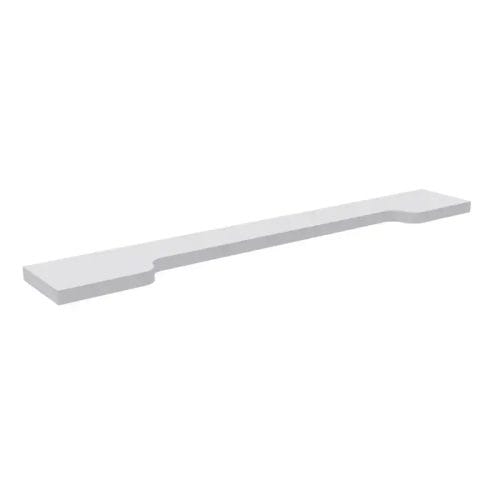
A cabinet toe kick, also known as the base panel beneath the cabinet, is designed to fill the gap between the cabinet body and the floor. From a visual perspective, it helps complete the overall look of the cabinetry. From a practical standpoint, it prevents dust, debris, and daily household waste from entering the space under the cabinets, making routine cleaning easier and more efficient.
Main functions of a cabinet toe kick
The toe kick plays both a decorative and a protective role. Visually, it allows the color and lines of the cabinets to appear more unified and balanced. In daily use, it protects the lower edge of the cabinet from accidental impacts and enhances the stability between the cabinet and the floor.
Since kitchens are naturally more humid environments, a well designed toe kick can also block water from reaching the cabinet base, offering basic moisture protection and helping extend the lifespan of the cabinets. That said, some people feel that toe kicks are less durable and relatively costly, which leads them to consider a brick built base as a more solid and economical alternative. Understanding these differences helps clarify the choice.
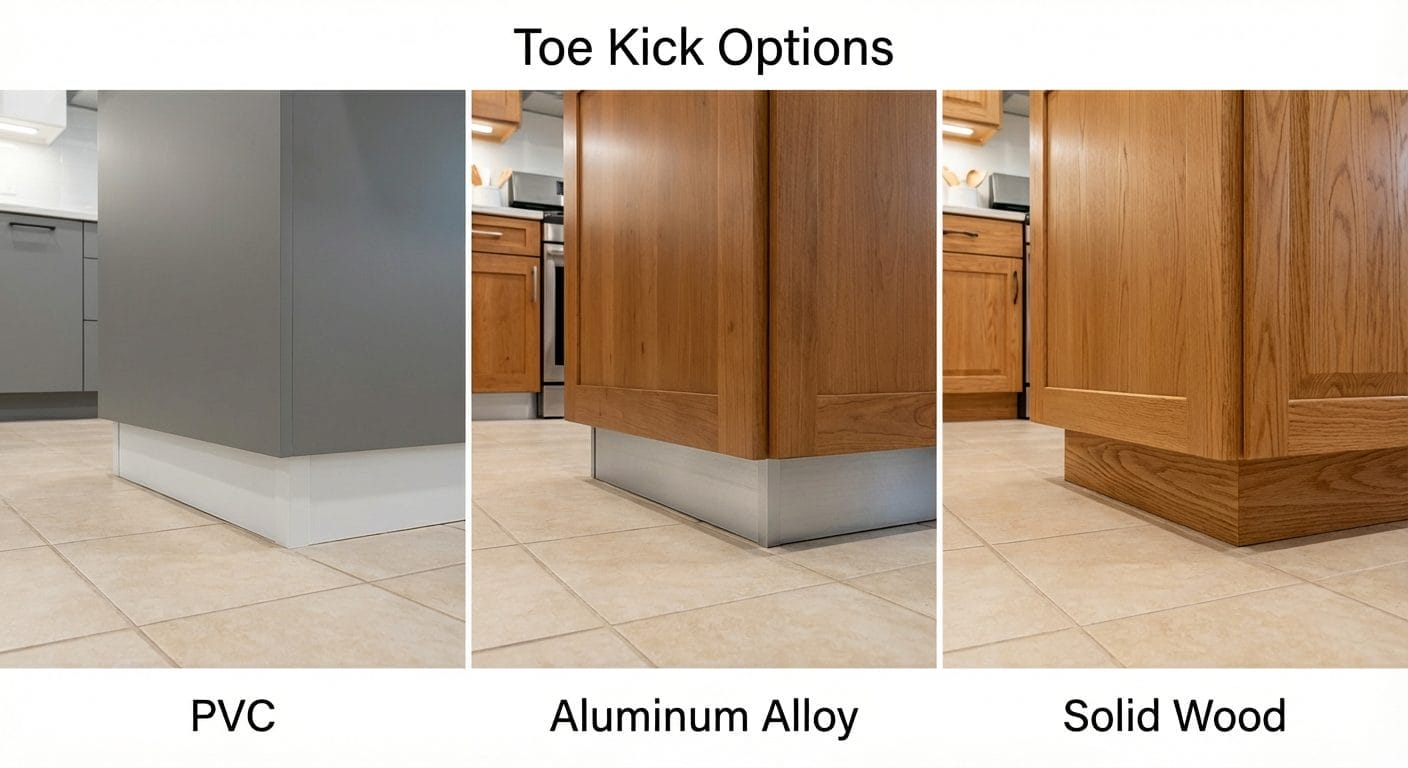
The toe kick option
Toe kicks are available in a variety of materials such as PVC, aluminum alloy, and solid wood, making them adaptable to different interior styles. Installation and removal are relatively simple, which makes it convenient to clean the area beneath the cabinets and keep the kitchen tidy.
However, toe kicks also have limitations. Certain materials may deform or loosen over time due to moisture exposure or external impact, affecting both appearance and durability. If the joint between the cabinet and the toe kick is not well sealed, it can become a hygiene blind spot where dirt accumulates and becomes difficult to clean.
The brick built base option
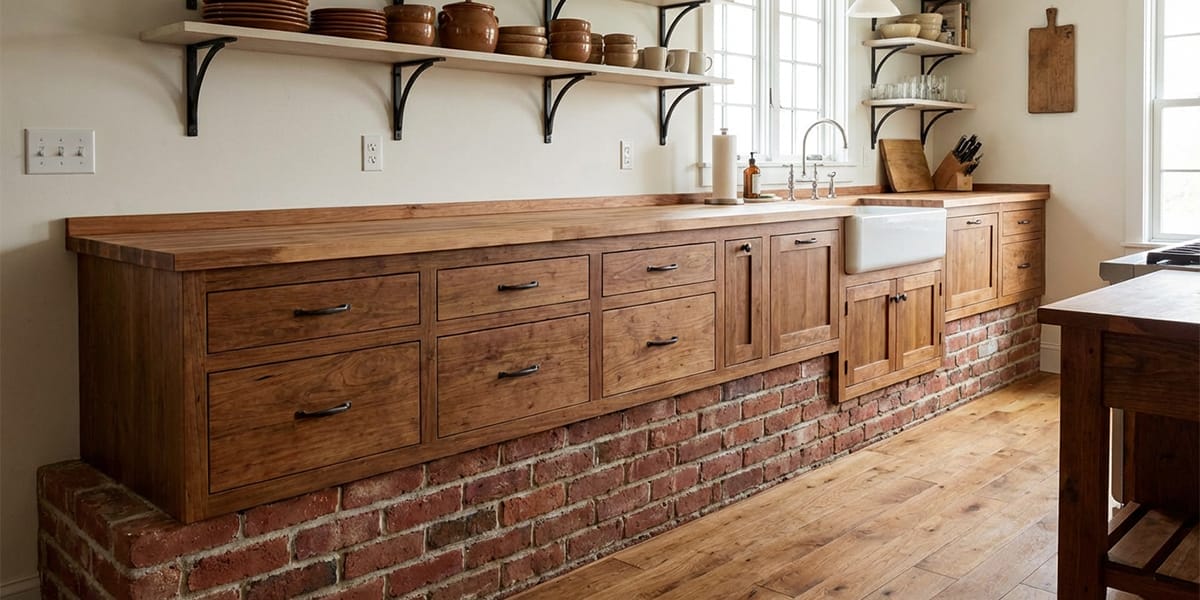
A brick built base serves as a fixed foundation for the cabinets and offers several clear advantages. Its structure is extremely solid and stable, allowing it to support the cabinet body evenly and improve overall load bearing capacity. It can also be customized to integrate seamlessly with the kitchen structure, creating a more cohesive and substantial appearance.
In daily use, a brick built base is highly reliable and does not suffer from deformation or detachment. Its moisture and water resistance are particularly strong, effectively isolating ground moisture from the cabinets. Because it connects seamlessly with the floor, it eliminates hidden corners under the cabinets, making cleaning easier and reducing the space where insects and bacteria could develop. During construction, it also allows for concealed routing of plumbing and electrical lines.
That said, this option places higher demands on construction quality. The base must be perfectly level to ensure proper cabinet installation later on. From an ergonomic perspective, the depth of the base is usually set slightly narrower than the countertop, typically recessed by about eight to ten centimeters. This leaves enough space for the feet when standing, improving comfort and preventing excessive forward leaning while cooking.
Summary and core recommendations
In summary, both options have their strengths. Toe kicks are flexible, visually diverse, and easier to adjust or replace later, making them suitable for kitchens with limited budgets or changing style preferences. Brick built bases stand out for their durability, sealing performance, and long term stability, making them ideal for homeowners who prioritize practicality, cleanliness, and lasting reliability.
No matter which solution you choose for the area beneath the cabinets, it is important to remember that the true key to durability lies in the moisture resistance of the cabinet itself. The design under the cabinet is an external line of defense, while the cabinet material is the internal foundation. Instead of focusing only on the base structure, it is equally important to choose cabinets with strong moisture resistant cores.


Related posts

Receiving the keys to a new home is an exciting milestone yet it often brings an important and sometimes confusing question. What is the best... Continue reading

The kitchen is far more than a place for cooking meals. In many American homes it has become a central space for daily routines family... Continue reading
Kitchen cabinets play a vital role in both the function and visual identity of a kitchen. Among all cabinet components, cabinet doors are the most... Continue reading

The colors you choose for your home don’t just paint walls—they shape moods, create feelings, and influence how every day unfolds. In 2026, whole home... Continue reading
In modern home renovation projects, custom cabinetry has become a core element in both kitchen and bathroom planning. Choosing the right custom cabinet supplier is... Continue reading











Add comment