No products in the cart.
Return To Shop.png?sharp=1)




How to Maintain and Repair a Bathroom Vanity
Although bathroom vanities are specially treated during manufacturing to offer water resistance moisture protection and corrosion resistance they still require regular care and proper maintenance in daily use. Many homeowners underestimate the importance of routine upkeep and as a result various quality issues appear over time which significantly shorten the service life of the vanity. Knowing how to maintain and repair a bathroom vanity can help preserve its appearance functionality and long term value. The following guidelines provide a comprehensive overview.
Table of Contents
Bathroom Vanity Maintaining
First when a bathroom vanity needs to be moved it should always be lifted gently rather than dragged across the floor. Pulling it forcefully may damage the base or loosen internal joints. When placing the vanity ensure the floor surface is level. If the ground is uneven the legs must be properly padded or adjusted to prevent structural stress or long term deformation.
Second daily cleaning should always be done with a soft cloth. Rough fabrics or abrasive sponges can scratch the surface finish over time. Cleaning agents should be diluted before use and strong chemical cleaners should be avoided. Mild neutral detergents are sufficient for removing common dirt while protecting surface coatings.
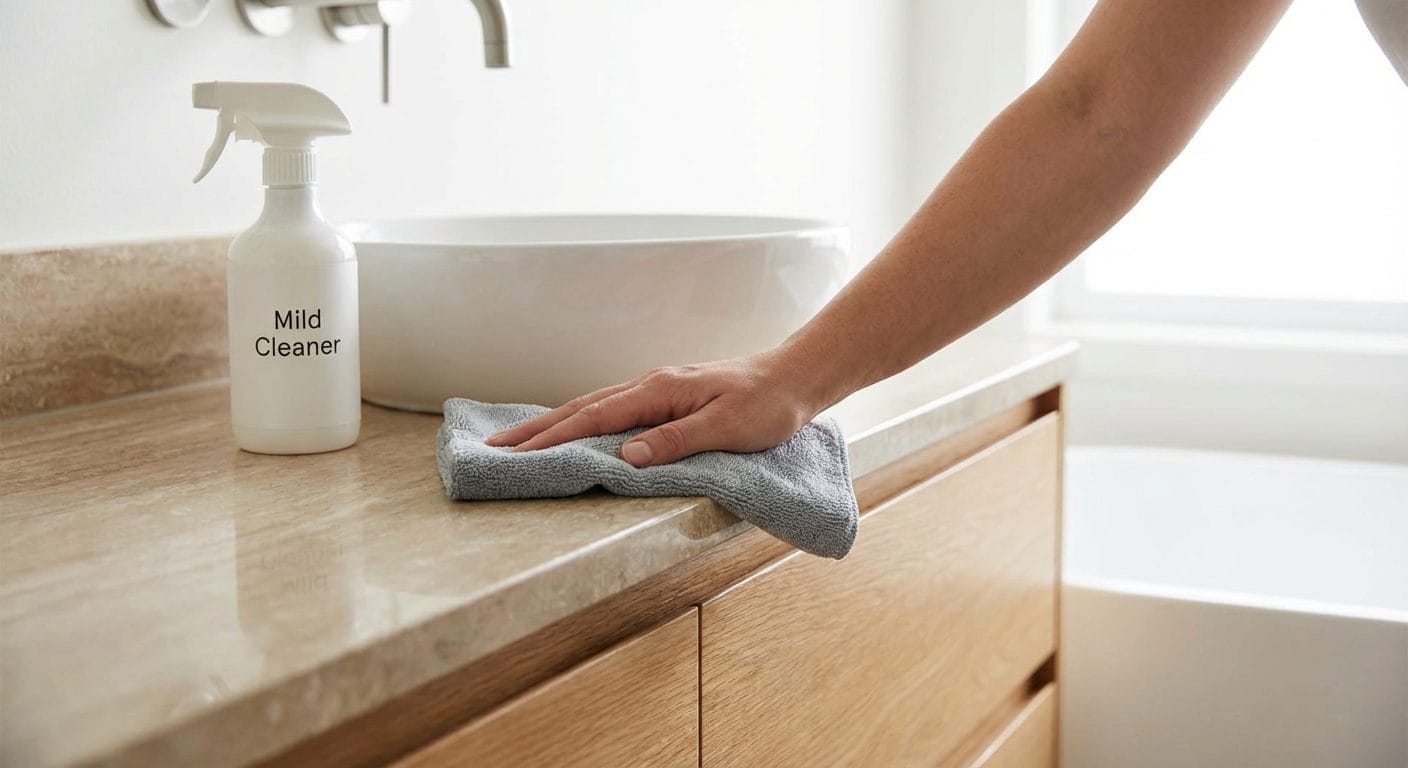
Second daily cleaning should always be done with a soft cloth. Rough fabrics or abrasive sponges can scratch the surface finish over time. Cleaning agents should be diluted before use and strong chemical cleaners should be avoided. Mild neutral detergents are sufficient for removing common dirt while protecting surface coatings.
Third the vanity should not be placed in areas exposed to direct sunlight for extended periods. Excessive sunlight accelerates moisture loss which may lead to cracking warping or fading especially in wooden materials. At the same time the vanity should not be kept in extremely dry environments because overly dry air can also cause cracking. Balanced indoor humidity is essential for material stability.
Fourth if water marks appear on the surface a damp cloth can be placed over the stain and gently pressed several times with a warm iron. The moisture and heat help release trapped water marks allowing the surface to return to its original condition. Care must be taken to avoid excessive heat.
Fifth countertop maintenance deserves special attention. Sharp or hard objects should never be used directly on the surface to avoid scratches. For colored countertops neutral cleaners are recommended to prevent discoloration and chemical damage.
Sixth mirrors should be cleaned regularly. When water stains appear on the mirror surface they can be removed using a soft cloth and neutral cleaner. Regular cleaning prevents mineral buildup and keeps the mirror clear and bright.
Bathroom Vanity Repairing

Ceramic sink scratches
Ceramic sinks should be kept clean at all times. Dust and sand particles should be removed promptly to prevent surface abrasion. When minor scratches appear apply a small amount of toothpaste to the scratched area then polish repeatedly with a soft dry cloth. Afterward apply a thin layer of wax. This process can restore smoothness and gloss effectively.
Artificial stone countertop scratches
For light scratches on artificial stone surfaces use fine grit sandpaper rated eight hundred or above or a soft scouring pad with water. Gently polish the scratched area until the surface becomes smooth again and the marks fade.
Burn marks
If burn marks are left on the vanity surface from sparks or cigarettes and the paint layer is affected wrap a thin piece of fine textured cloth around a toothpick and gently rub the affected area. Afterward apply a thin layer of vinegar. This method helps reduce or eliminate scorch marks without harming the surrounding finish.
Heat marks
White heat marks left on the vanity surface can usually be removed by wiping with a cloth dampened with alcohol floral water or kerosene. Gentle repeated wiping is sufficient in most cases.
Water stains
Water stains can be treated by covering the mark with a damp cloth and carefully pressing it with a warm iron. This allows moisture trapped beneath the surface to evaporate and the stain to disappear gradually.
Surface abrasions
If the painted surface of the vanity is scratched but the underlying wood is not exposed use a wax crayon or paint that matches the cabinet color to fill the damaged area. After covering the exposed base color apply a thin layer of clear nail polish to seal and protect the repair.
Removing white marks
White marks can be treated by applying a mixture of cigarette ash and lemon juice using a soft cloth. This traditional method helps restore surface clarity.
Regular waxing
Every six to twelve months apply a layer of paste wax to the entire bathroom vanity including the cabinet body hardware handles towel bars and brackets. Waxing adds a protective layer enhances surface luster and extends durability.
To maintain long lasting color and brightness it is recommended to clean the bathroom vanity at least once every two weeks. For solid wood vanities regular waxing is especially important to protect the natural grain and prevent moisture damage. When opening and closing cabinet doors avoid using excessive force. Gentle operation reduces stress on hinges and helps prevent mechanical failure over time. With proper care and timely maintenance a bathroom vanity can remain functional attractive and reliable for many years.


About author

Related posts

Kitchen base cabinets do more than support the countertop. Their internal configuration affects how easily cookware, utensils, dishes, and everyday supplies can be stored and... Continue reading

Kitchen cabinet quotes can vary significantly even when they appear to cover the same kitchen. One quote may include plywood cabinet boxes, finished panels, fillers,... Continue reading

A knee drawer is a specialized vanity cabinet component designed to add storage while creating comfortable open space underneath a bathroom countertop. Knee drawers are... Continue reading

A 33-inch farmhouse sink is a common choice for a 36-inch base cabinet, but it is not a universal rule. The correct fit depends on... Continue reading

A kitchen cabinet filler is a narrow finished strip used to close or manage the space between a cabinet and a wall, appliance, corner, or... Continue reading





Add comment