No products in the cart.
Return To Shop.png?sharp=1)
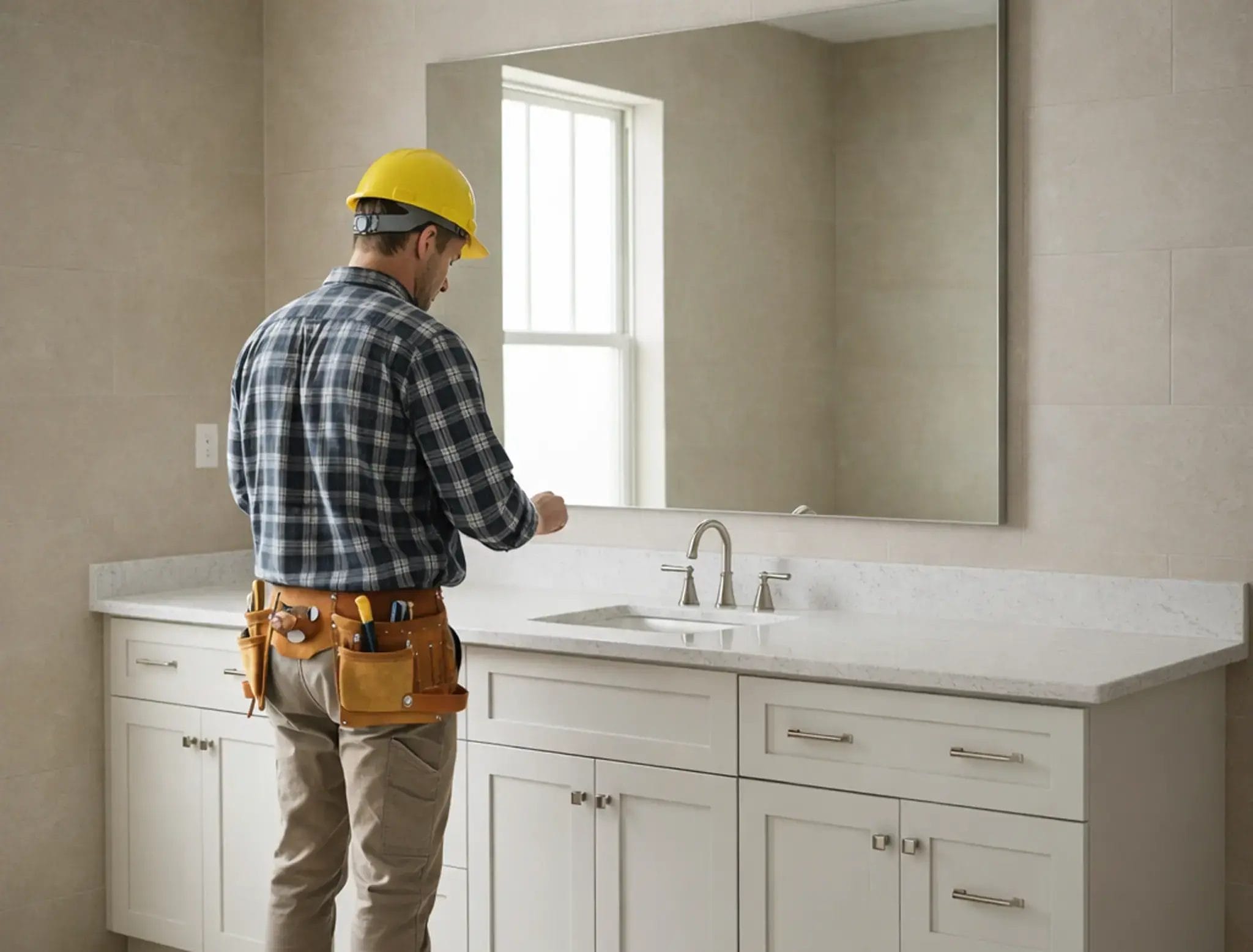



How to Install a Bathroom Vanity: Freestanding Step-by-Step Guide
Installing a freestanding bathroom vanity is a manageable DIY project when the plumbing, cabinet position, and wall conditions are prepared correctly. Unlike a floating vanity, a freestanding vanity is supported by the floor, but it may still need to be secured to the wall according to the manufacturer’s instructions and the installation conditions.
The basic process includes shutting off the water, removing or disconnecting the existing plumbing, positioning and leveling the vanity cabinet, cutting or adjusting plumbing openings when needed, securing the cabinet, installing the vanity top, sink, and faucet, reconnecting the drain and water supply lines, and checking the installation for leaks.
Before you begin, confirm the vanity dimensions, plumbing locations, wall studs, and available floor space. Small measurement errors can cause the cabinet to interfere with the drain, supply lines, baseboards, doors, or surrounding walls.
This guide walks you through how to install a bathroom vanity step by step, with a focus on freestanding vanity cabinets commonly used in residential bathrooms.
Table of Contents
1. Before You Start: Tools and Preparation
Before installing a bathroom vanity, gather the tools and materials you may need and inspect the installation area carefully.
Tools You May Need
For a typical freestanding vanity installation, prepare:
- Tape measure
- Pencil
- Level
- Stud finder
- Drill/driver
- Screwdriver
- Adjustable wrench
- Pliers
- Utility knife
- Caulk gun
- Shims
- Appropriate cabinet fasteners
- Silicone or bathroom-grade sealant
- Bucket and towels
Depending on the vanity and plumbing layout, you may also need a hole saw, jigsaw, or other cutting tool to create openings for the drain and water supply lines.
If your vanity arrives ready-to-assemble, review the model-specific assembly instructions before beginning the installation.
Shut Off the Water
Before disconnecting any plumbing, shut off the hot and cold water supply valves.
Open the faucet to release remaining pressure, then place a bucket or towels below the drain and supply connections before loosening them.
If the shutoff valves do not close completely or the plumbing condition is uncertain, address that problem before continuing with the vanity installation.
Check the Vanity Dimensions and Plumbing Location
Measure the vanity and compare it with the available bathroom space before moving it into position.
Confirm:
- Overall vanity width, depth, and height
- Drain location
- Hot and cold water supply locations
- Wall stud locations
- Baseboard or wall-trim interference
- Door and drawer clearance
- Nearby toilet, shower, or doorway clearance
The plumbing should fit within the open or designated plumbing area of the vanity without interfering with drawers, shelves, or structural cabinet components.
Before finalizing the vanity location, review our bathroom vanity size guide to compare common vanity widths, depths, heights, and layout considerations.

Inspect the Floor and Wall
Check that the floor is stable and reasonably level and that the wall surface is suitable for the planned installation.
A slightly uneven floor can often be corrected with shims during installation, but larger floor or wall problems should be addressed before the vanity is secured.
Use a stud finder to locate structural support where the vanity will be fastened to the wall, if required by the manufacturer or installation conditions.
Before finalizing the location, double-check the vanity dimensions and bathroom layout so there is enough space for the cabinet doors, drawers, plumbing, and surrounding fixtures.
2. Remove the Old Vanity and Disconnect Plumbing
If you are replacing an existing bathroom vanity, remove the old cabinet and disconnect the plumbing before positioning the new vanity. Work carefully around the drain and water supply lines to avoid damaging existing plumbing.
Disconnect the Water Supply and Drain
After shutting off the hot and cold water supply valves, place a bucket and towels beneath the plumbing connections.
Disconnect the faucet supply lines from the shutoff valves, then loosen and remove the P-trap from the sink drain. Some water may remain inside the trap, so keep the bucket underneath while disconnecting it.
If you plan to reuse the existing plumbing, inspect the shutoff valves, supply lines, and drain components for corrosion, leaks, or damage before installing the new vanity.
Remove the Existing Vanity
Use a utility knife to carefully cut through any caulk or sealant where the vanity top or cabinet meets the wall.
Remove any screws or fasteners securing the cabinet to the wall. If the countertop and cabinet are separate components, removing the top first can make the cabinet easier to move.
Carefully pull the vanity away from the wall while making sure the drain pipe and water supply lines pass through the cabinet openings without being bent or damaged.
Clean and Inspect the Installation Area
Once the old vanity is removed, clean away remaining caulk, adhesive, and debris.
Inspect the exposed wall and floor for:
- Water damage
- Mold or moisture
- Damaged drywall
- Uneven flooring
- Loose or damaged plumbing
- Baseboard or trim interference
Repair any significant problems before installing the new vanity. Starting with a clean, stable installation area makes it easier to position and level the new cabinet correctly.
3. Measure and Position the New Vanity
Before securing the vanity, move it into the installation area and confirm that the cabinet fits the space and aligns with the existing plumbing.
Position the Vanity Against the Wall
Carefully move the freestanding vanity into place and center it according to the bathroom layout.
Check that there is enough clearance for:
- Cabinet doors and drawers
- Adjacent walls
- Toilet or shower fixtures
- Door trim and baseboards
- Plumbing connections
- Vanity top overhang, if applicable
Do not force the cabinet into a space that is too tight. A small gap may be easier to address than damaging the cabinet or surrounding wall.
Mark the Plumbing Openings
If the drain and water supply lines pass through the back or bottom of the vanity, mark their locations carefully.
Measure from fixed reference points such as the side wall, floor, or cabinet edge rather than estimating by eye.
Transfer the measurements to the cabinet and verify them before cutting.
When creating openings, make them large enough for the plumbing to pass through without pressure on the pipes, but avoid removing more cabinet material than necessary.

Check the Vanity for Level and Fit
Place a level across the top and front of the cabinet.
Check whether the vanity sits flat on the floor or rocks slightly.
If the floor is uneven, use shims under the cabinet where needed rather than forcing the vanity against the wall.
Also check whether the back of the cabinet sits properly against the wall. Baseboards, wall irregularities, or plumbing may prevent the vanity from sitting flush.
Confirm the Final Position
Before drilling or fastening anything, confirm that:
- The vanity is centered correctly.
- Plumbing lines align with the cabinet openings.
- Doors and drawers open freely.
- The cabinet is level from side to side.
- The cabinet is stable on the floor.
- The vanity top will fit the surrounding walls and fixtures.
Once the position is correct, mark the cabinet location and wall fastening points so the vanity can be secured without shifting.
4. Level, Shim, and Secure the Vanity
After positioning the vanity and confirming the plumbing alignment, level and secure the cabinet before installing the countertop or reconnecting the plumbing.
Level the Vanity
Place a level across the top of the vanity from side to side and front to back.
If the floor is uneven, insert shims beneath the cabinet where needed. Make small adjustments and check the level again until the vanity sits flat and does not rock.
Avoid forcing an uneven cabinet against the wall. Proper leveling helps the countertop sit correctly and keeps cabinet doors and drawers properly aligned.
Locate the Wall Studs
Use a stud finder to locate the wall studs behind the vanity and mark their positions.
Whenever possible, fasten the vanity through a structural mounting rail or other manufacturer-approved fastening location rather than through a thin cabinet back panel.

Secure the Vanity to the Wall
Once the vanity is level and correctly positioned, secure it according to the manufacturer’s installation instructions.
Drill pilot holes where required and use appropriate fasteners to attach the vanity to structural support.
Do not overtighten the screws. The cabinet should remain level and stable without pulling the cabinet frame out of alignment.
After fastening, check the vanity with the level again and confirm that the cabinet does not shift or rock.
5. Install the Vanity Top, Sink, and Faucet
Once the vanity cabinet is level and securely positioned, you can install the vanity top, sink, and faucet. The exact process may vary depending on whether your vanity uses an integrated sink, undermount sink, vessel sink, or separate countertop.
Install the Faucet and Drain Components
If access to the underside of the sink will become limited after the countertop is installed, it is often easier to install the faucet and certain drain components beforehand.
Follow the manufacturer’s instructions to install the faucet through the appropriate mounting holes and secure it from below.
Install the drain assembly and any required gasket or sealant according to the sink manufacturer’s instructions.
Dry-Fit the Vanity Top
Before applying adhesive or sealant, place the vanity top on the cabinet and check the fit.
Confirm that:
- The top is properly centered.
- The overhang is even where applicable.
- The backsplash fits against the wall.
- The sink and faucet align with the plumbing.
- The top does not interfere with nearby walls or fixtures.
If the wall is slightly uneven, do not force the countertop into position.

Secure the Vanity Top
Remove the top after confirming the fit and apply the recommended adhesive or silicone to the cabinet according to the vanity top manufacturer’s instructions.
Carefully lower the countertop back into position without sliding it excessively.
Check the alignment again before the adhesive begins to set.
Seal the Backsplash and Wall Joint
Apply a continuous bead of bathroom-grade silicone where the vanity top or backsplash meets the wall.
Smooth the bead to create a clean joint and help prevent water from entering the gap behind the vanity.
Allow the adhesive and sealant to cure according to the manufacturer’s instructions before exposing the area to water.
6. Connect the Drain and Water Supply
Once the vanity top, sink, and faucet are in place, reconnect the drain and water supply lines.
Connect the Sink Drain
Align the sink drain with the wall drain and reinstall the P-trap.
Make sure the slip-joint washers and nuts are positioned correctly before tightening the connections.
The drain should line up naturally without forcing the pipe into position. If the drain does not align, adjust the fittings or use the appropriate plumbing components rather than bending or stressing the pipe.
Connect the Water Supply Lines
Attach the hot and cold faucet supply lines to the corresponding shutoff valves.
Tighten the connections securely, but avoid overtightening, which can damage fittings or washers.
Confirm that the hot supply connects to the hot side of the faucet and the cold supply connects to the cold side.
Turn the Water Back On
Slowly open the shutoff valves and allow water to flow to the faucet.
Run both hot and cold water while checking the connections under the sink.
Inspect:
- Faucet supply connections
- Shutoff valves
- Drain assembly
- P-trap joints
- Sink drain connection
Use a dry paper towel around each joint if needed. Even a small amount of moisture can help reveal a slow leak.

Check for Proper Drainage
Let the sink fill slightly, then release the water and watch the drain.
Make sure the water drains freely without leaking, backing up, or dripping from the P-trap connections.
If you notice any leak, shut the water off if necessary and correct the connection before using the vanity.
7. Seal, Test for Leaks, and Finish the Installation
After the plumbing is connected, complete the installation by sealing the vanity, checking for leaks, and reinstalling any doors or drawers that were removed earlier.
Seal Around the Vanity Top
Apply bathroom-grade silicone along the joint where the vanity top or backsplash meets the wall.
Make sure the surface is clean and dry before applying the sealant. Smooth the bead to create a continuous seal that helps prevent water from entering behind the vanity.
Follow the sealant manufacturer’s recommended curing time before exposing the area to water.
Perform a Final Leak Test
Run both hot and cold water for several minutes while inspecting the plumbing underneath the sink.
Check carefully around:
- Faucet supply line connections
- Shutoff valves
- Sink drain
- P-trap connections
- Wall drain connection
Then fill the sink partially and release the water to test the drain under a larger volume of water.
If everything remains dry, the plumbing connections are ready for normal use.
Reinstall Doors and Drawers
Reinstall any cabinet doors, drawers, or shelves that were removed during installation.
Open and close each one several times to make sure it operates smoothly and does not interfere with the plumbing or surrounding fixtures.
If the vanity doors are uneven after installation, see our guide on how to adjust concealed cabinet hinges for side, height, and depth adjustments.
Complete a Final Installation Check
Before considering the project complete, confirm that:
- The vanity is level and stable.
- The cabinet is securely positioned.
- Doors and drawers operate correctly.
- The countertop is properly aligned.
- Wall joints are sealed.
- Hot and cold water operate correctly.
- The sink drains properly.
- No plumbing connections are leaking.
Clean the countertop, cabinet, and surrounding work area after the installation is complete.
8. Common Bathroom Vanity Installation Mistakes
Bathroom vanity installation problems often come from inaccurate measurements, poor leveling, rushed plumbing connections, or fastening the cabinet before its position has been fully checked.
| Common Mistake | Why It Causes Problems | Better Approach |
|---|---|---|
| Skipping the plumbing measurements | Drain and supply lines may interfere with drawers, shelves, or cabinet panels | Measure and mark plumbing locations before cutting the cabinet |
| Cutting plumbing openings too large | Removes unnecessary cabinet material and can weaken the installation area | Cut only the clearance needed for the pipes and fittings |
| Installing the vanity without checking level | Doors, drawers, and the countertop may sit unevenly | Level the cabinet side-to-side and front-to-back before securing it |
| Ignoring an uneven floor | The vanity may rock or twist after installation | Use shims where needed and recheck the level |
| Forcing the cabinet tight against an uneven wall | Can pull the cabinet out of square | Shim or correct the wall condition instead of forcing the cabinet |
| Failing to secure the vanity when required | The cabinet may shift or become unstable over time | Follow the manufacturer’s fastening instructions and secure to structural support where required |
| Installing the countertop before checking cabinet position | Alignment or plumbing problems become harder to correct | Finalize cabinet position and level before installing the top |
| Overtightening plumbing fittings | Can damage washers, threads, or fittings and cause leaks | Tighten securely without excessive force |
| Skipping the leak test | Small leaks may go unnoticed and damage the cabinet or floor | Run hot and cold water and inspect every connection before finishing |
| Sealing before final alignment | Caulk can hide or lock in a poor fit | Confirm cabinet and countertop alignment before applying silicone |
Check the Installation Before You Finish
Before reinstalling all doors, drawers, and accessories, step back and inspect the vanity as a complete installation.
Check that:
- The vanity is level and stable.
- The countertop sits evenly.
- Plumbing lines have enough clearance.
- Drawers and doors open freely.
- The faucet and drain operate correctly.
- No connections are leaking.
- Wall and countertop joints are properly sealed.
Correcting a problem at this stage is usually easier than making changes after the bathroom is fully finished.
9. FAQ About Bathroom Vanity Installation
Can I Install a Bathroom Vanity Myself?
Yes, a freestanding bathroom vanity can often be installed as a DIY project if the existing plumbing is in good condition and the new vanity fits the space without major modifications.
The most important parts are accurate measuring, correct plumbing alignment, proper leveling, secure fastening, and leak testing. If the plumbing needs to be relocated or the wall and floor require major repair, professional help may be a better option.
For additional planning considerations before starting the project, see our bathroom vanity installation tips.
Does a Freestanding Bathroom Vanity Need to Be Secured to the Wall?
Even though a freestanding vanity is supported by the floor, it may still need to be secured to the wall according to the manufacturer’s instructions and the installation conditions.
Wall fastening can help prevent movement and keep the vanity stable and aligned over time.
How Do I Know if My Plumbing Will Fit the New Vanity?
Measure the drain and hot/cold supply line locations before installing the vanity.
Compare those measurements with the cabinet interior, drawer layout, shelves, and structural components. The plumbing should pass through the designated open area without interfering with moving parts or requiring excessive cabinet modification.
Should I Install the Faucet Before or After the Vanity Top?
If access to the underside of the sink will be limited after the countertop is installed, installing the faucet and certain drain components first can make the process easier.
Always follow the faucet, sink, and vanity top manufacturer’s instructions for the recommended installation sequence.
How Long Should I Wait Before Using the Sink?
Wait until the countertop adhesive and bathroom-grade silicone have cured according to the manufacturer’s instructions.
Cure times vary by product, so do not assume the sink is ready for water immediately after installation.
What Should I Do if the Vanity Is Not Level?
Use shims beneath the vanity where needed and check the cabinet side-to-side and front-to-back with a level.
Do not force the cabinet into position with wall screws. The vanity should be stable and level before it is fully secured and before the countertop is installed.
Final Thoughts
Installing a freestanding bathroom vanity is much easier when the cabinet, plumbing, and installation area are prepared correctly before the final fit.
Measure the space carefully, confirm the drain and water supply locations, level and secure the vanity, install the countertop and sink according to the manufacturer’s instructions, and test every plumbing connection before considering the project complete.
If the vanity fits the room properly and the plumbing is aligned, a careful DIY installation can produce a clean, stable result without unnecessary cabinet modifications.
If you are still selecting a vanity for your project, explore our bathroom vanities to compare available sizes, styles, and configurations.
For a DIY-friendly option, you can also browse our RTA bathroom vanities designed for convenient shipping and on-site assembly.


About author

Related posts

Kitchen cabinet quotes can look similar at first but include very different products and services. One quote may include plywood cabinet boxes, finished end panels,... Continue reading

A knee drawer is a specialized vanity cabinet component designed to add storage while creating comfortable open space underneath a bathroom countertop. Knee drawers are... Continue reading

A 33-inch farmhouse sink is a common choice for a 36-inch base cabinet, but it is not a universal rule. The correct fit depends on... Continue reading

A kitchen cabinet filler is a narrow finished strip used to close or manage the space between a cabinet and a wall, appliance, corner, or... Continue reading

Choosing RTA cabinets involves more than comparing door styles or headline prices. You need to evaluate cabinet-box construction, door materials, available sizes, hardware, shipping, assembly,... Continue reading





Add comment