No products in the cart.
Return To Shop or
or  ,
,


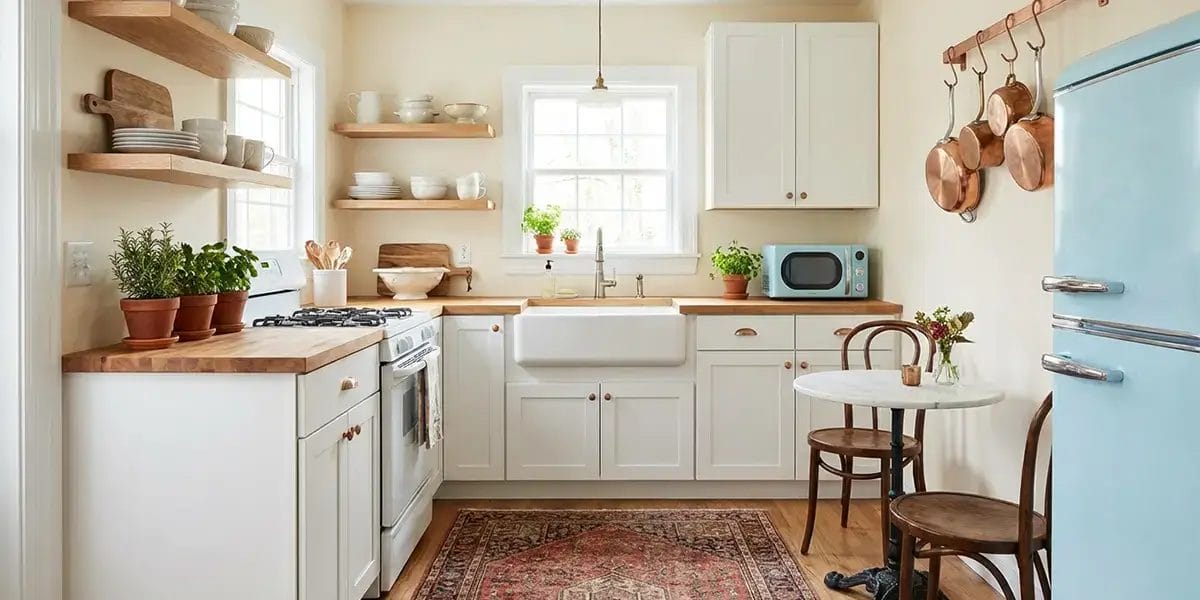
How to Create a Perfect Storage Layout in a Small Kitchen
Have you ever stood in your kitchen feeling completely overwhelmed by clutter. You install wall to wall cabinets, yet storage still feels insufficient. Items stored deep inside cabinets are hard to reach, tall cookware never seems to fit, and every attempt to stay organized ends in frustration. For small kitchens, every inch of space is extremely valuable. Unfortunately, traditional and poorly planned designs often turn limited square footage into inefficient storage zones.
In reality, the problem is rarely the size of the kitchen itself. The real issue lies in storage strategy and layout thinking. A truly efficient kitchen is not defined by how many cabinets it has, but by whether every design choice serves daily use instead of creating obstacles. This guide will show you how to maximize limited kitchen space and create a layout that feels clean, functional, and comfortable to use every day.
Table of Contents
Avoid Three Common Storage Design Mistakes
Many homeowners unknowingly fall into storage design traps that look acceptable on paper but fail in real life. These three mistakes are especially common in small kitchens and should be avoided.
1. Deep cabinets with standard pull baskets
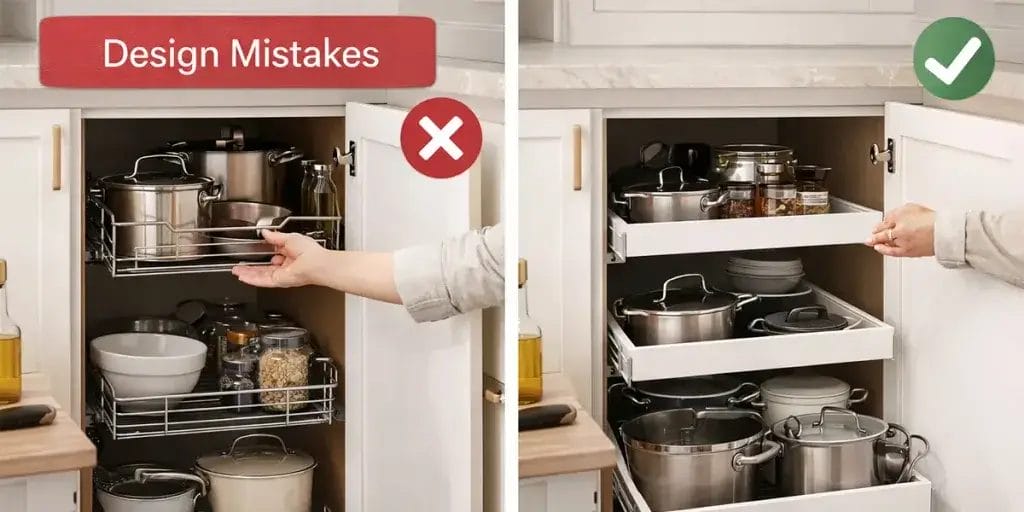
Deep cabinets offer generous capacity, but standard pull baskets make items difficult to reach. When something is stored at the back, you often need to remove everything in front just to grab it. This quickly becomes exhausting during daily cooking.
Switching to linked pull out systems allows inner shelves to slide forward together. With a single pull, every layer becomes visible and accessible. Even items stored at the very back can be reached easily, eliminating the need to crouch or search blindly.
2. Fixed shelves that limit flexibility
Fixed shelves lock you into one height forever. When you buy taller pots or small appliances, they simply do not fit, leaving vertical space wasted.
Adjustable shelves offer long term flexibility. You can raise shelves for tall cookware or lower them for compact items as needed. This adaptability ensures that cabinet space evolves with your lifestyle instead of becoming outdated.
3. Wall cabinets built all the way to the ceiling
While ceiling height cabinets may seem practical, the uppermost area is often unreachable. Cleaning becomes risky and daily access is inconvenient.
Leaving a small gap above wall cabinets creates a practical buffer zone for infrequently used items. Adding lift down storage baskets inside cabinets further improves safety and accessibility, allowing items to be lowered with minimal effort.
Five Clever Space Saving Design Ideas
For small kitchens, smart details make a significant difference. These five design strategies help improve storage efficiency while maintaining a refined appearance.
1. Cabinet door storage without wall damage
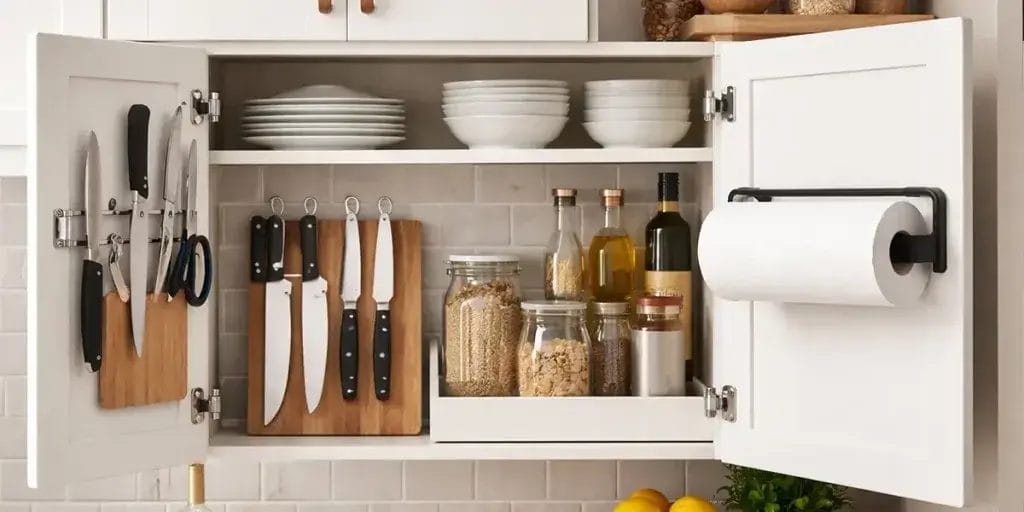
When wall space is limited and drilling is undesirable, cabinet doors become valuable storage surfaces. Magnetic knife holders mounted inside cabinet doors keep tools off countertops. Paper towel holders mounted on the outside offer easy access without disrupting the wall. This approach maximizes space while preserving a clean visual layout.
2. Sink cabinet organization with moisture protection
Sink cabinets are prone to moisture and clutter. Multi layer adjustable racks help separate cleaning supplies vertically, making everything easy to see and access. Lining the cabinet base with moisture resistant foil protects against leaks and simplifies cleanup, reducing long term damage.
3. Reeded glass cabinet doors with integrated lighting
Clear glass cabinets can expose clutter, but reeded glass provides visual softness while maintaining depth. Interior lighting enhances visibility during evening use and creates a warm, elevated atmosphere without revealing disorder.
4. Drawer organization with adjustable dividers and nonslip mats
Drawers easily become chaotic without structure. Adjustable dividers separate plates bowls and utensils, while nonslip liners prevent movement when drawers open quickly. Everything stays visible stable and easy to access.
5. Built in appliance zones with open shelving
Small kitchens often struggle with countertop crowding from appliances. Built in ovens free valuable surface space. Open shelves above appliances store baking tools within reach. Proper ventilation beneath shelves ensures safety and appliance longevity.
Kitchen storage does not need to be complicated. By organizing space according to usage frequency and avoiding common design mistakes, even the smallest kitchen can feel efficient organized and effortless to use.


About author

Related posts

For years, homeowners on Reddit’s r/kitchenremodel and r/DesignMyRoom have asked the same question: “Are two-tone kitchen cabinets a timeless classic, or just a trendy style... Continue reading

When people shop for new cabinet doors, they often focus on color, style, or finish first. That makes sense. But in real home projects, the... Continue reading

Painting bathroom cabinets is not the same as painting a dresser or a living room shelf. A bathroom is a humid space, which means the... Continue reading
Floating cabinets are beautiful. They make a space feel lighter, cleaner, and more refined. No bulky legs, no visual clutter — just a clean, modern... Continue reading
Cabinets take up a large part of any kitchen, bathroom, or laundry room. When the color no longer feels right, the whole space can start... Continue reading







Add comment