No products in the cart.
Return To Shop.png?sharp=1)


Pros and Cons of Stainless Steel Cabinets for Home Kitchens
Imagine preparing your family’s favorite meals in a kitchen lined with sleek, stainless steel cabinets. It feels professional, hygienic, and easy to clean—but how does it really perform in everyday home life? As a designer who has worked on countless American kitchens, I’ve seen homeowners excited about stainless steel, only to discover that what works in restaurants doesn’t always translate perfectly to family homes. Let’s break down the practical pros and cons to help you decide if stainless steel is the right choice for your household.
Table of Contents
Why Stainless Steel Cabinets Excel in Commercial Kitchens
Stainless steel has long been a standard in restaurants and hotels for good reason. It’s highly resistant to moisture, heat, and fire, making it ideal for the rigorous demands of commercial cooking. Surfaces are non-porous, easy to sanitize, and durable enough to withstand daily heavy use. In professional kitchens, aesthetics take a backseat to efficiency, and stainless steel delivers on hygiene, reliability, and long-term performance.
When these same strengths were introduced into residential kitchens, they initially gained attention for their modern look and low maintenance appeal. But while stainless steel can shine in restaurants, home kitchens come with very different priorities.

Safety Concerns in Everyday Use
One often overlooked issue is electrical safety. Stainless steel conducts electricity, and in homes, countertops frequently hold kettles, microwaves, and other appliances. If wiring ages and moisture is present, there is a small but real risk of electrical issues—something wooden cabinets avoid entirely thanks to their insulating properties.
Another concern is internal construction. Many “stainless steel” cabinets actually have a wooden core. If moisture penetrates, it can cause swelling, mold growth, and unpleasant odors—undermining the hygiene advantages that drew people to stainless steel in the first place.
Surface Scratches and Visual Maintenance
Stainless steel is highly susceptible to scratches. Everyday contact with pots, pans, and utensils leaves marks over time. While these scratches don’t compromise structural integrity, they can make a brand-new kitchen look worn within months. For homeowners who value a long-lasting pristine appearance, this is a major drawback.
Aesthetic Challenges in Home Kitchens
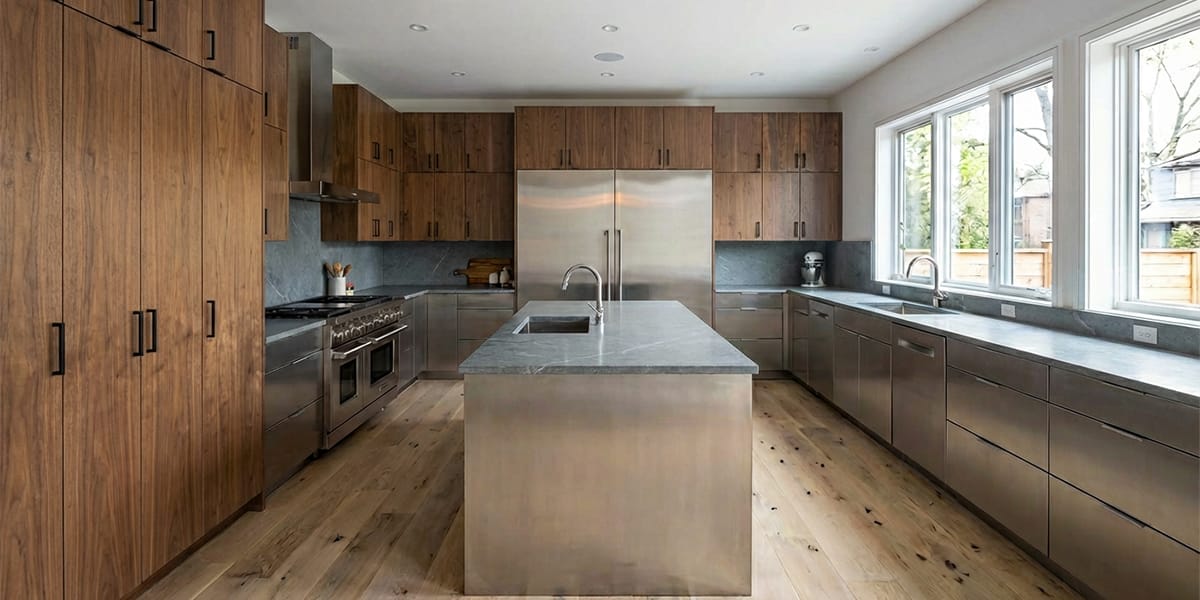
In restaurants, stainless steel conveys professionalism and efficiency. At home, however, the same material often feels cold and industrial. Kitchens are meant to be warm, inviting spaces where families gather. Stainless steel reflects light sharply and lacks the texture depth of wood or stone, which can make a kitchen feel sterile rather than cozy.
Even with high-end design, it’s challenging to integrate stainless steel cabinets into most American home interiors without feeling out of place.
Cost Considerations: Are Stainless Steel Cabinets Worth It?
There’s a common misconception that stainless steel is a cost-effective option. In reality, the material, fabrication, and installation are expensive. Food-grade stainless steel requires precise cutting, welding, and finishing. Prices per linear foot often exceed traditional wooden cabinets with quartz or granite countertops, yet the everyday home experience may not justify the premium.
Glare, Noise, and Installation Challenges
Because stainless steel surfaces are reflective, uneven surfaces or bulging from heat expansion can cause glare, which is visually uncomfortable. Noise is another factor: chopping, dropping utensils, or clanging pots produce pronounced echoes. Installation is also more demanding—improper corner joints or on-site adjustments can leave dents or visible seams, which are difficult to repair.
Practical Alternatives for Homes
For families who love the sleek, modern look of stainless steel but want fewer hassles, consider stainless steel accents rather than full cabinets. Options like backsplashes, countertop edges, or appliance panels give a professional touch without introducing the drawbacks of full stainless steel cabinetry. Pairing wood or engineered boards with these accents can balance durability and warmth.
Final Thoughts: Niche vs. Mainstream
Stainless steel cabinets remain excellent for commercial kitchens, where efficiency and hygiene are top priorities. For most American households, however, factors like emotional comfort, aesthetic warmth, cost-effectiveness, noise, and installation ease matter just as much.
Before committing, weigh the benefits against the practical realities of family life. In many cases, stainless steel works best in a limited, thoughtful application rather than an entire home kitchen. This approach lets you enjoy durability and modern style without sacrificing comfort and warmth.


About author

Related posts

Kitchen base cabinets do more than support the countertop. Their internal configuration affects how easily cookware, utensils, dishes, and everyday supplies can be stored and... Continue reading

Kitchen cabinet quotes can vary significantly even when they appear to cover the same kitchen. One quote may include plywood cabinet boxes, finished panels, fillers,... Continue reading

A knee drawer is a specialized vanity cabinet component designed to add storage while creating comfortable open space underneath a bathroom countertop. Knee drawers are... Continue reading

A 33-inch farmhouse sink is a common choice for a 36-inch base cabinet, but it is not a universal rule. The correct fit depends on... Continue reading

A kitchen cabinet filler is a narrow finished strip used to close or manage the space between a cabinet and a wall, appliance, corner, or... Continue reading





Add comment