No products in the cart.
Return To Shop


Glass Kitchen Cabinet Doors: Pros, Cons, Types and Best Uses
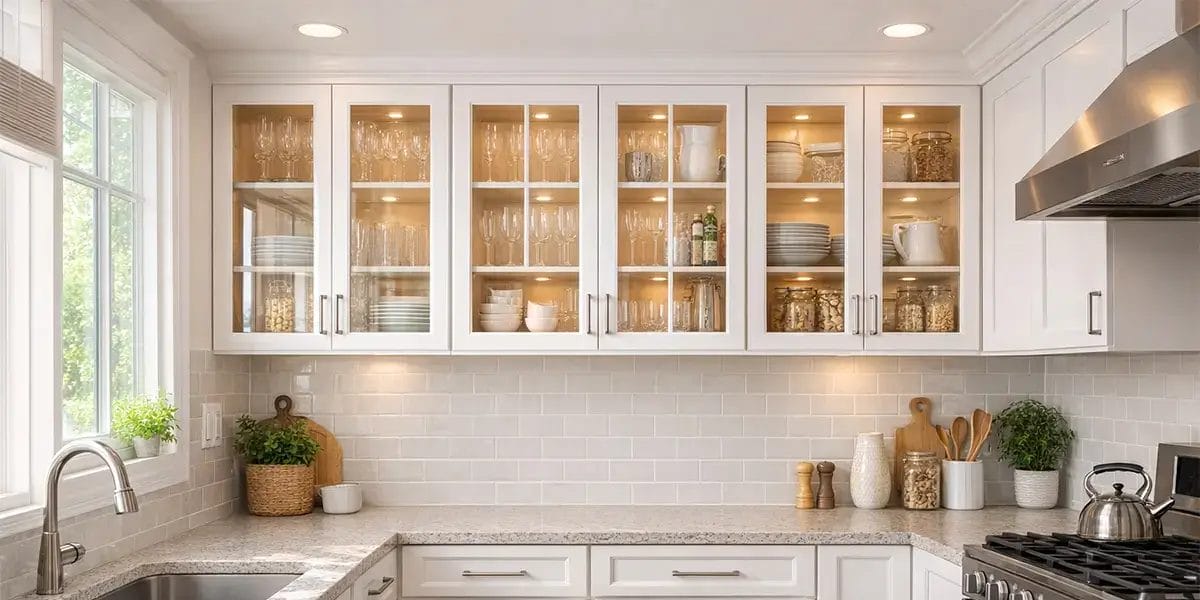
Glass kitchen cabinet doors can make a kitchen feel more open, put favorite dishes on display, and break up long rows of solid upper cabinets. But they also make clutter more visible, show fingerprints, and require careful attention to glass quality and hardware.
Are glass kitchen cabinets worth it? For many kitchens, yes — especially when used on selected upper cabinets rather than throughout the entire room. Whether they work for you depends on what you plan to store behind them, how much maintenance you want, and which type of glass you choose.
Glass Kitchen Cabinet Doors: Pros and Cons at a Glance
| Advantages | Disadvantages |
|---|---|
| Make upper cabinets feel visually lighter | Clear glass exposes clutter and mismatched dishes |
| Display glassware, ceramics, and serving pieces | Fingerprints and cooking residue may be more visible |
| Make it easier to see what’s stored inside | Glass can chip, crack, or break under impact |
| Work well with interior cabinet lighting | Replacement panels and compatible hardware may add cost |
| Available in clear, frosted, textured, and tinted styles | Not every cabinet door can be converted to glass |
Glass-front cabinets work particularly well when you want part of the kitchen to serve as display space. If most of your cabinets hold everyday supplies, food packaging, or cookware, solid doors may be more practical for those areas.
What Are the Advantages of Glass Kitchen Cabinet Doors?
They Make Upper Cabinets Feel Less Heavy
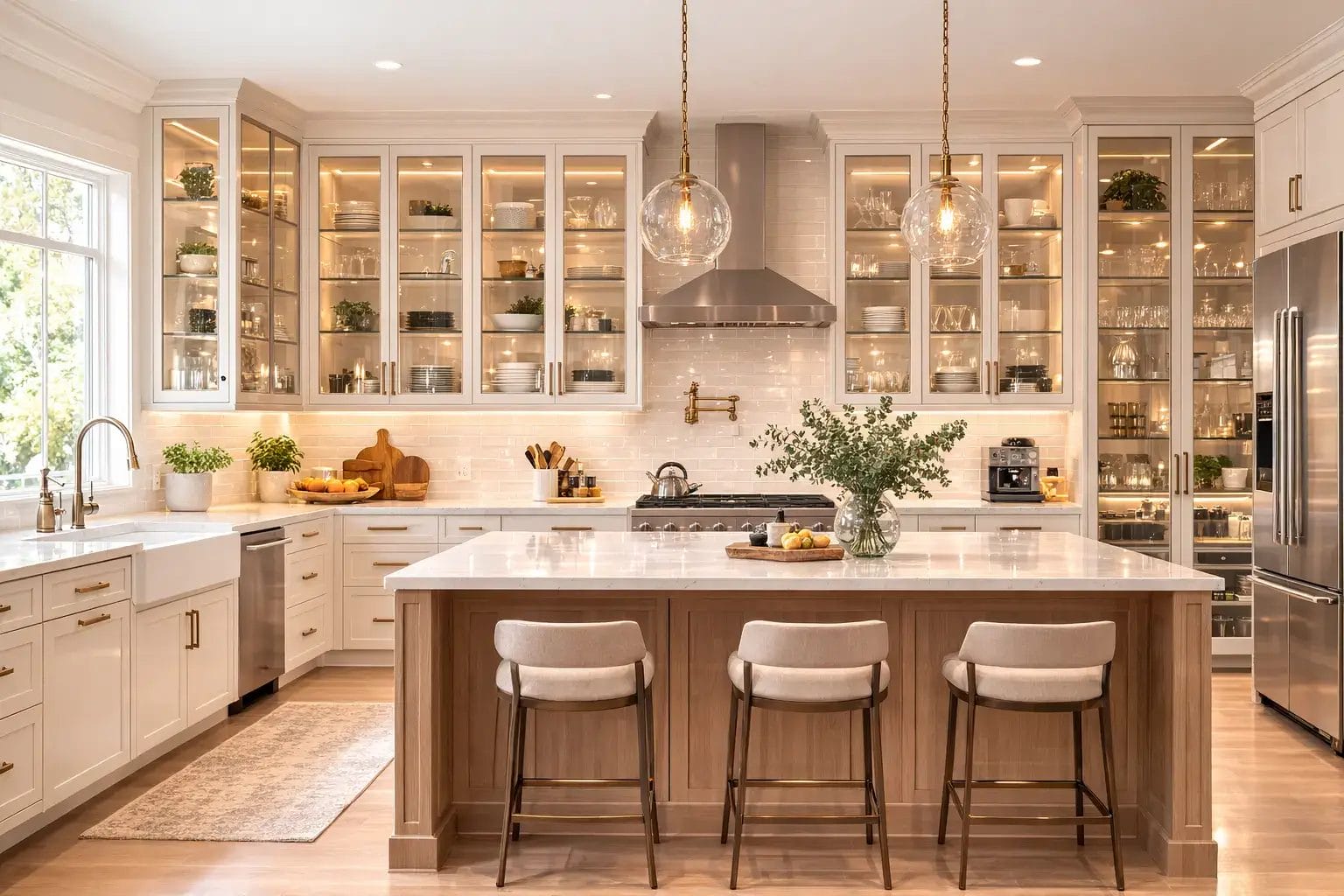
A long row of solid wall cabinets can feel visually dense, particularly in a small kitchen. Replacing a few solid door panels with glass can add depth and interrupt that continuous surface.
This doesn’t mean glass physically makes the kitchen larger. It changes how much of the cabinet interior you can see, making selected areas feel more open.
They Turn Storage into Display Space
Glass-front cabinets are useful for displaying dishes that you enjoy seeing every day.
Clear glass works particularly well for matching dinnerware, wine glasses, and decorative serving pieces. Interior lighting can make these cabinets stand out without requiring additional wall decorations.
One or two glass-front wall cabinets may be enough to create that effect.
You Can Choose How Much the Glass Reveals
Not every glass cabinet door has to be completely transparent.
Frosted glass softens the view of stored items, while fluted and other textured finishes distort their outlines. These options can provide some visual privacy without returning to a completely solid door.
The finish matters as much as the cabinet style.
What Are the Disadvantages of Glass Cabinet Doors?
Clear Glass Makes Clutter More Noticeable
With clear glass doors, everyday storage becomes part of the kitchen’s appearance.
Mismatched cups, food containers, and stacks of assorted dishes remain visible even when the cabinet is closed. If you prefer to keep those items out of sight, use solid doors or choose glass that obscures the interior.
Fingerprints and Grease Need Regular Cleaning
Glass can be easy to wipe down, but marks are often easier to notice on clear, smooth surfaces.
Cabinets near a cooking area may collect grease residue. Frequently used doors can also develop fingerprints around the handles.
The cleaning effort depends on the glass finish, placement, and how often the cabinets are used.
Glass Can Break and May Be More Expensive to Replace
Glass is not impact-proof. Even a durable panel can be damaged by a hard impact, particularly around its edges.
Replacement may require a glass panel made to the correct dimensions or an entirely new door assembly. Costs depend on the glass type, frame construction, and replacement options.
Before ordering, confirm the glass specification and whether replacement components are available.
Are Glass Kitchen Cabinet Doors Durable?
Glass cabinet doors can hold up well to everyday kitchen use when the glass, frame, hinges, and installation are suitable for the application.
Tempered safety glass is generally more resistant to impact than ordinary annealed glass of similar thickness, but it can still break. Do not assume a cabinet includes tempered glass unless the product specification confirms it.
The surrounding cabinet construction also matters. A glass insert may resist moisture, but painted wood frames, joints, shelves, and cabinet boxes still need protection from prolonged water exposure.
When comparing glass-front cabinets, check the glass type, door dimensions, frame construction, and hinge compatibility rather than judging durability by appearance alone.
Which Type of Glass Is Best for Kitchen Cabinet Doors?
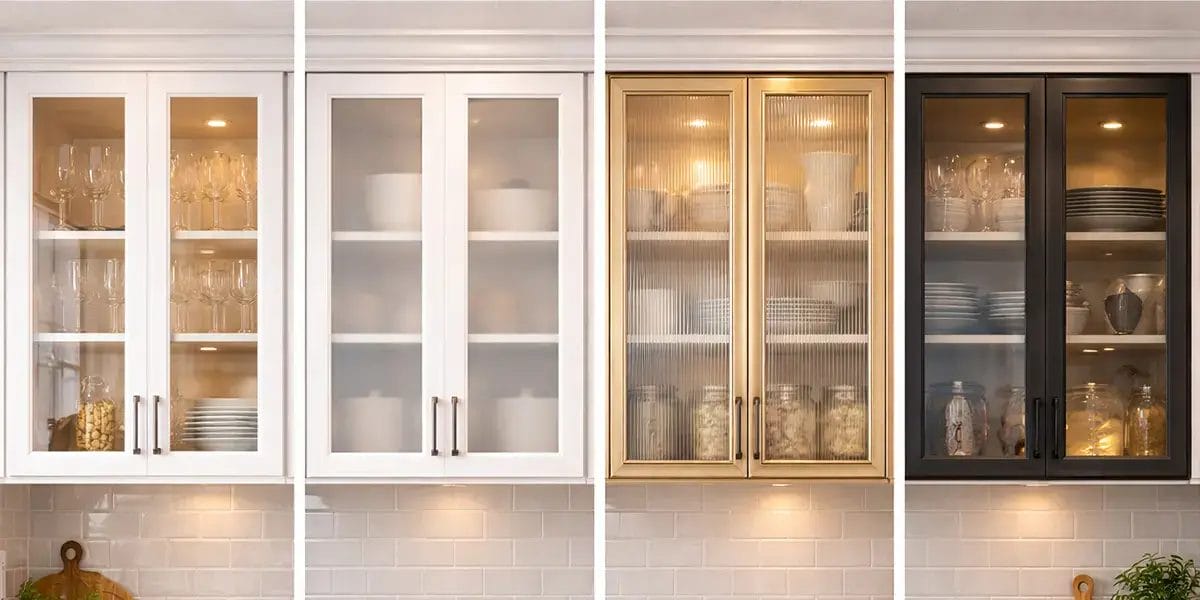
The main difference between glass styles is how clearly you can see through them.
| Glass Type | Visibility | Best Use | Main Consideration |
|---|---|---|---|
| Clear Glass | Fully transparent | Displaying coordinated dishes and glassware | Everything inside remains visible |
| Frosted Glass | Blurred or partially concealed | Everyday upper cabinets | Less suitable for detailed display |
| Fluted or Textured Glass | Distorted view | Decorative wall cabinets and feature areas | Texture may need more attention during cleaning |
| Tinted Glass | Reduced visibility depending on tint and lighting | Contemporary display cabinets | Can make the cabinet interior appear darker |
Clear vs. Frosted Glass Cabinets
Clear glass is the better choice when the items inside the cabinet are part of the design. It provides an unobstructed view of shelves, dishes, and lighting.
Frosted glass is often more practical when the cabinet holds a mixture of everyday items. It allows light through while reducing how clearly you can see the contents.
For a busy kitchen, frosted glass can be a useful compromise between open display and concealed storage.
Where Should You Use Glass Cabinets in a Kitchen?
Glass cabinet doors usually work best when placed deliberately rather than repeated across every cabinet.
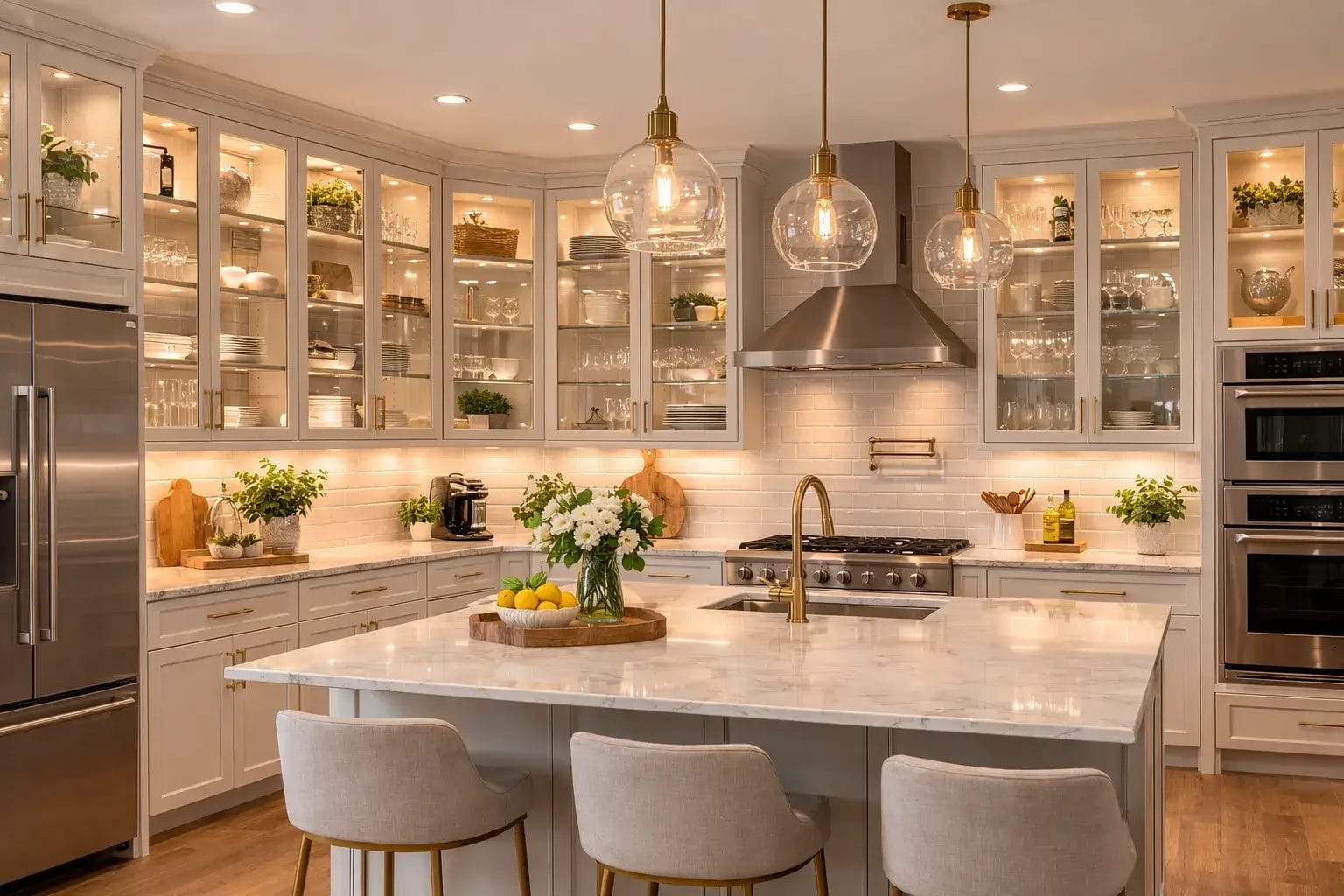
Upper Cabinets
Wall cabinets are a natural location for glass fronts. They keep dishes visible at eye level and can help break up long runs of solid doors.
For example, a pair of glass-front cabinets beside a range hood or window can provide display space while the remaining upper cabinets handle everyday storage.
Coffee Bars and Beverage Stations
Glass doors can work well above a coffee counter or beverage station, where cups, glasses, and serving accessories are frequently used.
Clear glass emphasizes the display. Frosted or textured glass provides a more subdued appearance.
Mixed Glass and Solid Cabinet Layouts
One practical arrangement is to use glass-front upper cabinets for display and solid base cabinets for pots, pans, cleaning products, and less decorative supplies.
This keeps the display area manageable without sacrificing concealed storage.
For more ideas on combining cabinet styles and finishes, see our Kitchen Cabinet Design Trends Guide.
How Do You Clean Glass Kitchen Cabinet Doors?
For routine cleaning, use a clean microfiber cloth and a glass cleaner suitable for the glass finish. Apply the cleaner to the cloth rather than spraying heavily around the frame joints.
For fingerprints, gently wipe the affected area and dry it with a second clean cloth to reduce streaking.
Avoid abrasive pads, especially on coated, frosted, or textured surfaces. Follow the manufacturer’s care instructions, as some finishes require specific cleaning products.
Also check the door frames and hinges periodically. Loose hardware or misaligned doors can create problems even when the glass itself is in good condition.
Glass-Front Kitchen Cabinet Options from RARA
If you prefer frosted glass rather than a fully transparent door, RARA offers selected Shaker wall cabinet configurations with frosted glass panels.
For example, the Opulent White Shaker Wall Cabinet with 2 Frosted Glass Doors is an RTA wall cabinet measuring 24 inches wide, 42 inches high, and 12 inches deep. It combines a white Shaker-style frame with frosted glass door panels.
Another option is the Refined Modern Slate Shaker Wall Cabinet with 2 Frosted Glass Doors, a pre-assembled option with a darker cabinet finish.
These are examples of specific glass-front configurations, not a guarantee that every RARA collection offers the same glass options. Review the individual product listing for available sizes, assembly type, and included components.
You can also browse our Ready-to-Assemble Kitchen Cabinets or Pre-Assembled Kitchen Cabinets to compare cabinet collections.
Frequently Asked Questions About Glass Kitchen Cabinets
Are glass kitchen cabinets a good idea?
Yes, when you want to display selected items or make upper cabinets feel visually lighter. They are less convenient when you need to conceal clutter or prefer a kitchen with minimal visible storage.
Is frosted glass better than clear glass for kitchen cabinets?
Frosted glass is often better for everyday storage because it obscures the contents. Clear glass is better for showcasing dishes, glassware, and decorative objects. Neither is universally better.
Can you replace solid kitchen cabinet doors with glass doors?
Sometimes. The existing cabinet dimensions and door construction determine whether a compatible glass-front replacement is available. Adding glass to an existing door requires a suitable frame and proper glass retention. A solid slab door generally cannot simply have its center removed without an appropriate replacement design.
Do glass cabinet doors break easily?
Not necessarily. Durability depends on the glass type, thickness, support, and installation. Safety glass can offer improved performance, but no glass door is unbreakable.
Are glass-front cabinets harder to keep clean?
They can require more visible surface cleaning, especially clear glass near a busy cooking area. Frosted or textured options may make stored clutter less noticeable, although the cleaning requirements vary by finish.
Are Glass Kitchen Cabinet Doors Worth It?
Glass-front cabinets are worth considering when you want a lighter-looking kitchen and a place to display dishes or glassware. Their main trade-offs are visible clutter, cleaning, and the need to verify safe, compatible construction.
For many homeowners, combining a few glass-front upper cabinets with solid-door storage is more practical than using glass throughout the kitchen. The most useful choice is the one that works with what you actually store and how you use the room.


About author

Related posts

A diagonal corner wall cabinet connects two upper-cabinet runs with an angled front facing into the kitchen. It can provide enclosed storage at an inside... Continue reading

A deep drawer organizer separates cookware, food containers, dishes, or utensils into sections that stay usable when the drawer moves. Choose the organizer around the... Continue reading

Cabinet dividers separate the inside of a cabinet into storage sections, often allowing baking sheets, cutting boards, and serving trays to stand upright. Choose a... Continue reading





Add comment