No products in the cart.
Return To Shop


Kitchen Cabinet Materials: Comparing Solid Wood, MDF and Plywood
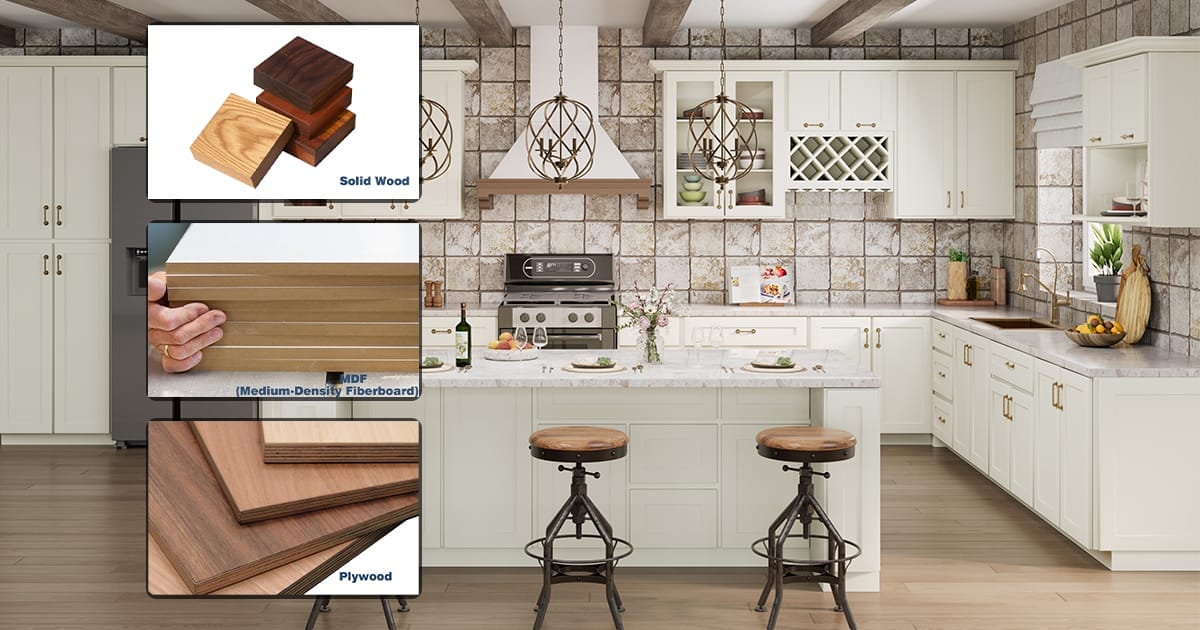
Kitchen cabinets are rarely made from one material throughout. Solid wood, MDF, and plywood are three of the most common materials used across cabinet doors, face frames, boxes, shelves, drawer fronts, and other components.
Each material performs differently. Solid wood is valued for natural grain and visible wood components, MDF provides a smooth and consistent surface for painted doors and panels, while plywood is widely used for structural cabinet components such as boxes and shelves.
This guide compares solid wood, MDF, and plywood by construction, common cabinet uses, durability, moisture considerations, cost, finish options, and long-term value. The goal is not to identify one material as universally best, but to show where each material makes the most sense within a complete kitchen cabinet system.
Solid wood, MDF, and plywood are only part of the material options used in modern cabinetry. For a broader overview that also covers HDF and particleboard, see our guide to the five main kitchen cabinet materials and where each one is commonly used.
Table of Contents
Solid Wood Kitchen Cabinets
Solid wood is commonly used for visible cabinet components such as face frames, door frames, drawer fronts, mouldings, and decorative details. It is valued for its natural grain, stainability, repairability, and traditional wood appearance.
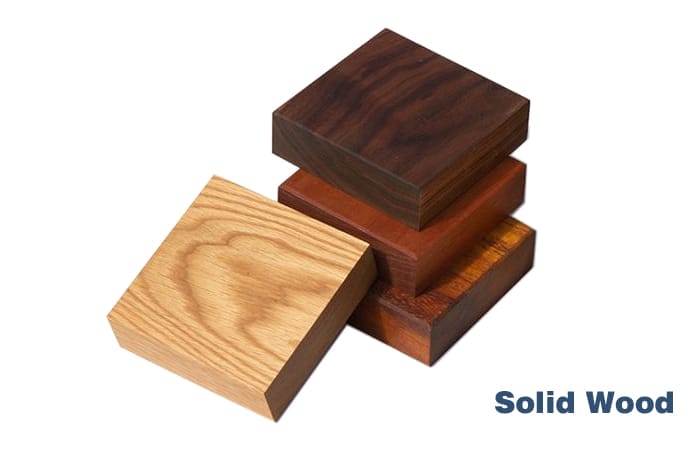
Common cabinet woods include maple, oak, cherry, birch, walnut, and other species. Their grain pattern, hardness, color, and response to humidity vary, so the exact wood species and cabinet component matter when comparing solid wood cabinetry.
Pros of Solid Wood
- Natural wood grain and distinctive appearance
- Can be stained, painted, repaired, or refinished
- Well suited to face frames, door frames, and other visible components
- Available in multiple wood species with different colors and grain patterns
Cons of Solid Wood
- Usually costs more than MDF and many plywood applications
- Can expand or contract as indoor humidity changes
- Wood species vary in hardness, grain, and long-term appearance
- Finish quality and construction affect performance as much as the material itself
Where Solid Wood Works Best
Solid wood is especially useful where natural grain, stained finishes, visible framing, or future refinishing are priorities. It does not need to be used for every cabinet component for a cabinet to be well constructed.
When comparing solid wood with MDF and plywood, focus on the component being evaluated. Solid wood is often chosen for visible parts of the cabinet, while MDF and plywood may be better suited to different painted or structural applications.
MDF Kitchen Cabinets
MDF, or medium-density fiberboard, is an engineered wood panel made from wood fibers combined with resin and compressed into a dense, uniform board. In kitchen cabinets, MDF is commonly used for painted doors, center panels, decorative panels, and selected cabinet components.
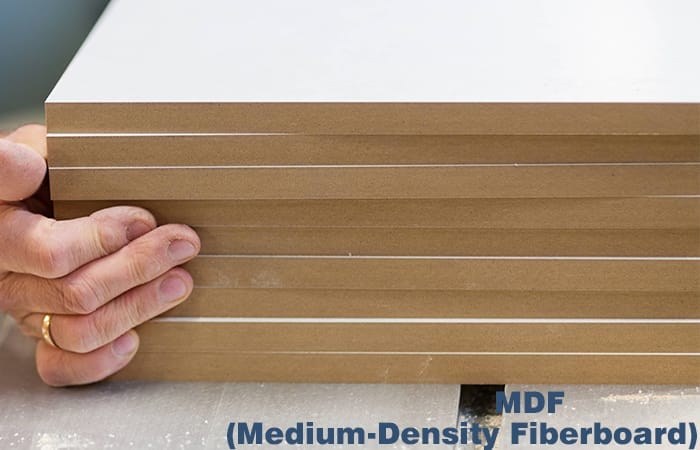
MDF has no natural wood grain, which gives it a smooth and consistent surface for painted finishes. This makes it especially useful for Shaker center panels, routed doors, and other painted components where a uniform appearance is important.
Pros of MDF
- Smooth and uniform surface for painted finishes
- Consistent density without natural knots or grain variation
- Works well for routed and recessed door profiles
- Often costs less than solid wood for comparable painted components
Cons of MDF
- Can swell or deteriorate if exposed to prolonged moisture through damaged or unfinished areas
- Heavier than some plywood panels of similar dimensions
- Does not provide natural wood grain for stained finishes
- Performance depends on panel grade, thickness, finish, and edge protection
Where MDF Works Best
MDF is especially useful for painted cabinet doors, center panels, decorative components, and other applications where a smooth, consistent painted surface is more important than visible natural wood grain.
Compared with solid wood, MDF provides a more uniform painted surface and does not expand and contract in the same way as natural wood. Compared with plywood, MDF is used more often for finished door and panel components than for structural cabinet boxes and shelves.
Plywood Kitchen Cabinets
Plywood is an engineered wood panel made by bonding thin wood veneers in alternating grain directions. In kitchen cabinetry, it is commonly used for cabinet boxes, shelves, backs, and selected drawer components where structural strength and dimensional stability are important.
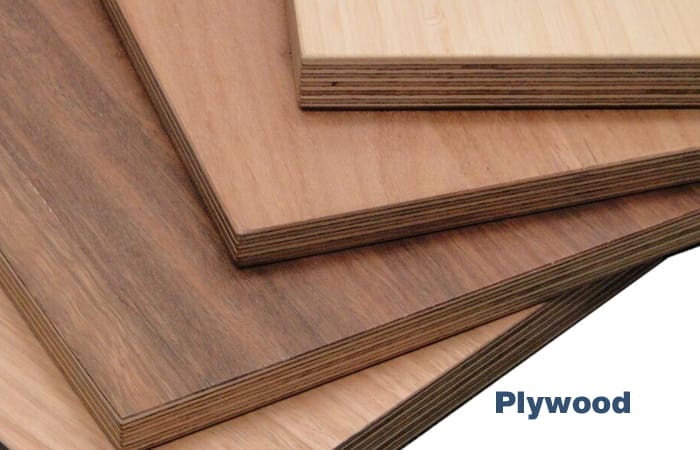
Plywood quality varies by panel thickness, core construction, veneer grade, number of layers, edge treatment, and the presence of internal voids. For that reason, the term “plywood cabinet” alone does not tell you everything about the quality of the finished cabinet.
For a closer look at these differences, see our cabinet grade plywood guide, which explains veneer grades, core types, and thickness considerations for cabinet components.
Pros of Plywood
- Good structural strength for cabinet boxes and shelves
- Layered construction provides dimensional stability
- Generally lighter than MDF panels of similar size
- Suitable for structural components that require relatively high panel strength
Cons of Plywood
- Quality can vary significantly between panel grades and core constructions
- Exposed edges may require edge banding, veneer, or another finished treatment
- Prolonged water exposure can damage veneer layers and panel edges
- Higher-grade plywood can cost more than MDF or particleboard alternatives
Where Plywood Works Best
Plywood is commonly used for structural cabinet components such as cabinet boxes, shelves, backs, and selected drawer parts. It is especially useful where panel strength, dimensional stability, and manageable weight are priorities.
If you are comparing panel materials specifically for cabinet boxes, doors, and other sheet-based components, see our cabinet board materials guide for a more focused look at board selection.
Compared with MDF, plywood is used more often for structural cabinet components, while MDF is commonly chosen for smooth painted doors and panels. Compared with solid wood, plywood provides a more dimensionally stable panel for cabinet boxes and shelves but does not offer the same natural solid-wood character for visible framing components.
Durability and Moisture Considerations
Durability depends on more than the material name alone. Panel grade, thickness, cabinet construction, finish quality, edge protection, hardware installation, and exposure to moisture all influence how solid wood, MDF, and plywood perform over time.
Kitchen areas around sinks, dishwashers, plumbing connections, and wet countertops deserve extra attention, but no common cabinet material should be treated as waterproof unless the specific product is designed and rated for that use.
Solid Wood and Humidity
Solid wood responds naturally to changes in indoor humidity. It can expand or contract as moisture levels change, so wood species, door construction, joinery, finish quality, installation conditions, and indoor climate all affect long-term performance.
Solid wood can be used in both upper and base cabinet components when the cabinet is properly designed and finished. Its suitability should not be determined by cabinet position alone.
MDF and Moisture Exposure
MDF is dimensionally consistent under normal indoor conditions and performs well in many painted cabinet applications. However, prolonged water exposure can damage the panel, particularly at unfinished edges, damaged surfaces, drilled openings, and poorly protected joints.
When MDF is used in kitchen cabinetry, check the panel grade, edge sealing, finish coverage, component location, and manufacturer care requirements.
Plywood and Moisture Exposure
Plywood’s layered construction provides good dimensional stability for cabinet boxes, shelves, backs, and other structural components. However, plywood is not waterproof. Prolonged moisture can still affect exposed edges, veneer layers, adhesives, and lower-quality cores.
When comparing plywood cabinets, consider the panel grade, thickness, core construction, edge treatment, finish, and where the plywood is used within the cabinet.
What Matters Most Near Sinks and Dishwashers
For cabinets installed near plumbing or appliances that may introduce moisture, check the complete cabinet construction rather than choosing by material name alone.
Pay particular attention to:
- Finished and sealed panel edges
- Sink-base floor and plumbing openings
- Finished end panels
- Toe-kick protection
- Seams around countertops and sinks
- Dishwasher clearances and installation requirements
- How quickly leaks can be identified and repaired
A well-protected MDF component can perform better in its intended application than poorly finished plywood, while solid wood performance also depends on species, construction, finish, and humidity conditions. Compare the complete cabinet specification rather than assuming one material is always the most durable.
Cost and Long-Term Value
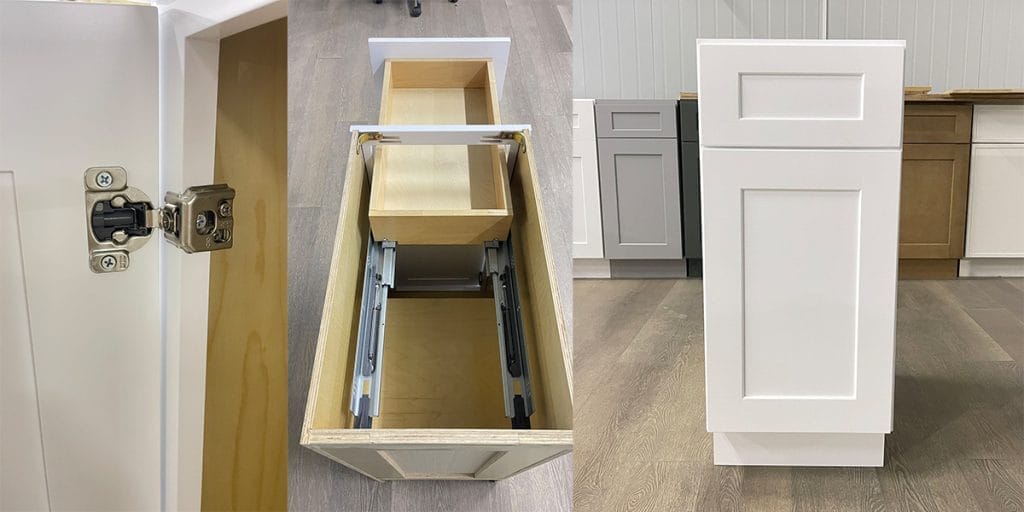
The cost of kitchen cabinet materials depends on more than whether a cabinet uses solid wood, MDF, or plywood. Wood species, panel grade, thickness, cabinet construction, finish, hardware, door style, manufacturing method, and warranty can all affect the final price.
Solid wood components often carry a higher material and finishing cost, especially when premium wood species or stained finishes are used. MDF can provide a more economical option for painted doors and panels, while plywood pricing varies significantly by panel grade, core quality, thickness, and where it is used within the cabinet.
Compare Cost by Cabinet Component
A useful comparison looks at the material used for each part of the cabinet rather than assigning one price level to the entire cabinet.
For example, one cabinet may use plywood for the box, solid wood for the face frame and door frame, and MDF for a painted center panel. Another collection may use different materials while offering similar hardware, finish, and storage features.
Think Beyond the Initial Price
Long-term value depends on how well the cabinet materials, construction, finish, hardware, and installation work together. A higher material cost does not automatically mean better value, and a lower-cost material does not automatically mean poor quality.
When comparing cabinet collections, consider:
- Cabinet box material and thickness
- Door and drawer construction
- Shelf construction and span
- Finish quality
- Edge protection
- Hinges and drawer glides
- Warranty coverage
- Replacement availability
- Total project cost
The better choice depends on the cabinet component, finish, intended use, and overall construction. Compare complete cabinet specifications rather than assuming solid wood, MDF, or plywood is always the best value.
When you are ready to compare these materials in actual cabinet collections, browse our RTA kitchen cabinets to review available construction, finishes, sizes, and configurations.
Solid Wood vs MDF vs Plywood Comparison
Solid wood, MDF, and plywood are all widely used in kitchen cabinetry, but they are not interchangeable. Each material is better suited to certain cabinet components, finishes, and construction requirements. Comparing them side by side makes it easier to understand what you are actually getting in a cabinet collection.
| Factor | Solid Wood | MDF | Plywood |
|---|---|---|---|
| Common cabinet uses | Face frames, door frames, drawer fronts, trim and visible components | Painted doors, center panels, routed panels and decorative components | Cabinet boxes, shelves, backs and selected drawer components |
| Appearance | Natural grain varies by wood species | Smooth, uniform surface without visible grain | Layered wood construction, often covered with veneer, laminate or finish |
| Best suited finishes | Stain, clear finish or paint | Smooth painted finishes | Veneer, laminate, paint or other finished surfaces |
| Dimensional behavior | Naturally expands and contracts with humidity changes | Uniform engineered panel under normal indoor conditions | Layered construction provides good dimensional stability |
| Moisture considerations | Finish and indoor humidity affect performance | Exposed or damaged edges require protection from prolonged moisture | Edges, veneers and cores can still be affected by prolonged water exposure |
| Repair or refinishing | Many visible components can be repaired or refinished depending on construction | Localized damage can be harder to repair invisibly | Repair options depend on the surface finish and type of damage |
| Typical cost tendency | Often higher, especially for premium wood species | Often economical for painted components | Varies significantly by grade, core and thickness |
| What to verify | Wood species, component construction, joinery and finish | Panel grade, thickness, edge treatment and finish | Panel thickness, core quality, veneer grade, number of layers and edge treatment |
Which Material Is Better for Kitchen Cabinets?
There is no single material that is best for every part of a kitchen cabinet. A well-constructed cabinet may intentionally combine several materials, using plywood for structural panels, solid wood for visible framing components, and MDF for selected painted doors or panels.
The more useful question is not simply whether a cabinet is “solid wood,” “MDF,” or “plywood,” but which material is used in each component and how that component is constructed and finished.
How Solid Wood, MDF and Plywood Are Used Together

Kitchen cabinets are often built from more than one material. The cabinet box, face frame, doors, center panels, shelves, drawer components, and finished ends may each use a different material based on the function of that component.
This is why a cabinet described simply as “wood” or “plywood” may not tell you enough about its actual construction.
Cabinet Boxes and Shelves
Plywood is commonly used for cabinet boxes and shelves because its layered construction provides good structural stability. The exact performance depends on panel thickness, core quality, shelf span, and how the cabinet is assembled.
Face Frames and Door Frames
Solid wood is commonly used for face frames, door frames, drawer fronts, and other visible components where natural grain, joinery, or refinishing may be important.
In painted cabinetry, solid wood may also be combined with engineered wood panels rather than being used throughout the entire cabinet.
Painted Door Panels
MDF is commonly used for painted center panels and selected door components because its smooth, uniform surface creates a consistent painted finish without visible wood grain.
A Shaker-style door, for example, may combine a solid wood frame with an MDF center panel depending on the manufacturer and collection.
To understand how these materials relate to the actual door design, see our Shaker cabinet door styles guide, including five-piece door construction, recessed center panels, and the differences between traditional and slim Shaker profiles.
Cabinet doors can also use different core materials, surface treatments, and finishes depending on the door style and manufacturing method. For a door-focused comparison, see our guide to cabinet door materials and their common applications.
Why Mixed-Material Cabinets Are Common
Using multiple materials in one cabinet is not automatically a sign of lower quality. What matters is whether each material is appropriate for the component, properly finished, and supported by sound cabinet construction.
When comparing cabinets, look beyond a single material label and check how the box, doors, face frame, shelves, drawers, and finished panels are actually built.
Kitchen Cabinet Materials FAQ
What is the difference between solid wood, MDF and plywood kitchen cabinets?
Solid wood is natural lumber and is commonly used for visible components such as face frames, door frames, and drawer fronts. MDF is an engineered fiberboard with a smooth, uniform surface that works well for painted doors and panels. Plywood is made from layers of wood veneer and is commonly used for structural components such as cabinet boxes and shelves.
Which parts of kitchen cabinets are commonly made from plywood?
Plywood is commonly used for cabinet boxes, shelves, backs, and selected drawer components. The exact use depends on the cabinet collection, panel thickness, core construction, and manufacturer specifications.
Why is MDF commonly used for painted cabinet doors?
MDF has a smooth and consistent surface without natural knots or grain variation. This makes it useful for painted Shaker center panels, routed doors, and other components where an even painted finish is important.
Is solid wood better than plywood for kitchen cabinets?
Not necessarily. They often serve different purposes. Solid wood is commonly used for visible framing and door components, while plywood is often used for structural panels such as cabinet boxes and shelves. The better material depends on the cabinet component and construction.
Is plywood waterproof?
No. Plywood generally has good dimensional stability, but it can still be damaged by prolonged water exposure, especially at exposed edges, veneer layers, and lower-quality cores. Finish quality and edge protection remain important.
Can one kitchen cabinet use solid wood, MDF and plywood together?
Yes. Mixed-material construction is common. For example, a cabinet may use plywood for the box, solid wood for the face frame and door frame, and MDF for a painted center panel. Using more than one material does not automatically indicate lower quality.
What should I compare besides the cabinet material?
Check where each material is used, panel thickness, plywood core quality, wood species, edge treatment, finish quality, shelf construction, drawer construction, hinges, drawer glides, joinery, warranty, and replacement support.


About author

Related posts

A cabinet hinge restrictor clip limits how far a compatible hinge opens, helping stop a cabinet door or handle from hitting a nearby wall, cabinet,... Continue reading

Raised panel cabinets have a shaped center panel that rises from its surrounding profile, while recessed panel cabinets have a flat center set back inside... Continue reading

A bathroom vanity with drawers works best when the drawer layout matches your daily storage and leaves room for the sink and plumbing. Check which... Continue reading

A kitchen cabinet valance is a decorative board used to finish an open area in a cabinet layout, often between two wall cabinets above a... Continue reading

Stacked kitchen cabinets use a separate upper tier above the main wall cabinets. They add enclosed storage and can extend a cabinet run closer to... Continue reading





Add comment