No products in the cart.
Return To Shop or
or  ,
,


How to Choose Eco-Friendly Kitchen Cabinets
If you’ve ever opened a brand-new kitchen cabinet and noticed a sharp chemical smell, you’re not imagining things. Cabinets play a much bigger role in your home’s indoor air quality than most people realize.
As someone who’s worked with kitchens and cabinetry for years, I can tell you this: eco-friendly cabinets aren’t just about being “green.” They’re about protecting your family’s health, ensuring long-term durability, and avoiding materials that quietly cause problems down the road.
This guide breaks down how to evaluate eco-friendly kitchen cabinets in the U.S. market—without marketing hype, and without unnecessary fear tactics.
Table of Contents
1. Start With the Materials
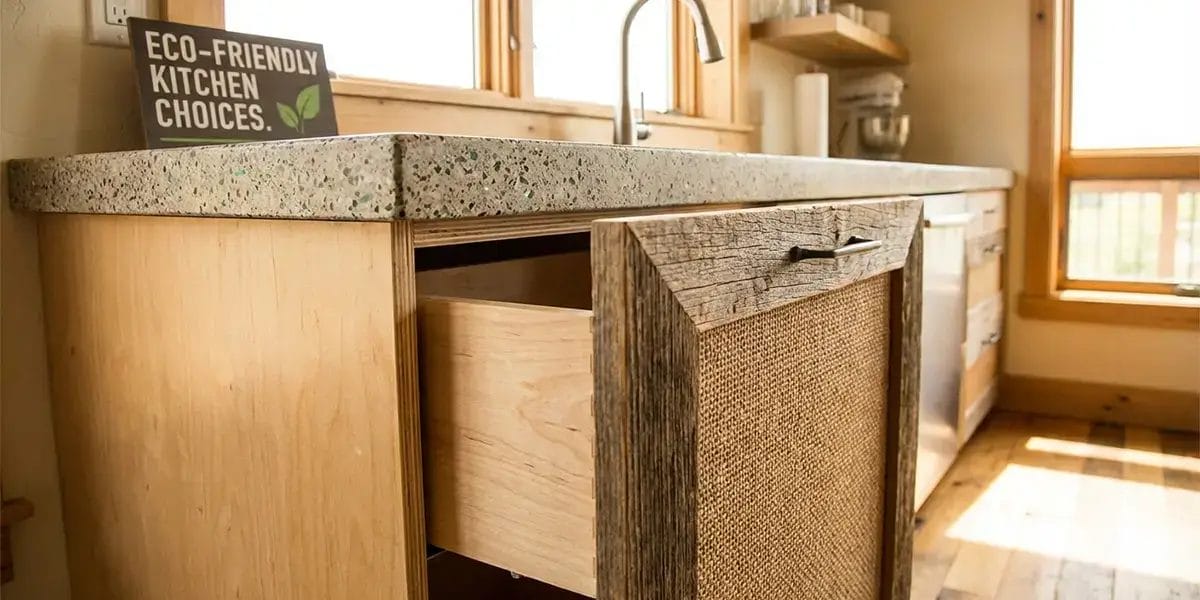
Every kitchen cabinet is made up of three core parts:
the cabinet box, the doors, and the countertop.
If you want an eco-friendly kitchen, this is where the real decisions begin.
Cabinet Box Materials
Solid Wood
Solid wood is naturally low in harmful emissions and highly durable. When properly finished, it’s one of the safest cabinet materials available. The downside? Cost. Solid wood cabinets are usually more expensive, which is why many homeowners look at engineered alternatives.
Particle Board & MDF
These materials are common in modern cabinetry, but quality varies widely. The main concern is the adhesive used during manufacturing. Low-quality glue can release formaldehyde and other VOCs over time.
In the United States, always look for:
- CARB Phase 2
- TSCA Title VI compliance
These certifications indicate low formaldehyde emissions and compliance with federal safety standards. Without them, you’re taking an unnecessary risk.
2. Choosing Safe Countertop Materials
Countertops cover a large surface area and can directly affect indoor air quality.
Quartz Countertops
Quartz is one of the safest and most stable countertop options. Made from natural quartz combined with resin, high-quality quartz is:
- Non-toxic
- Low in VOCs
- Radiation-free
Brands like Silestone, Caesarstone, and Cambria follow strict U.S. safety standards and are widely trusted.
Natural Marble
Marble is visually stunning, but homeowners sometimes worry about natural radiation. In reality, most marble used in homes contains only trace amounts of naturally occurring elements. The risk is minimal, and reputable suppliers test their materials before sale.
Engineered Stone & Composite Materials
Quality varies significantly. Look for products labeled low-VOC or certified by Greenguard, which ensures minimal harmful emissions indoors.

3. Cabinet Door Materials & Finishes
Cabinet doors are what you touch every day—and what you see the most.
Solid Wood Doors
Naturally eco-friendly and durable, especially when finished with low-VOC coatings.
PVC or Thermofoil Doors
These can be safe if manufactured correctly, but poorly made products may release VOCs over time. Manufacturing quality matters a lot here.
Painted Doors
The paint itself makes the difference.
- Low-VOC paints are safe and widely used today
- Cheap paints may continue emitting chemicals long after installation
4. Manufacturing Quality & Craftsmanship
Even eco-certified materials can underperform if craftsmanship is poor.
Well-made cabinets feature:
- Tight joints and precise construction
- High-quality edge banding that seals exposed panel edges
- Smooth drawer slides and properly finished interiors
Edge banding is especially important—it prevents formaldehyde inside engineered boards from escaping into the air. This detail is often overlooked but makes a real difference.
5. Smell, VOCs, and Indoor Air Quality
A strong chemical smell is a clear warning sign. It often indicates excessive VOCs or formaldehyde.
That said, no smell doesn’t automatically mean safe. Some harmful substances are odorless. Use smell as an initial check, but always rely on certifications and material transparency for real assurance.
6. Eco-Friendliness Comparison Table
| Material | Eco-Friendliness | Key Notes |
|---|---|---|
| Quartz countertop | High | Non-toxic, low VOC, radiation-free |
| Natural marble | Moderate | Minimal natural radiation, generally safe |
| Engineered stone | Varies | Choose low-VOC or Greenguard-certified |
| Solid wood door | High | Naturally low in harmful chemicals |
| PVC / thermofoil door | Moderate | Poor-quality versions may emit VOCs |
| Painted door | Depends on paint | Low-VOC paint is safe |
| Particle board | Moderate | Must meet CARB Phase 2 or TSCA Title VI |
| MDF | Moderate | Same standards apply |
7. Simple Quality Checks Before You Buy
Before committing to cabinets, take a closer look:
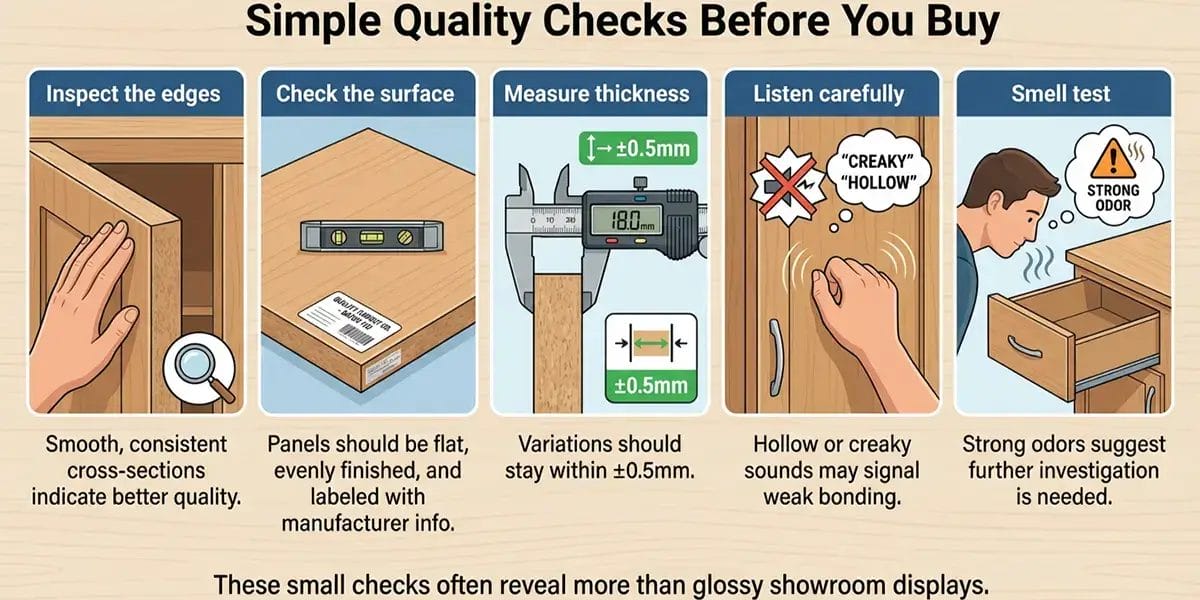
- Inspect the edges: Smooth, consistent cross-sections indicate better quality
- Check the surface: Panels should be flat, evenly finished, and labeled with manufacturer info
- Measure thickness: Variations should stay within ±0.5mm
- Listen carefully: Hollow or creaky sounds may signal weak bonding
- Smell test: Strong odors suggest further investigation is needed
These small checks often reveal more than glossy showroom displays.
Final Thoughts on Eco-Friendly Cabinets
Choosing eco-friendly kitchen cabinets isn’t about chasing the most expensive option or falling for buzzwords. It’s about understanding materials, verifying certifications, and paying attention to craftsmanship.
When done right, eco-conscious cabinets provide:
- A healthier indoor environment
- Long-term durability
- Timeless design that doesn’t compromise function
A good kitchen should work hard for your family—and quietly support your health every day.


Related posts
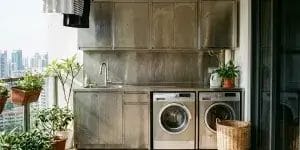
If you’re planning a laundry setup on your balcony, one question matters more than anything else: What kind of cabinet will actually last—and not turn... Continue reading

If you’re planning a kitchen upgrade, installing a new sink might seem like a simple task. I’ve had many homeowners tell me,“It looks easy enough—I’ll... Continue reading

If your kitchen feels tight, cluttered, or just hard to work in—you’re not alone. I’ve worked with plenty of homeowners across the U.S., and honestly,... Continue reading
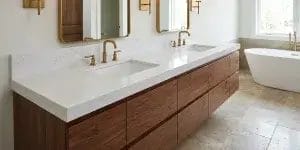
When planning a bathroom remodel, many homeowners focus on tile, lighting, or paint colors. But after working with bathroom designs for many years, I’ve learned... Continue reading
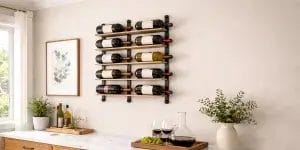
A wall mounted wine rack is more than just a storage solution. In many homes, it becomes a subtle design feature that adds personality and... Continue reading







Add comment