No products in the cart.
Return To Shop or
or  ,
,


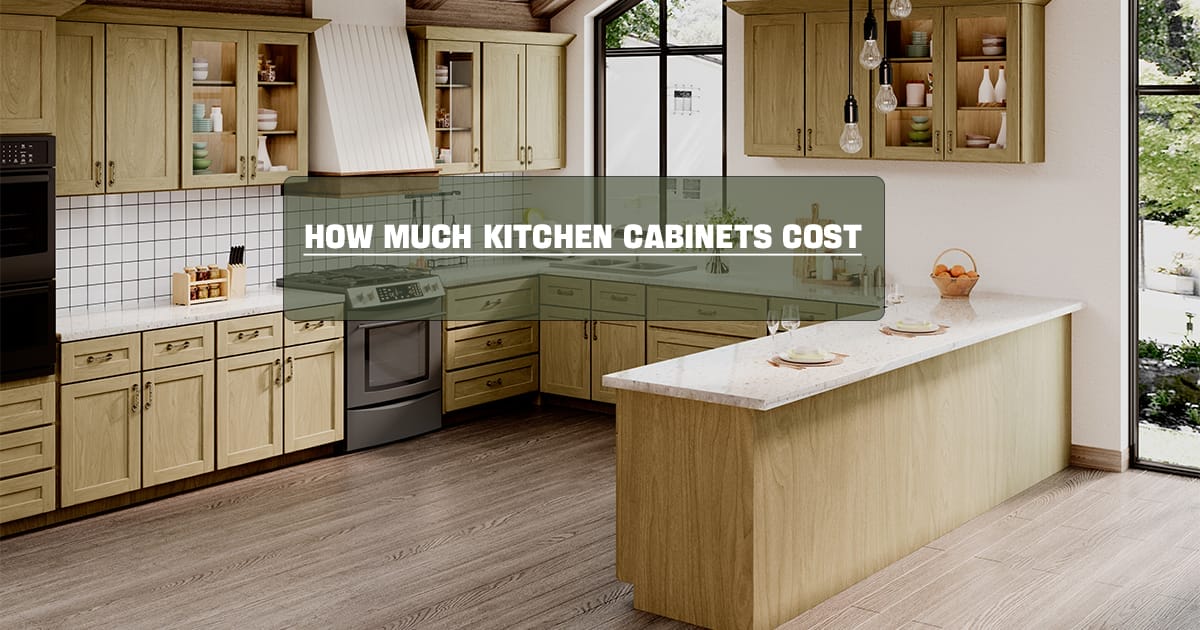
How Much Do Kitchen Cabinets Typically Cost?
Why Cabinet Costs Matter? If you’re planning a kitchen renovation, it’s very likely that cabinets will be one of your biggest expenses. As someone who’s helped dozens of families over the past two decades, I know how confusing it can feel: you want cabinets that look beautiful, but also ones that resist daily wear-and-tear, stay functional, and don’t blow your budget. For many home cooks (and moms), the big questions are: How much should I realistically set aside? Where do costs come from? Can I save without sacrificing quality?
In this guide, I’ll walk you through the typical cost breakdown, offer budget ranges, and share practical tips so you can plan wisely and avoid sticker shock.
Table of Contents
What Makes Up the Cost of Kitchen Cabinets

When I quote a kitchen for my clients, I always break down the costs into several “buckets.” Here’s what you’re paying for — and why.
1. Material Type
The material you choose has a major impact on cost. For example:
- Stock or RTA (ready-to-assemble) cabinets often use less expensive engineered materials, and their installed cost can range from $100 to $300 per linear foot for basic stock.
- Semi-custom cabinets offer more flexibility, and you might pay $150 to $650 (or more) per linear foot installed, depending on finish and design.
- Custom cabinets—built to your exact layout and wishes—can be $500 to $1,200+ per linear foot installed.
- Material quality also matters within those tiers: solid wood, plywood, MDF, and particleboard all carry different price points.
2. Cabinet Type
- Stock (or prefab): These are mass-produced, standard sizes, and are usually the least expensive.
- Semi‑custom: Gives more flexibility in size, style, or finish; more costly than stock but more budget-friendly than fully custom.
- Custom: Tailored to your kitchen, your design, and often includes features like built-ins, specialty wood, or architectural detail. Labor, design, and materials push the cost higher.
3. Hardware & Accessories
Things like hinges, drawer slides, pull-out organizers, lazy Susans, soft-close doors, and drawer dividers all add up. Even a modest upgrade in hardware or organizer features can increase your cost noticeably.
4. Installation
Installation is more than just “screwing in boxes”: demoing old cabinets, measuring precisely, transporting, leveling, attaching crown moldings, and more. Installation labor can range significantly depending on the type of cabinet.
5. Additional “Hidden” Costs
- Wall modifications, fixing uneven drywall, or reinforcing studs.
- Electrical/water changes (if the layout shifts).
- Disposal or removal of old cabinets.
- Trim, molding, and finishing touches (toe-kicks, crown moldings).
- Design or measurement fees (some pros charge for an in‑home measurement).
Here’s a quick table to make this more concrete:
| Cost Component | What You’ll Pay For / Why It Matters |
|---|---|
| Material | Stock vs custom, wood vs MDF, quality of wood/plywood |
| Cabinet Type | Prefab vs semi-custom vs custom |
| Hardware & Accessories | Drawers, organizers, soft-close, etc. |
| Labor & Installation | Removal, fitting, leveling, moldings |
| Extras | Trim, wall prep, demolition, design/measurement fee |
Typical Budget Ranges & What You Get for Your Money
To help you set a realistic budget, here are some common “tiers” for cabinetry in a kitchen remodel, based on linear-foot pricing and total cost:
| Budget Tier | Approximate Total Cost | What This Budget Can Get You |
|---|---|---|
| $5,000 – $10,000 | Very modest stock or RTA cabinets, limited features | Basic ready-to-assemble boxes, standard finishes, minimal custom organization |
| $10,000 – $20,000 | Mid-range semi-custom or good-quality stock with upgrades | More style options, better hardware, some pull-outs or built-in organizers |
| $20,000+ | Semi-custom or custom with premium materials and full-featured design | Custom sizing, high-end wood or plywood, specialized storage (pantry units, tall cabinets), premium doors/hardware |
These are rough estimates (actual costs vary by your kitchen size, your geographic area, how complex the layout is, and who is doing the work). For example, HomeGuide’s data shows that the average total cost for new cabinets (material + labor) often falls between $4,500 and $15,000 for many kitchens.Custom high-end systems could go even higher depending on design complexity.
Real‑World Examples
To make things feel more tangible, here are a few example cabinet units you might buy, plus how they contribute to your cost:
- IKEA KNOXHULT base cabinet (white) — around $320 for a basic RTA-style unit.
- Project Source Oak Brook unfinished base cabinet — about $129; good base to paint or stain yourself.
- Hampton Bay Avondale 36″ plywood Shaker base — roughly $344, ready to assemble but with more solid construction.
- IKEA SEKTION / MAXIMERA base with drawers — approx $490, offering full-extension drawers and good storage.
These individual cabinet prices help show how your “per linear foot” estimate translates into actual units and help you plan rough quantities.
Tips & Tricks to Plan Your Cabinet Budget Smartly
Here are some practical strategies I’ve picked up over 20 years designing kitchens and working with families:
1. Measure Carefully & Prioritize
- Sketch your layout, note how often you cook, and decide which storage features you really need (e.g., deep drawers vs. corner lazy Susans).
- Allocate more budget to function (drawers, organizers) if that’s important to you — ugly problems are no fun when you have to dig for your pots every day.
2. Shop Around
Get quotes from local carpenters / cabinet makers and from big-box or factory-direct suppliers. Sometimes local craftsmen can compete or beat “brand-name” cabinet lines.
Compare “all in” bids: cabinets + installation + accessories, not just the boxes.
3. Know Where to Save (and Where to Spend)
Save: on stock cabinets for low-use areas, or choose RTA units you can assemble.
Spend: on high-quality hardware, good drawer slides, or organizers if those features will affect how often and how well you use your kitchen.
4. Think Long-Term
Higher-quality cabinets (with good construction and hardware) may cost more now but can last decades—making them worth the investment.
Maintain regularly: clean interiors, wipe down surfaces, keep drawer slides and hinges in good shape, and you’ll extend the life of your cabinetry.
My Experience & Perspective
As a designer and a mom, I’ve seen kitchens where clients went super-budget and regretted not investing in better slides or more organized drawers. On the other hand, I’ve also worked with families who spent more than they needed to for highly custom cabinets when a simpler semi-custom design would have served them just as well.
One of my favorite “real-life budget wins”: a client who chose decent semi-custom cabinets, but spent extra on drawer organizers and soft-close hardware. The result? A kitchen that feels premium to use—but without the stratospheric cost.
Summary & Action Plan
- Cabinet cost is made up of material + cabinet type + hardware + installation + extras.
- Typical pricing (installed) ranges from $100/linear foot for basic stock to $1,200+/linear foot for full custom.
- For most kitchen remodels, you might fairly budget $10,000–$20,000 for quality cabinets, though your exact number depends on your space, style, and how many custom features you want.
- Do your homework: measure, sketch, and get multiple quotes — and don’t forget to account for installation and extras.
- Invest smart: if your budget is tight, prioritize the features you will use every day.


Related posts

Receiving the keys to a new home is an exciting milestone yet it often brings an important and sometimes confusing question. What is the best... Continue reading

The kitchen is far more than a place for cooking meals. In many American homes it has become a central space for daily routines family... Continue reading
Kitchen cabinets play a vital role in both the function and visual identity of a kitchen. Among all cabinet components, cabinet doors are the most... Continue reading
The colors you choose for your home don’t just paint walls—they shape moods, create feelings, and influence how every day unfolds. In 2026, whole home... Continue reading
In modern home renovation projects, custom cabinetry has become a core element in both kitchen and bathroom planning. Choosing the right custom cabinet supplier is... Continue reading







Add comment