No products in the cart.
Return To Shop or
or  ,
,


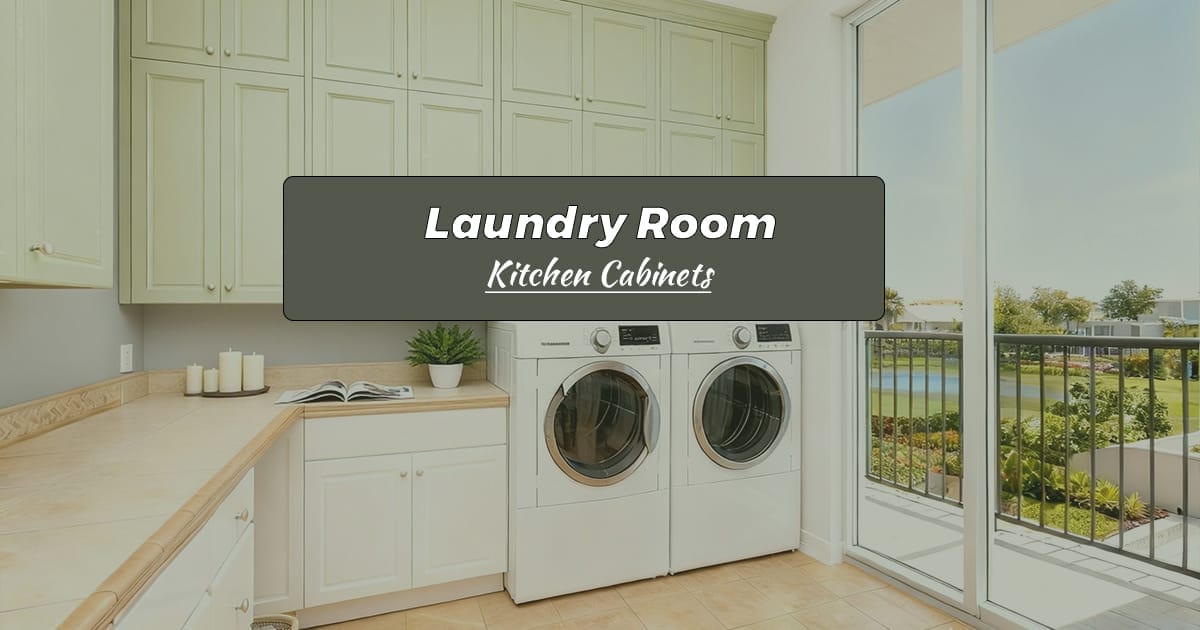
Can I Use Kitchen Cabinets in a Laundry Room?
Hello dear reader — I’m your friendly kitchen‑design “big sister”, here to walk you through a question I hear a lot from homeowners: “Can I use kitchen cabinets in my laundry room?” The short answer: Yes, absolutely. But like any smart home‑decision, it’s worth understanding how and when it works best. Whether you’re a dedicated home‑manager, a partner who loves rolling up the sleeves, or a home‑renovation pro advising your clients, let’s dive into this topic with warmth, practicality and design flair.
Table of Contents
1. Why it makes sense — and when it doesn’t

In the U.S. market, many laundry rooms are small, multi‑purpose spaces — yet they handle heavy use: washers, dryers, folding, storage for detergents, linens, often cleaning supplies and even pet or seasonal gear. Kitchen cabinets—designed for durability, storage, style—can be a perfect fit. For example, RTA cabinet providers note laundry‑room cabinets as part of their offering:
“RTA laundry room cabinets are cost‑effective … easy to construct … offering plenty of functional storage space.”
When using kitchen cabinets in the laundry room makes sense:
- You want consistent design continuity between your kitchen and laundry (e.g., same cabinet style or finish).
- Your laundry room storage needs mimic kitchen storage (drawers, doors, tall cabinets).
- You’re doing a full refresh/renovation and want one coherent cabinetry solution.
When you might pause or adjust:
- The laundry room is extremely wet/humid (steam from dryer, utility sink) and you need materials specifically rated for that environment.
- The space is so small or oddly shaped that typical kitchen cabinet depths/layouts don’t fit well.
- You’re on a tight budget and might prioritize simpler utility shelving rather than full cabinetry.
For guidance on choosing between buying ready-to-assemble cabinets or building your own for flexibility in multiple spaces, see our guide on Buy vs Build Cabinets.
2. Design, colour & style opportunities

Using kitchen‑style cabinets in the laundry gives you a chance to elevate a utilitarian space into something you enjoy being in. Let’s look at some design angles:
Colour / finish ideas:
- A crisp white shaker cabinet in the laundry can mirror your kitchen and make the space feel brighter.
- Want a bit of personality? Go for soft grey, sage green or even navy on lower cabinets; pair with white uppers for contrast.
- Wood grain or laminate finishes from kitchen lines work beautifully in laundry rooms — giving a warm, elevated look rather than “just a utility room”.
Style & layout suggestions:
- Upper cabinets: Use shallow depth or hang above your washer/dryer stack. Keeps bulk storage up high out of the way.
- Base cabinets: If you have a folding counter or sink beside your machine, base cabinets on either side with doors and drawers give great hidden storage.
- Tall pantry‑style cabinets: If your laundry has space, tall units from kitchen lines can store mops, ironing boards, vacuum or liners — smart use of vertical real estate.
- Consistent hardware: Using the same pulls/hardware as your kitchen ensures coherence.
- Durability concerns: Choose cabinet materials that resist moisture; seal edges; consider moulding or filler if the ceiling differs.
For more guidance on cabinet door styles and choosing what fits your space and lifestyle, see Shaker vs Slab Kitchen Cabinet Doors.
3. Practical upgrade / renovation advice
If you’re thinking of incorporating kitchen cabinets into your laundry remodel, here are practical pointers:
- Measure carefully: Depth, door swing, clearance for dryer vent, folding space. Kitchen cabinets often are 24″ deep — in a cramped laundry you might prefer 18″ depth for upper units to avoid crowding.
- Think about the ceiling and lighting: If your laundry is low‑ceiling, tall kitchen cabinets might make space feel tight. On the other hand, reaching up high repeatedly isn’t ideal. Balance is key.
- Material suitability: Because laundry rooms often experience steam, moisture, vibrations from machines — choose cabinets with good build quality, plywood or moisture‑resistant materials, good finish. For more guidance on durable materials, see our guide on Choosing the 5 Cabinet Materials.
- Budget wisely: Re‑using kitchen‑line cabinets might save you money vs custom utility‑only cabinets; but ensure you’re not paying premium “kitchen custom” prices for a space that needs more utility‑based materials. RTA lines state laundry room cabinets are “cost‑effective … offering plenty of functional storage space.”
- Installation details: Make sure wall anchoring is solid (venting, washer/dryer vibrations), plumbing/electrical are accessible. Consider adding a folding countertop or sink module integrated with the cabinets.
- Color & flow: If your kitchen is open to or visible from the laundry room (common in U.S. homes), matching or complementing the kitchen cabinet style and color helps visual continuity.
- Storage zoning: Life in a laundry room is fast: sort, fold, treat stains, store supplies. Use base cabinets for daily items (detergents, rags, baskets) and upper/tall cabinets for less‑used items (seasonal linens, spare parts, bulk supplies).
4. Common pitfalls & how to avoid them
As your big‑sister designer, I’ve seen the missteps. Here are what to watch out for:
- Neglecting vent/clearance issues: Kitchen cabinets assumed for kitchen use might need modification (back venting, thinner depth) in laundry.
- Using cheap materials that don’t hold up to steam or vibration — especially if you’re converting kitchen cabinets rather than laundry‑specific ones. Learn more about why RTA cabinets are cost-effective and materials used in our guide on Why Are RTA Cabinets So Cheap.
- Over‑designing and under‑functioning: If you pick a beautiful kitchen finish but don’t plan accessibility (e.g., large door handles, good lighting, pull‑out shelves), you lose practicality.
- Budget blowouts: Don’t commit to constant matches of kitchen quality cabinets for laundry when lower cost utility‑cabinets would suffice. Balance style + function + budget.
- Ignoring layout changes: Just because kitchen cabinets “fit” doesn’t mean they fit the workflow of a laundry. Folding space, sink, appliance access need to dictate cabinet placement, not just mimic kitchen layout.
5. Key takeaways & next steps for your home
Here are the main things I want you to walk away with — and some actions you can take right away:
Takeaways:
- Yes—you can use kitchen cabinets in the laundry room. They can elevate style, offer durable storage, and bring design harmony.
- Whether it’s smart depends on your space, budget, usage patterns, and whether you pick suitable materials and layout.
- Matching your kitchen design (colour, finish, style) helps visual flow; but making sure it works for the laundry tasks is just as important.
Next steps for you:
- Measure your laundry room: width, height, depth, door swings, appliances, sink if any.
- Define how you use the room: Do you fold there? Iron? Store bulk items?
- Browse cabinet lines (kitchen‑cabinet brands) to compare styles, finishes, sizes—look for ones labelled “laundry or utility” too.
- Pick your colour/finish scheme: For example, white uppers + wood‑tone base cabinets or all‑white for bright space.
- Prepare your budget: decide how much you allocate to cabinets vs countertop vs appliances vs finishing touches.
- Talk to your installer or cabinet supplier: Ask how the kitchen‑line cabinets handle laundry‑room conditions (moisture, vibration), what adjustments are needed for depth or vent.
- Visualise the final space: How will cabinets look next to washer/dryer? Will your choice make laundry day easier—faster, more organised, less clutter?
So there you have it — your guide to whether kitchen cabinets can (and should) be used in your laundry room. With the right choices, you’ll end up with a space that’s not only functional but one you’re genuinely happy to use—a lovely extension of your home. Your laundry routine can feel less like a chore and more like part of a thoughtfully designed space. Let’s make your home even more comfortable, smart, and visually beautiful.


Related posts

Receiving the keys to a new home is an exciting milestone yet it often brings an important and sometimes confusing question. What is the best... Continue reading

The kitchen is far more than a place for cooking meals. In many American homes it has become a central space for daily routines family... Continue reading
Kitchen cabinets play a vital role in both the function and visual identity of a kitchen. Among all cabinet components, cabinet doors are the most... Continue reading

The colors you choose for your home don’t just paint walls—they shape moods, create feelings, and influence how every day unfolds. In 2026, whole home... Continue reading
In modern home renovation projects, custom cabinetry has become a core element in both kitchen and bathroom planning. Choosing the right custom cabinet supplier is... Continue reading









Add comment