No products in the cart.
Return To Shop
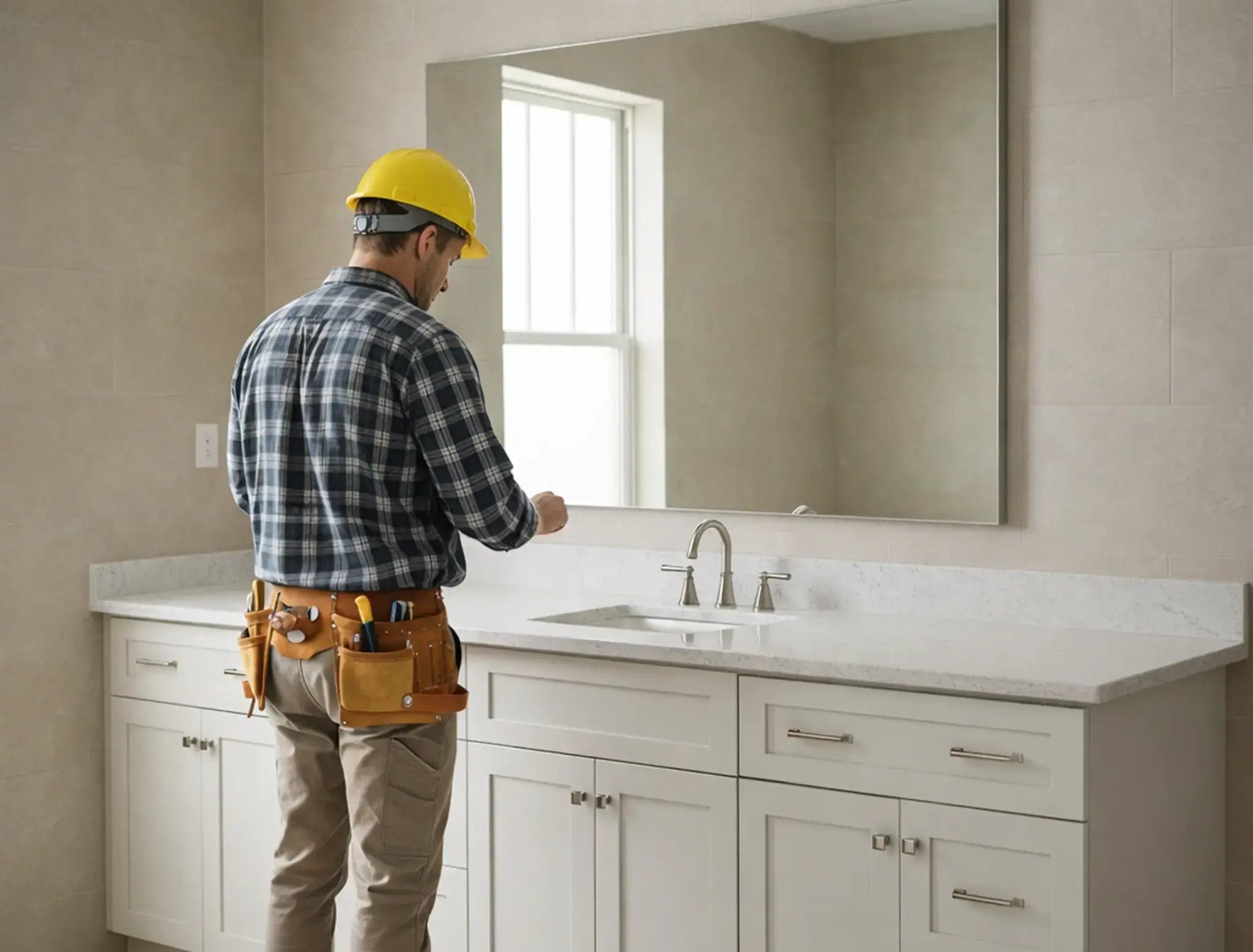



Is It Cheaper to Buy or Build a Cabinet?
Building your own kitchen cabinets can be cheaper than buying them if you already have woodworking tools, cabinet-making experience, and enough time to complete the project. However, once you include plywood, doors, drawers, hardware, finishing supplies, tools, and labor, buying ready-to-assemble (RTA) cabinets may offer better overall value.
The biggest difference is the amount of work involved. Building cabinets from scratch means manufacturing the components yourself. Buying RTA cabinets means assembling parts that have already been manufactured.
Neither option is always cheaper. To make a fair comparison, you need the same cabinet sizes, similar materials and hardware, and a complete list of expenses.
This guide explains what each option costs, where DIY expenses can add up, and when buying RTA cabinets makes more sense.
Building vs. Buying Kitchen Cabinets: What’s the Difference?
Building and buying cabinets can involve very different amounts of work, even when the finished kitchen looks similar.
Building Kitchen Cabinets From Scratch
Building your own cabinets means measuring, designing, cutting, assembling, and finishing the components.
Depending on the project, you may need to manufacture cabinet boxes, build or purchase doors and drawer fronts, construct drawer boxes, install hardware, and prepare the finished surfaces.
You also need suitable workspace and enough experience to produce square, accurately sized cabinet components.
Buying Ready-to-Assemble Cabinets
Ready-to-assemble cabinets are manufactured before delivery. Cabinet panels, doors, drawers, and other components are prepared according to the selected cabinet design.
You assemble the cabinet boxes using the manufacturer’s instructions, then complete the installation.
You do not normally need to cut every panel from raw plywood or manufacture matching doors from scratch.
What About Pre-Assembled Cabinets?
Pre-assembled cabinets arrive with the cabinet boxes already assembled. They can reduce the assembly work required at the job site, although installation is still necessary.
For more information, read our RTA vs. Pre-Assembled Kitchen Cabinets Guide.
The comparison in this article focuses primarily on building cabinets from raw materials versus purchasing RTA cabinets.
How Much Does It Cost to Build Kitchen Cabinets Yourself?
The cost of DIY kitchen cabinets depends on the materials, cabinet sizes, construction methods, door styles, tools, and amount of work you can do yourself.
Plywood and lumber may be the most obvious expenses, but they are only part of the project.
1. Cabinet Box Materials
Cabinet boxes require panels for the sides, bottoms, shelves, backs, and other structural components.
Plywood is commonly used in cabinet construction because of its strength and dimensional stability. Other engineered wood products may also be suitable for specific applications.
When calculating material costs, include panel thickness, cutting waste, joinery materials, and replacement pieces if mistakes occur.
A material estimate based only on the visible cabinet dimensions may underestimate the amount of plywood required.
2. Cabinet Doors and Drawer Components
Doors and drawers can account for a substantial portion of the work involved in building kitchen cabinets.
Depending on the cabinet design, you may need:
- Door materials or finished cabinet doors
- Drawer box materials and drawer fronts
- Hinges and drawer slides
- Handles or knobs
- Mounting hardware and fasteners
Building a set of matching cabinet doors requires accurate measurements and consistent joinery. If you plan to purchase finished doors instead, include that expense in your DIY budget.
3. Tools and Workshop Equipment
Cabinet construction requires suitable tools for measuring, cutting, drilling, joining, and assembling components.

Experienced woodworkers may already own the necessary equipment. Someone building cabinets for the first time may need to purchase tools, rent equipment, or pay for professional panel cutting.
Tool purchases can make a small DIY project more expensive than expected, particularly when the equipment will rarely be used again.
4. Finishing Supplies
If your cabinets are unfinished, you may need sanding supplies, primer, paint, stain, or other suitable finishing products.
Finishing also requires time and an appropriate work environment.
For painted cabinets, the preparation and application process can affect the final appearance. Compare this work with the finish already included in a manufactured cabinet collection.
5. Time and Labor
DIY labor is easy to overlook because you may not be paying yourself.
However, designing cabinets, cutting panels, assembling boxes, fitting hardware, and finishing doors can take considerable time.
It is useful to calculate two totals:
- Cash cost: The money you actually spend on materials, tools, hardware, and supplies.
- Total cost including your time: The cash expense plus an estimated value for the hours you spend on the project.
Both figures matter. They simply answer different questions.
What Does Buying RTA Kitchen Cabinets Cost?
Buying RTA cabinets removes much of the cabinet manufacturing work, but the advertised cabinet price may not represent the complete project cost.
A cabinet order can involve additional expenses for fillers, finished panels, toe kicks, decorative trim, hardware, freight, assembly, and installation.
Before comparing prices, check exactly what comes with the selected cabinet collection. Some components or accessories may need to be ordered separately.
Cabinet Purchase Price
Start with an itemized cabinet list showing the required sizes, quantities, and configurations.
Compare the cabinet box material, door construction, drawers, hinges, slides, and finish.
Two cabinet orders with similar prices may include different specifications.
Delivery and Assembly
RTA cabinets are typically shipped in separate packages containing components that require assembly.

Delivery charges depend on the order and shipping arrangements. Assembly may be completed by the homeowner or an installer.
If you hire an installer, ask whether cabinet assembly is included in the quoted labor.
Installation and Finishing
Once assembled, RTA cabinets still require proper positioning, leveling, structural fastening, and finishing.
The same installation requirements generally apply to cabinets built from scratch.
To compare building and buying fairly, separate expenses shared by both options from expenses unique to each method.
You can explore RARA’s Ready-to-Assemble Kitchen Cabinet Collections to compare available cabinet sizes and configurations.
DIY vs. RTA Cabinet Cost Comparison: An Example
Consider a hypothetical project involving four kitchen cabinets with comparable sizes, storage configurations, and finishes.
The figures below are illustrative assumptions used to explain the calculation. They are not actual RARA product prices, contractor estimates, or published industry averages.
Option A: Build the Cabinets Yourself
Assume the following costs:
- Cabinet materials, doors, hardware, and finishing supplies: $1,450
- Additional tools and consumables: $250
- Material delivery: $100
Total cash expense: $1,800
Now assume that manufacturing and assembling the cabinets requires 40 hours.
If you assign your time an illustrative value of $25 per hour, the additional labor value would be $1,000.
Total including the estimated value of your time: $2,800
Option B: Buy RTA Cabinets
Assume:
- Comparable factory-made RTA cabinets: $1,850
- Delivery: $200
Total cash expense: $2,050
Assume the cabinet boxes require eight hours of assembly.
Using the same illustrative value of $25 per hour, the assembly labor value would be $200.
Total including the estimated value of your time: $2,250
What Does This Example Show?
In this example, building the cabinets has a lower cash expense:
- DIY cash expense: $1,800
- RTA cash expense: $2,050
Building saves $250 in out-of-pocket expenses under these assumptions.
However, once the estimated value of the owner’s time is included:
- DIY total: $2,800
- RTA total: $2,250
RTA is $550 lower in the comparison that includes time.
This does not mean that RTA cabinets are always cheaper. Different materials, tool ownership, supplier prices, shipping charges, and labor requirements can change the outcome.
Both options would still require installation and any necessary site preparation. Those shared costs, along with applicable taxes and other renovation expenses, are excluded from this example.
For a more detailed project budget, see our Kitchen Cabinet Cost Estimator.
When Is Building Your Own Kitchen Cabinets Cheaper?
Building cabinets may cost less when you already have the equipment and experience required to complete the work efficiently.
You Already Own Woodworking Tools
If you have a properly equipped workshop, you may not need to spend additional money on major equipment.
This can make a meaningful difference, especially for smaller cabinet projects.
You Have Cabinet-Making Experience
Experienced builders are better positioned to estimate materials, plan joinery, reduce waste, and avoid costly mistakes.
If you are learning these skills during a complete kitchen remodel, the project may require more time and materials than expected.
Your Kitchen Requires Unusual Cabinet Dimensions
Building can be useful when a standard cabinet will not fit an unusual space.
Before choosing custom construction, however, check whether a standard cabinet combined with an appropriate filler or finished panel can accommodate the layout.
You Are Building Several Cabinets
A larger project may allow you to spread workshop setup and tool costs across multiple cabinets.
That can improve the economics of DIY construction, but the actual savings still depend on materials and labor.
When Does Buying RTA Kitchen Cabinets Make More Sense?
RTA cabinets are often worth considering when standard cabinet dimensions can fit the kitchen and you want to avoid manufacturing every cabinet component.
You Want to Reduce Manufacturing Work
RTA cabinets arrive with the main components prepared for assembly.
You do not normally need to cut plywood into cabinet panels, manufacture matching doors, or finish every component from raw materials.
You Want Consistent Cabinet Doors and Finishes
Producing uniform doors and drawer fronts can be time-consuming.
A manufactured cabinet collection provides matching components in the selected style and finish, although construction quality and finish specifications still vary by product.
You Have Limited Workspace
Building cabinets from scratch requires room for sheet materials, cutting tools, assembly, and potentially finishing work.
RTA assembly still needs adequate workspace, but it generally does not require a complete cabinet-making workshop.
Your Kitchen Uses Standard Cabinet Sizes
Many kitchens can be planned using standard wall cabinets, base cabinets, drawer bases, sink bases, corner cabinets, and pantry cabinets.
When those configurations fit the room, there may be little benefit in manufacturing every cabinet box from scratch.
Before purchasing, measure the actual room and confirm appliance clearances, fillers, and finishing requirements.
Browse RARA’s RTA Kitchen Cabinets to compare available cabinet types.
DIY vs. RTA Cabinet Quality: What Should You Compare?
Building cabinets yourself does not automatically produce higher quality. Buying RTA cabinets does not automatically mean compromising on quality.
The actual construction matters more than the purchasing method.
Cabinet Box Construction
Compare the materials, panel thickness, joints, back construction, and structural support.
Whether you build the cabinet yourself or buy manufactured components, the box needs to be properly designed for its intended size and use.
Doors and Drawer Hardware
Examine hinges, slides, drawer construction, door materials, and hardware compatibility.
For DIY cabinets, confirm that the hardware you select is appropriate for the panel material and cabinet design.
For RTA cabinets, check the manufacturer’s specifications for the components included in the selected collection.
Finishes and Moisture Protection
Kitchen cabinets are exposed to occasional spills, cleaning products, and changes in indoor humidity.
Proper finishes, protected panel edges, and correct installation matter for both DIY and factory-manufactured cabinets.
For more information, read our Kitchen Cabinet Materials Guide.
Can You Build Some Kitchen Cabinets and Buy the Rest?
Yes. Combining purchased cabinets with custom-built components can be practical when most of the kitchen uses standard sizes but one area requires special construction.
For example, you might purchase standard wall and base cabinets while building a specialized storage cabinet for an unusual opening.
Before mixing different cabinet systems, check their heights, depths, door styles, finishes, and installation details.
A custom-built cabinet may not match a factory finish exactly, even when the colors look similar.
For a broader comparison of purchasing approaches, see our Custom vs. Ready-Made vs. DIY Cabinets Guide.
What Should You Compare Before Deciding?
A fair comparison starts with one complete kitchen layout and the same cabinet specifications.
Check the following before deciding:
- Required cabinet sizes and configurations
- Cabinet box, door, and drawer materials
- Hinges, drawer slides, and other hardware
- DIY materials or purchased cabinet prices
- Tool purchases, consumables, and finishing supplies
- Freight and delivery
- Manufacturing and assembly time
- Installation and finishing labor
- Warranty and replacement support
Keep cash expenses separate from the estimated value of your own time.
If you have already received prices from cabinet suppliers, our Kitchen Cabinet Quote Comparison Guide explains how to compare complete orders fairly.
FAQ: Buying vs. Building Kitchen Cabinets
Is It Cheaper to Buy or Build Kitchen Cabinets?
Building can have lower out-of-pocket costs if you already own the tools, have cabinet-making experience, and complete the work yourself. Buying RTA cabinets may offer better overall value once materials, hardware, tool costs, finishing, and labor time are considered.
How Much Does It Cost to Build Your Own Cabinets?
The total depends on the number and size of cabinets, material specifications, doors, drawers, hardware, tools, finishing supplies, and labor. Prepare a complete material list before estimating the cost, and compare it with an itemized RTA cabinet quote for the same layout.
Is Building Kitchen Cabinets Hard?
Cabinet construction requires accurate measuring, cutting, joinery, assembly, and hardware installation. Door making and finishing can add complexity. Building a complete kitchen is generally more demanding than assembling factory-prepared RTA components.
Is Building Cabinets the Same as Assembling RTA Cabinets?
No. Building from scratch involves manufacturing components from raw materials. Assembling RTA cabinets involves putting together components already prepared by the manufacturer.
Are RTA Cabinets Good Quality?
RTA cabinets are available in different materials and construction types. Quality depends on the selected cabinet collection, hardware, manufacturing, and correct assembly. Review individual product specifications rather than judging quality by the assembly format alone.
Do RTA Cabinets Still Need Installation?
Yes. RTA cabinets require cabinet-box assembly before installation. Once assembled, they must be positioned, leveled, secured, and finished correctly.
Final Decision: Should You Build or Buy Kitchen Cabinets?
Building cabinets may be worthwhile if you have the tools, experience, and time to complete the work, particularly when your kitchen needs unusual cabinet dimensions.
Buying RTA cabinets may be more practical when standard sizes work for the layout and you prefer to avoid manufacturing cabinet components from scratch.
The best choice depends on the complete cost, the specifications you want, and the work you are prepared to do.
Compare RARA’s Ready-to-Assemble Kitchen Cabinets and Pre-Assembled Kitchen Cabinets to review available sizes, door styles, and cabinet configurations.
If you need help checking the layout before ordering, you can also request RARA’s Free Room Design Service.


About author

Related posts

A cabinet hinge restrictor clip limits how far a compatible hinge opens, helping stop a cabinet door or handle from hitting a nearby wall, cabinet,... Continue reading

Raised panel cabinets have a shaped center panel that rises from its surrounding profile, while recessed panel cabinets have a flat center set back inside... Continue reading

A bathroom vanity with drawers works best when the drawer layout matches your daily storage and leaves room for the sink and plumbing. Check which... Continue reading

A kitchen cabinet valance is a decorative board used to finish an open area in a cabinet layout, often between two wall cabinets above a... Continue reading

Stacked kitchen cabinets use a separate upper tier above the main wall cabinets. They add enclosed storage and can extend a cabinet run closer to... Continue reading





Add comment