No products in the cart.
Return To Shop.png?sharp=1)



RTA vs Pre-Assembled Kitchen Cabinets: Which Is Better for Your Project?
Last Updated: September 2, 2026
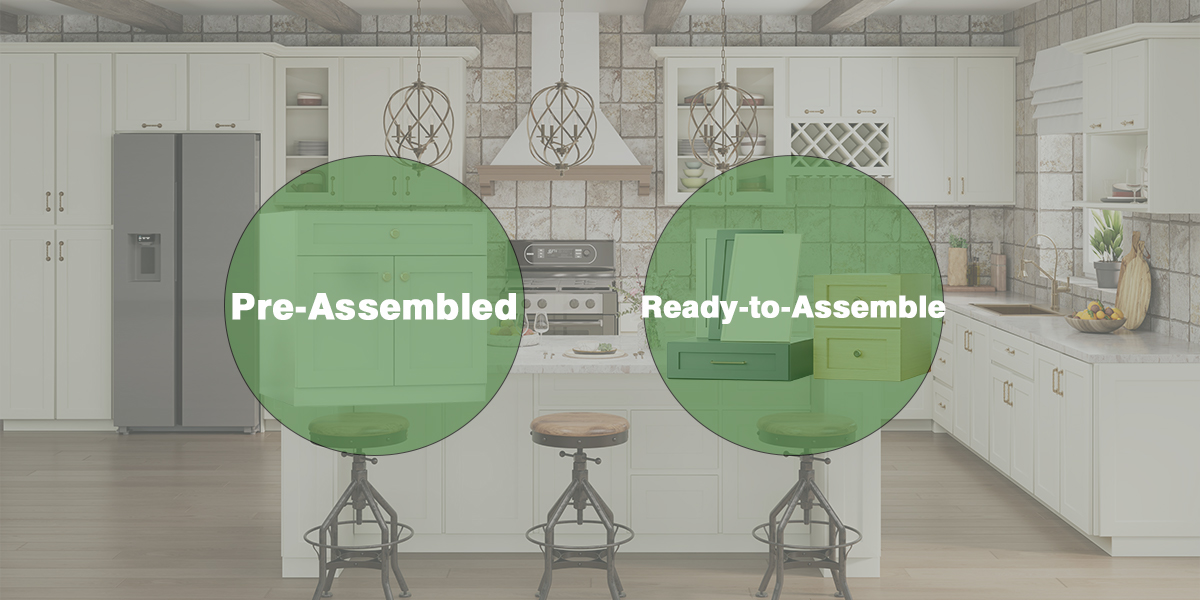
RTA vs pre-assembled kitchen cabinets differ mainly in how the cabinet boxes arrive and how much assembly is completed before shipment. RTA kitchen cabinets arrive flat-packed and require cabinet-box assembly, while pre-assembled kitchen cabinets arrive with the boxes professionally assembled. Both options still require on-site positioning, leveling, fastening, fillers, trim, and countertop coordination.
Choosing between them depends on your budget, project schedule, delivery access, assembly experience, and installation plan. This guide compares cost, quality, shipping, assembly, installation, and project fit so you can decide which option makes more sense for your kitchen.
Table of Contents
RTA vs Pre-Assembled Cabinets at a Glance
RTA vs pre-assembled cabinets differ primarily in how the cabinet boxes arrive. RTA cabinets arrive flat-packed and require cabinet-box assembly before installation. Pre-assembled cabinets arrive with the boxes professionally assembled before shipment. Both options still require complete on-site installation.
| Comparison | RTA Cabinets | Pre-Assembled Cabinets |
|---|---|---|
| Delivery Format | Cabinet components arrive flat-packed in boxes. | Cabinet boxes arrive professionally assembled. |
| Cabinet-Box Assembly | Required before installation. | Completed before shipment. |
| On-Site Installation | Required. | Required. |
| Handling and Access | Smaller packages are generally easier to move through narrow doors, hallways, and stairs. | Assembled units are larger and heavier, so delivery access requires more planning. |
| Project Planning | Allow time and suitable space for cabinet-box assembly. | Allow sufficient receiving, handling, and storage space for assembled units. |
| Labor and Time | The homeowner or installer completes cabinet-box assembly. | Cabinet-box assembly is completed before delivery, reducing preparation work on site. |
| Quality | Depends on materials, construction, hardware, finish, and assembly accuracy. | Depends on materials, construction, hardware, finish, and assembly accuracy. |
| Best Fit | Projects prioritizing flexible handling, DIY involvement, or tighter delivery access. | Projects prioritizing convenience and eliminating cabinet-box assembly. |
Quality is determined by cabinet construction, materials, hardware, finish, and assembly accuracy—not by the delivery format alone. RTA and pre-assembled cabinets can offer comparable quality when their specifications are equivalent.

What Are RTA Kitchen Cabinets?
RTA stands for Ready-to-Assemble. Instead of arriving as completed cabinet boxes, RTA kitchen cabinets are delivered flat-packed as cabinet-specific components. A typical package may include pre-drilled cabinet-box panels, doors or drawer fronts, shelves, assembly hardware, and instructions. Exact contents vary by cabinet type and collection.
Before installation, the cabinet boxes must be assembled according to the collection-specific instructions. Once assembled, the cabinets still need to be positioned, leveled, fastened, adjusted, and fitted with the necessary fillers and trim during on-site installation.
RTA describes the delivery and assembly format—not a specific material, construction method, door style, or quality level. When comparing RTA cabinets, review the cabinet-box specifications, doors, drawers, hinges, slides, shelves, finish, and warranty rather than judging quality from the delivery format alone.

What Are Pre-Assembled Kitchen Cabinets?
Pre-assembled kitchen cabinets arrive with their cabinet boxes professionally assembled before shipment. The cabinet-box panels are joined and squared in advance, eliminating the cabinet-box assembly step. Depending on the selected collection and cabinet type, doors, drawer fronts, drawers, and hardware may also arrive installed or prepared for installation.
Pre-assembled does not mean the cabinets arrive fully installed in the kitchen. After delivery, each cabinet still needs to be positioned, leveled, fastened, adjusted, and secured on site. Fillers, finished panels, trim, countertops, appliances, and other project-specific components must also be fitted during installation.
Like RTA, pre-assembled describes the delivery and assembly format—not one universal material, construction method, or quality level. Cabinet-box materials, doors, drawers, hinges, slides, finishes, sizes, and accessories vary by collection, so buyers should compare the specifications of the actual cabinets being considered.
RTA vs Pre-Assembled Cabinets: Key Differences
The differences between RTA and pre-assembled cabinets affect more than packaging. They determine when cabinet-box assembly occurs, how much preparation is required before installation, and how labor and project time should be planned.
Assembly and Labor
RTA cabinet boxes must be assembled before installation. The process generally involves identifying the cabinet-specific components, joining the box panels, keeping the cabinet square, and installing or adjusting the included parts according to the instructions. This work may be completed by the homeowner, contractor, or cabinet installer, depending on the project and the person’s assembly experience.
Pre-assembled cabinets eliminate the cabinet-box assembly step because the boxes are professionally assembled before shipment. However, this does not eliminate on-site installation labor. The cabinets must still be carried into the space, positioned according to the layout, leveled, joined together, fastened securely, and adjusted before fillers, panels, trim, and countertops are completed.
For either format, accurate work matters. Correct cabinet-box assembly helps doors, drawers, and hardware operate properly, while correct on-site installation keeps the cabinet run level, aligned, and securely attached.
Shipping and Delivery
RTA cabinets are shipped as flat-packed components in separate cartons. The smaller individual packages can be easier to move through narrow doors, hallways, staircases, elevators, and tight turns. However, a complete kitchen may include many cartons, so the receiving area should provide enough dry, protected space to organize and store every package before assembly.
Pre-assembled cabinets arrive as completed cabinet boxes, making the individual units larger and heavier. Before ordering, measure the entire delivery route—including exterior doors, hallways, stairs, elevators, corners, and the final storage area. Plan sufficient help and appropriate handling equipment to move the cabinets safely without damaging the boxes, doors, or surrounding surfaces.
Processing time, shipping time, delivery method, and freight cost can vary by collection, inventory availability, order size, destination, and carrier. Confirm the current estimate for the specific order before scheduling demolition or installation. When the shipment arrives, check the package count, note visible damage, take clear photos, and follow the applicable shipping and claim policy.

On-Site Installation
Both RTA and pre-assembled cabinets require complete on-site installation. Before either format is installed, the cabinet layout, wall dimensions, floor conditions, appliance locations, and required clearances should be checked against the final design.
For RTA cabinets, each cabinet box must first be assembled and checked for square. After assembly, the cabinets are positioned, leveled, shimmed where necessary, joined to adjacent cabinets, and securely fastened according to the installation plan.
Pre-assembled cabinets can move directly to these installation steps because the cabinet boxes arrive assembled. They must still be positioned, leveled, shimmed, joined, and fastened on site. Fillers, finished panels, trim, countertops, appliances, and final door or drawer adjustments are also completed during installation.
Choosing pre-assembled cabinets reduces the work required before installation, but it does not replace the installation process or the need for an accurate layout.
Project Timing, Access, and Storage
RTA cabinets require a separate assembly stage before installation begins. The project schedule should allow time to confirm the package inventory, organize cabinet-specific components, assemble each cabinet box, and check the completed boxes before they are moved into position. A clean, level work area is also needed for assembly.
Because RTA components remain flat-packed until assembled, they can be easier to move through restricted access routes and store in stages. This may be useful when the project has narrow stairs, tight doorways, limited turning space, or no room to receive multiple assembled cabinet boxes at once.
Pre-assembled cabinets remove the cabinet-box assembly stage, but the completed boxes require more floor space for receiving and storage. Delivery should be coordinated with the installation schedule so the cabinets are not stored longer than necessary and remain protected from moisture, construction debris, and accidental damage.
The better format depends on the available workspace and project sequence. RTA requires assembly time and a suitable work area, while pre-assembled cabinets require a clear delivery route and sufficient space for larger completed boxes.
Are RTA Cabinets Less Expensive Than Pre-Assembled Cabinets?
RTA cabinets are often less expensive upfront than equivalent pre-assembled cabinets because cabinet-box assembly is not included. However, this does not mean every RTA order will have a lower final project cost. The comparison must use the same kitchen layout, cabinet sizes, materials, door construction, finish, hardware, and accessories.
When comparing the total cost, include:
- Cabinet prices for the same layout and specifications
- Cabinet-box assembly labor or the homeowner’s assembly time
- Tools or supplies required for assembly
- Delivery, receiving, and handling costs
- Fillers, finished panels, trim, hardware, and accessories
- Complete on-site installation for either delivery format
RTA may provide better value when the homeowner or installer can complete the cabinet-box assembly efficiently. If professional assembly must be added separately, the price difference may become smaller. Pre-assembled cabinets may justify a higher upfront price when reducing preparation time and avoiding cabinet-box assembly are important to the project.
The most reliable approach is to compare complete kitchen cabinet quotes line by line rather than comparing advertised cabinet prices alone.
How Does Cabinet Quality Compare?
RTA cabinets can provide the same level of quality and durability as pre-assembled cabinets when the product specifications are equivalent and the cabinets are assembled and installed correctly. The delivery format alone does not determine cabinet quality.
Materials and Construction
Start by comparing the cabinet-box construction. Review whether the box uses plywood, engineered panels, or a combination of materials, along with the panel thickness, joinery method, back-panel construction, and shelf specifications. A material name alone does not provide enough information to judge the strength or expected performance of the cabinet.
Next, compare the doors, drawer boxes, hinges, drawer slides, shelves, finish, and available warranty. These components can vary between collections even when both products are sold in the same delivery format. RTA cabinets are not automatically lower quality, and pre-assembled cabinets are not automatically more durable.
For a fair comparison, review the specifications of the exact cabinet collections being considered. Our kitchen cabinet materials guide explains how common cabinet-box, door, and engineered materials differ.
Assembly Quality and Inspection
For RTA cabinets, assembly quality depends on following the collection-specific instructions and completing each step accurately. Cabinet-box panels should be joined securely, and the completed box should be checked for square and alignment before doors, drawers, or hardware are adjusted and the cabinet is installed.
Pre-assembled cabinet boxes are professionally assembled before shipment, which removes the need for the buyer or installer to complete this step. However, professional assembly does not guarantee that every cabinet will arrive without damage or require no adjustment. Handling and transportation can affect doors, drawers, hardware, or finishes, so an inspection after delivery is still necessary.
Before installation, check both cabinet formats for:
- Damage to cabinet-box panels, doors, drawers, and finishes
- Secure joints and properly aligned cabinet boxes
- Smooth operation of doors, drawers, hinges, and slides
- Missing hardware, shelves, or cabinet-specific components
- Adjustments needed before the cabinets are installed
Document any visible damage or missing components and follow the applicable claim or replacement process before installation begins.

Which Option Is Better for Your Project?
Neither delivery format is the best choice for every kitchen. The right option depends on your assembly plan, project schedule, receiving route, available workspace, storage conditions, and the specifications of the cabinet collections being considered.
RTA cabinets may be the better fit when:
- You are comfortable assembling cabinet boxes or have an installer who can complete the assembly.
- Your project schedule includes enough time to organize, assemble, and inspect the cabinets before installation.
- You have a clean, dry, and level workspace for cabinet-box assembly.
- Your delivery route includes narrow doors, hallways, stairs, elevators, or tight corners that make assembled boxes difficult to move.
- You prefer to store the cabinets flat-packed and assemble them in stages as the project progresses.
- You want more control over when and where cabinet-box assembly is completed.
- You have compared the materials, construction, hardware, finish, warranty, and complete project cost with equivalent pre-assembled options.
RTA is most practical when the project has a clear assembly plan. Without adequate time, workspace, tools, or assembly experience, the convenience of flat-packed delivery may be offset by additional labor or project delays.
Pre-assembled cabinets may be the better fit when:
- You want to eliminate cabinet-box assembly before installation.
- Your kitchen measurements and cabinet layout have already been finalized.
- Your project schedule benefits from moving directly from receiving and inspection to on-site installation.
- The complete delivery route has enough clearance for larger assembled cabinet boxes.
- You have sufficient dry, protected indoor space to store the cabinets before installation.
- You have enough help or appropriate equipment to handle larger and heavier cabinet units safely.
- Your contractor or installer prefers to receive cabinet boxes already assembled.
- You have compared the exact materials, construction, hardware, finish, accessories, availability, and total project cost with equivalent RTA options.
Pre-assembled cabinets are most practical when the receiving route, storage area, and installation schedule have been confirmed in advance. They remove cabinet-box assembly, but the cabinets still require on-site positioning, leveling, joining, fastening, fillers, trim, countertops, and final adjustments.
Explore RTA and Pre-Assembled Kitchen Cabinet Options
FAQ
What Is the Main Difference Between RTA and Pre-Assembled Cabinets?
RTA cabinets arrive flat-packed and require cabinet-box assembly before installation. Pre-assembled cabinets arrive with the cabinet boxes professionally assembled before shipment. Both formats still require complete on-site installation.
Are RTA Cabinets Less Expensive Than Pre-Assembled Cabinets?
RTA cabinets are often less expensive upfront because cabinet-box assembly is not included. However, the final project cost depends on the cabinet specifications, assembly labor or DIY time, delivery, accessories, and on-site installation.
How Do RTA Cabinets Compare to Pre-Assembled Cabinets in Quality?
The delivery format does not determine cabinet quality. Compare the cabinet-box materials, panel thickness, joinery, doors, drawers, hardware, finish, warranty, and assembly accuracy of the specific collections being considered.
Do Pre-Assembled Cabinets Still Require On-Site Installation?
Yes. Pre-assembled cabinets eliminate cabinet-box assembly, but they must still be positioned, leveled, joined, fastened, and adjusted on site. Fillers, panels, trim, countertops, and appliances are also completed during installation.
Which Cabinet Format Is Better for a DIY Project?
RTA cabinets may suit a DIY project when the homeowner has the tools, workspace, time, and experience needed for accurate cabinet-box assembly. Pre-assembled cabinets reduce preparation work but still require careful on-site installation.
Which Format Works Better for Tight Delivery Access or Limited Storage?
Flat-packed RTA cartons can be easier to move through narrow doors, hallways, stairs, elevators, and tight turns. Pre-assembled cabinet boxes require more clearance and storage space, so the complete receiving route should be measured before ordering.


About author

Related posts

Kitchen cabinet quotes can look similar at first but include very different products and services. One quote may include plywood cabinet boxes, finished end panels,... Continue reading

A knee drawer is a specialized vanity cabinet component designed to add storage while creating comfortable open space underneath a bathroom countertop. Knee drawers are... Continue reading

A 33-inch farmhouse sink is a common choice for a 36-inch base cabinet, but it is not a universal rule. The correct fit depends on... Continue reading

A kitchen cabinet filler is a narrow finished strip used to close or manage the space between a cabinet and a wall, appliance, corner, or... Continue reading

Choosing RTA cabinets involves more than comparing door styles or headline prices. You need to evaluate cabinet-box construction, door materials, available sizes, hardware, shipping, assembly,... Continue reading





Add comment