No products in the cart.
Return To Shop or
or  ,
,


Why Are RTA Cabinets So Cheap?
If you’ve been scrolling through kitchen remodel ideas or exploring home improvement options, you’ve probably noticed the rising popularity of RTA (Ready-To-Assemble) cabinets. They promise style, functionality, and—perhaps most surprisingly—a much lower price tag than custom or pre-assembled cabinets. But why exactly are they so cheap? As a designer who has worked on dozens of kitchen projects across the U.S., I want to share my perspective: cheap doesn’t have to mean low quality—but it’s essential to understand what you’re really getting.
RTA cabinets are particularly appealing to three groups: home cooks who enjoy DIY projects, handy men who like taking control of their remodel, and interior design professionals looking for budget-friendly yet stylish solutions for clients. Understanding the economics and logistics behind RTA cabinets will not only help you shop smarter but also inspire creative ways to make your kitchen look more expensive than it actually is.
Table of Contents
What Are RTA Cabinets?
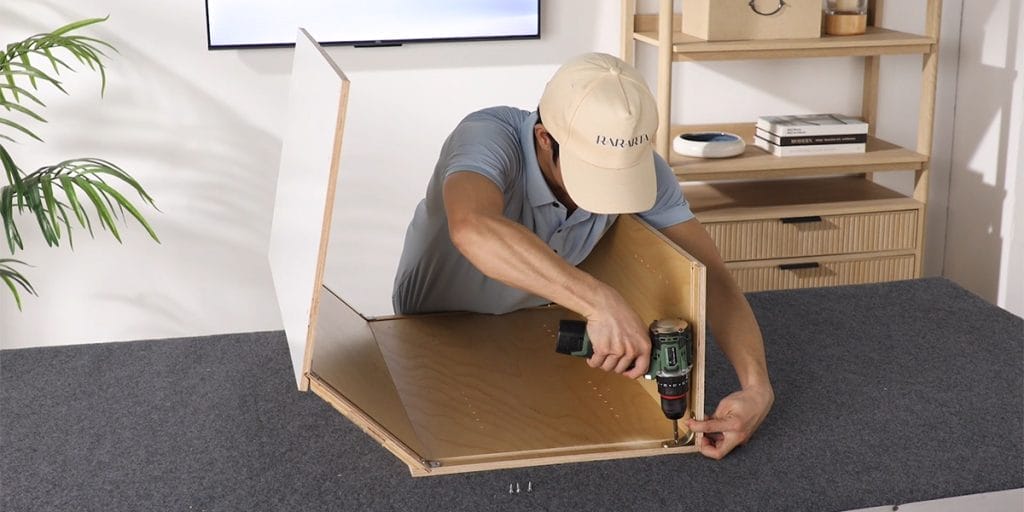
RTA stands for Ready-To-Assemble, meaning the cabinets arrive flat-packed and require assembly at home or on-site. Unlike pre-assembled cabinets that come fully built, or custom cabinets tailored to exact specifications, RTA cabinets are designed for efficiency and flexibility.
Why are they becoming increasingly popular in the U.S. market? Several reasons:
- DIY Spirit: Many homeowners enjoy the sense of accomplishment from assembling their cabinets.
- Faster Renovation: Flat-packed cabinets are easier to transport and install, which speeds up remodel timelines.
- Budget-Friendly: They allow families and designers to achieve high-style kitchens without breaking the bank. For more ways to stay within budget, see our guide to affordable kitchen cabinet tips.
Retailers like RaraRTACabinets, and big-box stores such as Lowe’s and Home Depot have helped normalize RTA cabinets as a mainstream option. Designers have started recommending them for projects where budget and time are priorities.
Why Are RTA Cabinets So Cheap?
RTA cabinets are inexpensive for several key reasons, primarily related to manufacturing, materials, and market strategy.
1. Manufacturing & Logistics Efficiency
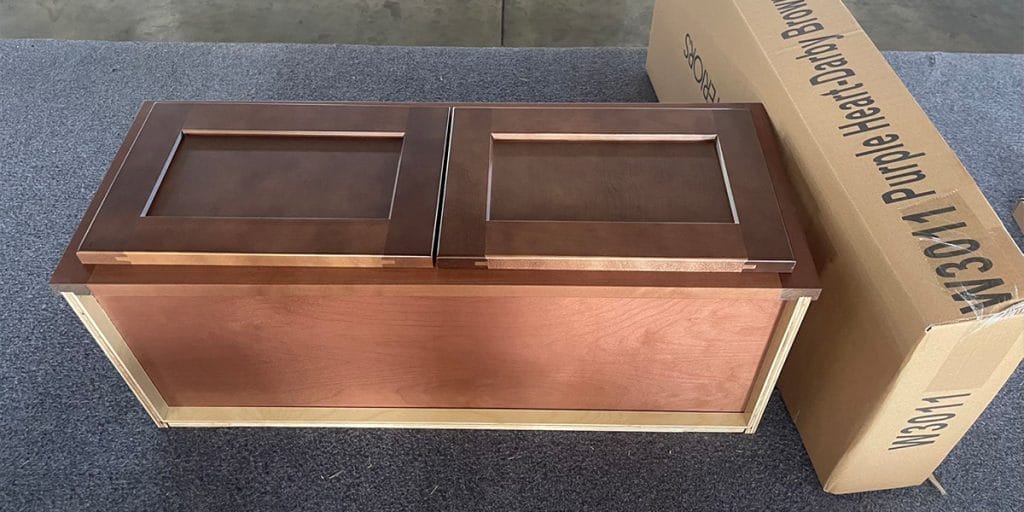
- Flat-Pack Shipping: RTA cabinets are shipped in flat boxes, which drastically reduces shipping volume and costs. Compared to bulky pre-assembled cabinets, flat-packs take up less space in trucks and warehouses.
- Standardized, Mass-Produced Sizes: Many RTA cabinets follow standard dimensions, minimizing customization and complex production steps.
- DIY Assembly: The assembly responsibility falls on the consumer or installer, reducing labor costs at the factory.
The cost-effective model behind RTA cabinets combines large-scale manufacturing with customer involvement, which helps keep prices lower without sacrificing basic quality.
2. Material and Craftsmanship Choices
While modern RTA cabinets have improved significantly in quality, some entry-level models still use cost-effective materials such as MDF (Medium-Density Fiberboard) or particleboard. These materials are lighter, easier to manufacture, and cheaper than solid hardwood. Homeowners comparing different construction options can learn more in our guide to the five most common cabinet materials.
To further reduce production costs, manufacturers streamline design features, often simplifying moldings or using fewer pre-finished coatings. These practical trade-offs allow cabinets to be offered at a fraction of the cost of fully custom options.
3. Market Strategy & Competition
RTA cabinet manufacturers leverage a competitive model:
- Direct-to-Consumer Sales: Many operate online, reducing retail markup.
- Warehouse Proximity: Shipping from local warehouses reduces logistics costs.
- Stock & Inventory Management: Standardized cabinets can be stocked in larger quantities, lowering overhead.
The blend of DIY-friendly assembly and professional installation makes the “assemble it yourself” approach an effective cost-saving strategy. This model appeals to homeowners looking to stay on budget as well as contractors aiming to maintain healthy margins on remodeling projects.
Cheap Doesn’t Mean Low Quality
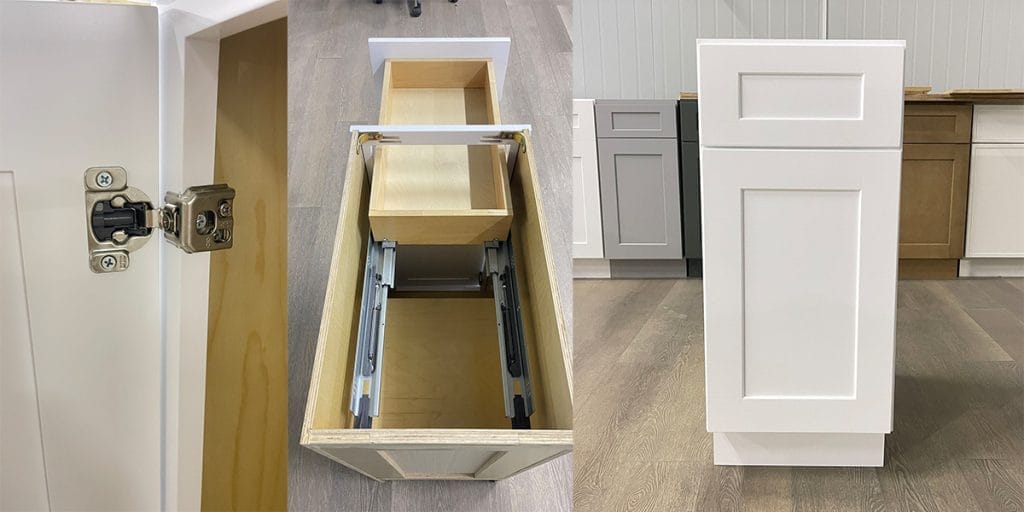
As a designer, I often remind clients that “cheap” can be a positive if you make smart choices. Here’s how to ensure quality:
- Check the Cabinet Boxes: Look for plywood or furniture-grade MDF rather than low-quality particleboard.
- Inspect Hardware: Hinges, drawer slides, and soft-close mechanisms should meet standard durability specs.
- Plan Your Space: Measure carefully and account for wall flatness, floor height, and plumbing/electrical obstacles. DIY assembly can be tricky if you overlook these details.
Designer Tips for Budget-Friendly Style
The beauty of RTA cabinets is that the savings can be reinvested into high-impact design elements:
- Door & Hardware Upgrades: Classic white Shaker doors paired with brass or matte black handles instantly elevate the space. For more guidance, see our guide on choosing kitchen cabinet hardware.
- Lighting: Under-cabinet warm white (3000K) LED lighting adds both function and ambiance.
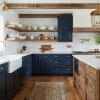
- Contrasting Colors: A navy lower cabinet combined with white upper cabinets and brass hardware can make an ordinary kitchen feel high-end.
Renovation Options
- Partial Remodels: If your existing cabinet boxes are in good condition, you can replace just the doors or interior organizers with RTA alternatives.
- Full Installation: RTA cabinets reduce delivery lead times, making them ideal for rental flips or budget-conscious full kitchen remodels. The faster turnaround allows homeowners to enjoy their new kitchen sooner.
Style, Color, and Overall Kitchen Coordination
When planning a kitchen with RTA cabinets, consider:
Style Recommendations
For homeowners exploring style ideas, our guide to the best kitchen cabinet styles for modern homes offers additional inspiration.
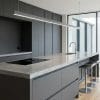
- Modern Minimalist: Handleless flat-panel doors, matte gray finishes, white islands, stainless steel toe kicks.
- Farmhouse Classic: White or light gray doors, open wood shelving, black hardware, vintage-style brass lighting.
- Contemporary Mix: Dark lower cabinets (deep green, charcoal) with light upper cabinets, metal accents, and natural wood finishes.
Color Psychology & Functional Context
Choosing the right palette can dramatically influence the kitchen’s atmosphere. For a deeper look into what’s trending, explore our guide to the Top 5 Kitchen Cabinet Colors for 2025.
- White: Expands the space visually, perfect for open kitchens.
- Gray/Navy Blue: Adds a sense of calm and solidity.
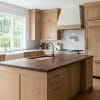
- Warm Wood Tones: Ideal for family-oriented kitchens where cooking and dining together is a daily ritual.
Coordination with Kitchen Elements
- Countertops: Quartz or marble can contrast or complement cabinet colors.
- Backsplashes: Either coordinate with cabinets or act as a bold accent.
- Floors, Islands, and Accessories: RTA cabinets free up budget to splurge on these high-visibility areas, making the kitchen feel luxurious without overspending. For additional functionality and ambiance, consider enhancing the space with under-cabinet lighting and smart accessories.
Practical Tips for Installing RTA Cabinets
Measuring & Planning
Measure wall width, height, electrical/plumbing locations, baseboard heights, and window/door positions before removing old cabinets. For a deeper walkthrough, check out our RTA cabinet installation guide.
Installation Sequence
- Assemble RTA boxes.
- Install base and wall cabinets.
- Add countertops and islands.
- Attach doors, drawers, and hardware.
- Finish with trim, lighting, and gap adjustments.
Balancing DIY & Professional Help
- DIY-friendly individuals can assemble the cabinets themselves to save money.
- Those short on time or seeking perfection may prefer professional installation to ensure flawless results.
Budget Priorities
Allocate saved money toward:
- High-quality countertops.
- Designer lighting.
- Functional drawer systems.
- Eco-friendly finishes.
Maintenance
Even RTA cabinets need care:
- Check hinges and slides regularly.
- Keep doors clean and dry.
- Avoid prolonged exposure to moisture to extend lifespan.
Conclusion
So, why are RTA cabinets so cheap? It comes down to manufacturing efficiency, DIY labor distribution, and material/scale advantages. But being inexpensive does not mean compromising style or function.
With careful brand selection, attention to materials, and smart design choices, RTA cabinets can help you create a stunning, functional kitchen without blowing your budget. By saving on cabinetry, you can invest in finishes, hardware, and lighting that make your kitchen both beautiful and uniquely yours.
In short, cheap can be chic—if you know how to shop, assemble, and style your kitchen like a pro.


Related posts

Receiving the keys to a new home is an exciting milestone yet it often brings an important and sometimes confusing question. What is the best... Continue reading

The kitchen is far more than a place for cooking meals. In many American homes it has become a central space for daily routines family... Continue reading
Kitchen cabinets play a vital role in both the function and visual identity of a kitchen. Among all cabinet components, cabinet doors are the most... Continue reading
The colors you choose for your home don’t just paint walls—they shape moods, create feelings, and influence how every day unfolds. In 2026, whole home... Continue reading
In modern home renovation projects, custom cabinetry has become a core element in both kitchen and bathroom planning. Choosing the right custom cabinet supplier is... Continue reading







Add comment