No products in the cart.
Return To Shop


Are RTA Cabinets Real Wood?
Short answer: Some RTA cabinets contain real wood, but RTA does not describe a cabinet material. It only means Ready-to-Assemble.
An RTA cabinet may use solid wood, plywood, HDF, MDF, particleboard, or a combination of several materials. The important question is not simply whether the cabinet is “real wood,” but which material is used for each component.
For example, a cabinet may combine a plywood box with a solid-wood face frame and an HDF painted door. Another cabinet may use veneered panels or particleboard. Both can still be sold as RTA cabinets because RTA describes how the cabinet is delivered and assembled—not what it is made from.
When comparing RTA cabinets, check the materials used for the cabinet box, doors, face frame, drawers, and shelves separately. A cabinet described as “real wood” may contain solid wood components alongside plywood or other engineered wood materials. Understanding these differences helps you compare products more accurately before buying.
Table of Contents
Understanding RTA Cabinets & Material Terminology
What is an RTA cabinet?
RTA stands for Ready-to-Assemble. The cabinet components are packaged for assembly before installation rather than arriving fully assembled.
Importantly, RTA describes the delivery and assembly format—not the cabinet material or quality level. An RTA cabinet can be made from plywood, solid wood, HDF, MDF, particleboard, or combinations of these materials.
For more on how assembly, packaging, and manufacturing affect pricing, see our guide to Why Are RTA Cabinets So Cheap?.
Common material terms you’ll see in listings
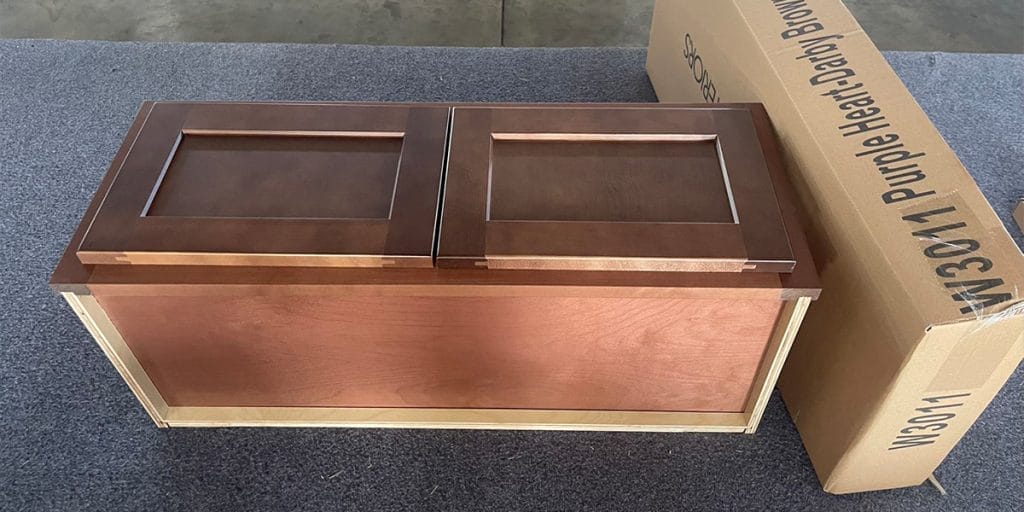
- Solid wood / Solid hardwood: Single pieces or stiles/rails made from hardwood species (maple, oak, cherry, walnut). Solid wood is prized for its grain and feel but moves with humidity.
- Hardwood vs. softwood: Hardwood comes from broadleaf trees (oak, maple); softwood from conifers (pine). “Hardwood” is often implied when manufacturers say “real wood,” but check the species.
- Plywood: Several thin veneers glued at alternating grain directions. Strong, dimensionally stable, and commonly used for cabinet boxes.
- MDF / HDF (Medium / High Density Fiberboard): Compressed wood fibers. Smooth, good for painted finishes and cheaper than plywood, but heavier and less moisture-resistant.
- Particleboard: Pressed wood particles. Least expensive; deserves caution in wet or steam-heavy kitchens.
- Veneer / wood veneer: A thin slice of real wood adhered to an engineered substrate (plywood/MDF). Gives a real-wood look without the cost of solid wood.
For a more detailed explanation of different cabinet materials and their pros and cons, check out 5 Cabinet Materials You Should Know.
So what does “real wood” mean in RTA cabinets?
The term “real wood” can be confusing because solid wood, plywood, and wood veneer all contain natural wood, but they are not the same material.
Solid wood is made from solid pieces of lumber. Plywood consists of layers of wood veneer bonded together, while a veneered panel has a thin wood surface over another core material. MDF and HDF are manufactured from wood fibers rather than solid wood boards.
An RTA cabinet may use solid wood for its face frame, plywood for its cabinet box, and HDF for painted door components. The best way to understand a product is to check the material specified for each part rather than relying on the phrase “real wood.”
Which Parts of RTA Cabinets Use Real Wood?
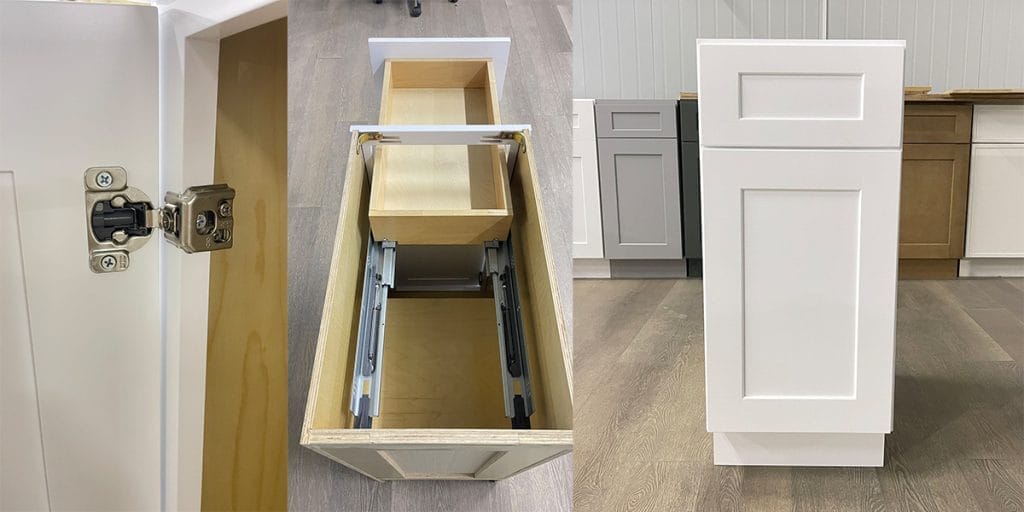
Where You May Find Real Wood in an RTA Cabinet
- Cabinet box: Plywood is commonly used for cabinet sides, bottoms, and other structural panels. Some RTA cabinet lines use MDF or particleboard instead.
- Doors and drawer fronts: Depending on the collection, these may use solid wood, HDF, MDF, wood veneer, or a combination of materials. Check the door frame and center panel separately.
- Face frame: Framed RTA cabinets may have a solid wood face frame attached to a plywood cabinet box. Frameless cabinets do not have this separate front frame.
- Drawer box: Drawer sides and backs may be made from solid wood, plywood, or other engineered materials. Check the joints and bottom panel separately.
- Shelves and back panels: Plywood and engineered wood panels are commonly used rather than solid hardwood boards.
What to ask the seller
If you see “real wood” in product copy, clarify:
- Which components are real wood (doors? frames? boxes?)
- Is the box plywood or particleboard? What thickness?
- Is the door solid wood, solid-wood frame with MDF panel, or veneer?
- What species of wood and what finish system is used?
For cabinets with plywood boxes, use our cabinet plywood buying checklist to compare panel specifications beyond the “real wood” label.
A Real RTA Cabinet Construction Example
RARA’s Opulent Shaker White RTA Kitchen Cabinets provide a useful example of how different materials are used within the same cabinet collection.
According to the published product specifications, this collection features:
- 1/2-inch plywood cabinet side panels
- Solid wood face frames
- HDF door frames and center panels
- Dovetail drawer boxes with solid wood sides and backs and plywood bottoms
- 3/4-inch adjustable plywood shelves
- Concealed adjustable soft-close hinges
- Full-extension undermount soft-close drawer slides
The face frame and parts of the drawer box are solid wood, while the cabinet box uses plywood and the painted door components use HDF.
This is why “solid wood cabinets” and “cabinets with solid wood components” should not be treated as interchangeable descriptions.
You can review the complete construction details on the Opulent Shaker White product page before ordering.
A realistic expectation
A cabinet does not need solid wood doors or solid wood box panels throughout to contain genuine wood components.
For example, a collection may have a solid wood face frame, a plywood cabinet box, and HDF painted doors. Each material serves a different purpose, and the complete construction should be considered before making a purchase decision.
RTA Cabinet Material Comparison Table
| Material | Common Cabinet Uses | Main Advantage | Main Consideration |
|---|---|---|---|
| Solid Wood | Face frames, door components, trim | Natural grain and strong structural components | Moves with humidity |
| Plywood | Cabinet boxes, shelves, backs | Strong and dimensionally stable | Quality varies by thickness and veneer/core construction |
| HDF / MDF | Painted doors and panels | Smooth, consistent painted surface | Must be protected from prolonged water exposure |
| Particleboard | Cabinet boxes and panels in some lines | Economical and dimensionally consistent | Edge sealing and moisture protection are especially important |
| Wood Veneer | Doors, panels, finished surfaces | Real wood appearance with a stable core | Veneer thickness and substrate quality vary |
How to Tell What Your RTA Cabinets Are Made Of
A practical guide for homeowners before buying RTA cabinets
When you shop for kitchen cabinets, especially online, it can be hard to tell whether a product is real solid wood or engineered wood. The following simple and factual methods can help you identify the material quickly without tools.
1.Read the Construction Specifications
Start with the manufacturer’s specification sheet. Look for separate descriptions of the cabinet box, door, face frame, drawer box, shelves, and back panel.
Avoid relying only on phrases such as “wood construction” or “all-wood cabinetry.” Ask which exact components are solid wood, plywood, HDF/MDF, particleboard, or veneer.
2.Check Exposed Edges and Unfinished Areas
Solid wood shows continuous wood fibers through the material. Plywood typically reveals multiple thin layers at an exposed edge, while MDF and particleboard have a more uniform fiber or particle core.
Veneered panels have a thin real-wood surface bonded over a different core material.
3. Inspect a Sample Door
If you are buying cabinets online, order a sample door when available. Inspect the front, back, edges, joints, and finish rather than judging the material from website photography alone.
A sample can also help you evaluate paint quality, veneer seams, door construction, and color under your actual kitchen lighting.
4. Ask These Four Questions Before Buying
- What is the cabinet box made of? Check whether the sides, bottom, and back panels use plywood, MDF, particleboard, or another material.
- Are the cabinet doors solid wood or engineered wood? Ask about the door frame and center panel separately. A five-piece Shaker door does not automatically mean every component is solid wood.
- Which parts are actually solid wood? Find out whether the face frame, door components, or drawer boxes contain solid wood.
- What are the material thicknesses and construction details? Review the panel specifications, drawer joints, shelf construction, and other details that affect the finished cabinet.
These questions help you identify what you are buying without relying on broad descriptions such as “all wood” or “premium wood construction.”
Is Solid Wood Always Better for RTA Cabinets?
No. Solid wood can be an excellent cabinet material, but using more solid wood does not automatically make an RTA cabinet better.
Different cabinet components have different requirements. Solid wood works well where natural grain, strength, and appearance are important, while plywood offers good dimensional stability for cabinet boxes and shelves. HDF and MDF can also be practical choices for painted doors because their smooth, uniform surfaces help create a consistent painted finish.
Instead of asking whether a cabinet is “all solid wood,” compare how each part of the cabinet is constructed.
Before buying, check:
- Cabinet box material: Look at whether the box is plywood, MDF, particleboard, or another engineered panel, and check the material thickness and back-panel construction.
- Door construction: Determine whether the door uses solid wood, an HDF/MDF painted panel, veneer, or a combination of materials.
- Drawer construction: Check the drawer-box material, joinery, and how the drawer bottom is supported.
- Shelves: Look at the shelf material, thickness, and support system, especially for wide wall or pantry cabinets.
- Hinges and drawer slides: Adjustable hinges and smooth, full-extension drawer slides can have a major impact on daily use.
- Finish quality: Check the consistency of painted or stained surfaces, especially around edges, joints, and door backs.
- Warranty: Review what the manufacturer covers for cabinet structure, hardware, and finish.
A well-designed combination of materials can be more practical than using solid wood for every cabinet component. The goal is to choose the right material for the right job rather than simply maximizing the amount of solid wood.
What to Check Before Buying RTA Wood Cabinets
RTA cabinets can contain solid wood, plywood, HDF, MDF, or other engineered wood materials. The term RTA simply describes how the cabinets are delivered and assembled.
Before ordering, confirm which materials are used for the cabinet box, doors, face frame, drawers, and shelves. Do not assume that a Shaker door is entirely solid wood or that a plywood cabinet box is made from solid lumber.
If you are comparing RTA cabinet collections, start by reviewing their published construction specifications.
Explore RARA Ready-to-Assemble Kitchen Cabinets to compare available styles and cabinet configurations.
For a more detailed evaluation of construction, hinges, drawer slides, and overall durability, read our RTA Cabinet Quality Checklist.


About author

Related posts

A diagonal corner wall cabinet connects two upper-cabinet runs with an angled front facing into the kitchen. It can provide enclosed storage at an inside... Continue reading

A deep drawer organizer separates cookware, food containers, dishes, or utensils into sections that stay usable when the drawer moves. Choose the organizer around the... Continue reading

Cabinet dividers separate the inside of a cabinet into storage sections, often allowing baking sheets, cutting boards, and serving trays to stand upright. Choose a... Continue reading





Add comment