No products in the cart.
Return To Shop


Are Wall Cabinets Cheaper Than Base Cabinets?
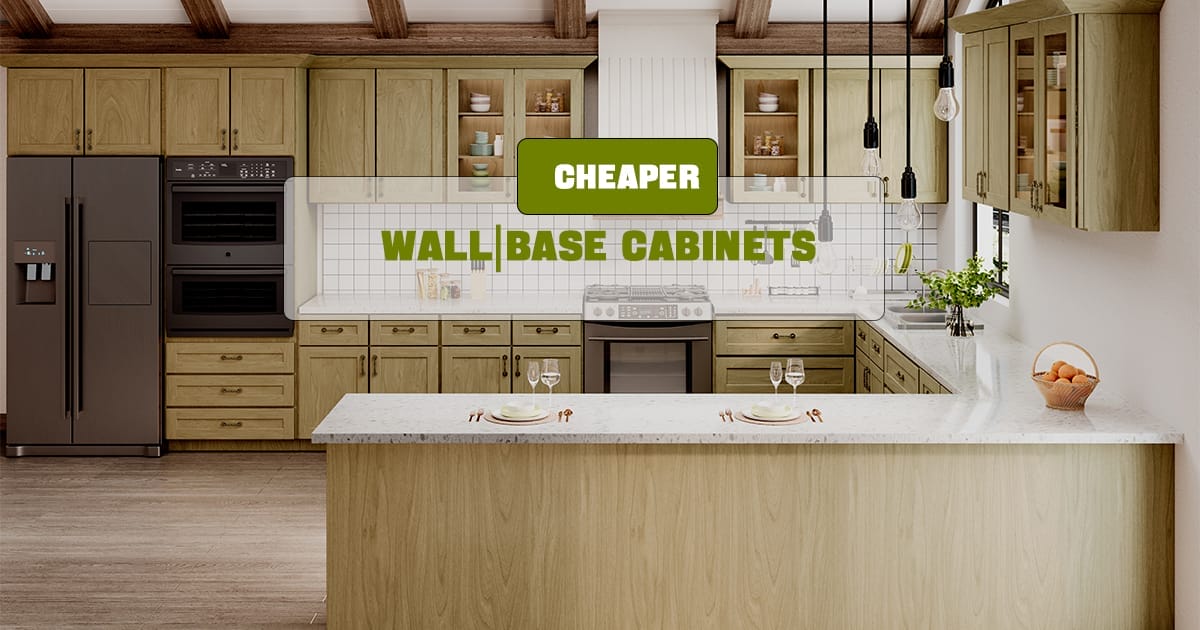
Are wall cabinets cheaper than base cabinets? Usually, yes. Wall cabinets are shallower, require less cabinet-box material, and generally contain fewer drawers, slides, pull-outs, and structural components than base cabinets of the same width and finish.
Base cabinets typically cost more because they provide deeper storage, support countertops, and may need to accommodate sinks, appliances, drawer systems, or specialty organizers. However, cabinet type alone does not determine the final price. A tall wall cabinet with glass doors, finished interiors, or upgraded accessories may cost more than a basic base cabinet.
This base cabinet vs wall cabinet guide compares cost, standard dimensions, storage, construction, installation, and everyday use. It will help you compare matching cabinet options and decide where to allocate more of your kitchen cabinet budget.
Table of Contents
What’s the Difference Between Wall (Upper) and Base (Lower) Cabinets?

Wall cabinets, also called upper cabinets, are installed above countertops, sinks, or appliances. Base cabinets, sometimes called lower cabinets, sit on the floor and support the countertop. Their different positions affect their dimensions, storage capacity, construction, installation, and price.
| Comparison | Wall Cabinets | Base Cabinets |
|---|---|---|
| Installation position | Mounted to the wall above the work surface | Installed on the floor beneath the countertop |
| Typical height | Commonly 12 to 42 inches, depending on placement | Usually 34.5 inches without the countertop |
| Typical depth | Usually 12 inches, with deeper options for certain locations | Usually 24 inches without the countertop |
| Main purpose | Stores dishes, glasses, food, and lighter everyday items | Stores cookware, appliances, cleaning supplies, and heavier items |
| Countertop support | Does not support the countertop | Supports the countertop, sink, or cooktop |
| Common components | Doors and adjustable shelves | Doors, drawers, pull-outs, shelves, and specialty organizers |
| Installation requirements | Must be securely fastened to wall framing | Must be leveled, joined, and secured before countertop installation |
| Typical cost | Often lower when width, finish, and construction are comparable | Often higher because of greater depth, structural demands, and hardware |
These are general cabinet standards rather than universal specifications. Widths, heights, depths, and available configurations vary by cabinet collection. Check the individual product specifications or use the kitchen cabinet size chart before finalizing a kitchen layout.
Are Wall Cabinets Generally Cheaper?
Usually, yes. When wall cabinets and base cabinets come from the same collection and use the same width, door style, finish, and construction, the wall cabinet will often have a lower unit price. Its shallower cabinet box requires less material and usually contains fewer expensive moving components.
However, the price difference depends on cabinet configuration. Buyers should compare matching products rather than assuming every wall cabinet costs less than every base cabinet.
Why Wall Cabinets Often Cost Less
Wall cabinets generally have several cost advantages:
- A standard wall cabinet is usually shallower than a base cabinet.
- The cabinet box uses less plywood or other construction material.
- Most models use shelves and doors instead of multiple drawer systems.
- They do not support countertops, sinks, or cooktops.
- Standard wall cabinets usually require fewer pull-outs, organizers, and heavy-duty slides.
Why Base Cabinets Usually Cost More
Base cabinets perform more structural and functional work within the kitchen. Their price may include:
- A deeper cabinet box and greater storage capacity
- Stronger construction for supporting countertops
- Drawers with full-extension slides
- Pull-out trays, waste-bin systems, or specialty organizers
- Sink, corner, cooktop, or appliance configurations
- Additional leveling and installation requirements
A basic door-and-shelf base cabinet may have a smaller price difference, while a drawer base or specialty base cabinet can cost considerably more than a standard wall cabinet.
When a Wall Cabinet May Cost More
A wall cabinet is not automatically the lower-priced option. Its cost can increase when it includes:
- Extra height or depth
- Glass doors
- Finished interiors
- Decorative panels or specialty finishes
- Integrated lighting
- Lift-up hardware or other upgraded opening systems
- Custom dimensions
For example, a tall glass-front wall cabinet may cost more than a basic base cabinet from the same collection.
Compare Installed Cost, Not Only Cabinet Price
The cabinet price is only one part of the comparison. Wall cabinets must be securely fastened to suitable wall framing, and installation may take longer when ceilings are high or walls are uneven. Base cabinets require careful leveling and must be prepared correctly before countertop installation.
For a complete project estimate, review the Kitchen Cabinet Cost Estimator and the Kitchen Cabinet Budget Guide. These resources account for the full cabinet mix instead of comparing a single wall cabinet with a single base cabinet.
How Wall and Base Cabinets Affect Kitchen Design

Wall cabinets and base cabinets serve different functions, so a kitchen budget should not always be divided equally between them. Base cabinets usually benefit from more spending on storage hardware and durability, while wall cabinets have a stronger influence on sightlines, room brightness, and the overall appearance of the kitchen.
Prioritize Function in Base Cabinets
Base cabinets handle heavier items and more frequent daily use. Drawers, pull-outs, waste-bin cabinets, sink bases, and corner storage systems can improve access, but they also increase the cabinet price.
When the budget is limited, prioritize the base cabinet features that directly affect daily use. A well-planned drawer base may provide more practical value than adding organizers to every cabinet.
Use Wall Cabinets to Shape the Room
Wall cabinets occupy the most visible part of the kitchen and influence how open or enclosed the room feels. Standard-height cabinets with simple door fronts generally control costs, while glass doors, finished interiors, deeper boxes, and cabinets extending toward the ceiling can increase the price.
A two-tone layout can also separate the visual roles of the two cabinet types. Lighter wall cabinets can keep the upper portion of the room visually open, while darker or wood-finish base cabinets can define the lower work area.
Compare Cabinets Within the Same Collection
For a useful price comparison, review wall and base cabinets from the same collection. Keep the door style, finish, width, construction, and assembly format as consistent as possible. Comparing unrelated products can make the cost difference appear larger or smaller than it really is.
Buyers who plan to assemble the cabinets after delivery can compare matching wall and base options in the RTA Kitchen Cabinets collection. Buyers who prefer cabinets delivered assembled can review the Pre-Assembled Kitchen Cabinets collection.
Both collections include wall and base cabinet configurations. The better format depends on assembly requirements, installation schedule, available styles, and the specific cabinet list required for the kitchen.
Can You Use Wall Cabinets as Base Cabinets?
A wall cabinet can sometimes be adapted for use near floor level, but it is not a direct replacement for a purpose-built base cabinet. Standard wall cabinets are shallower, do not include a toe-kick area, and may not be designed to support a countertop or the loads associated with sinks and appliances.
The cabinet construction, installation method, intended load, and manufacturer requirements should all be reviewed before making this type of modification.

What Must Be Addressed?
Using a wall cabinet as a base cabinet may require:
- A secure platform, legs, or separate toe-kick base
- Additional support beneath the countertop
- Adjustment of the finished counter height
- Proper anchoring to the wall and surrounding cabinets
- Finished side panels where the cabinet box is exposed
- Clearance for plumbing, electrical connections, or appliances
- Confirmation that the modification does not affect warranty coverage
When Can It Work?
A wall cabinet may be considered when a project needs shallower storage, such as:
- A narrow pantry or passage
- A small beverage area
- A home office or built-in desk
- A laundry room with limited floor depth
- A secondary storage area without a sink or heavy countertop load
Even in these situations, the cabinet must be properly supported and installed for its intended use.
When Should You Use a Base Cabinet Instead?
Use a purpose-built base cabinet when the cabinet will support:
- A sink or cooktop
- A stone or other heavy countertop
- Large drawers or pull-out storage
- Heavy cookware or appliances
- Plumbing or waste connections
- High-frequency kitchen work
Before modifying any cabinet, check the product specifications and applicable cabinet warranty terms. For a standard kitchen layout, selecting the correct base cabinet is usually the safer and more practical option.
How to Compare Wall and Base Cabinet Prices Before Buying
A useful price comparison requires more than checking the listed price of two cabinet units. Wall and base cabinets should be compared within the same product collection and as part of a complete kitchen layout.

Compare Matching Specifications
Select wall and base cabinets with specifications that are as similar as possible:
- The same cabinet collection
- The same door style and finish
- The same cabinet-box construction
- The same width
- The same assembly format
- Similar interior finishes and hardware quality
A narrow standard wall cabinet should not be compared with a wide drawer base, sink base, or specialty cabinet. Their dimensions and functions are too different to produce a meaningful price comparison.
Review What Each Cabinet Includes
Check the product specifications to determine whether the listed price includes:
- Doors and drawer fronts
- Shelves
- Hinges and drawer slides
- Toe-kick components
- Finished side panels
- Pull-out accessories
- Decorative panels or glass inserts
- Assembly services
A higher-priced cabinet may include components that would otherwise need to be purchased separately.
Compare the Complete Cabinet List
Most kitchens use more base cabinets than wall cabinets in areas containing sinks, dishwashers, ranges, islands, and drawer storage. The total amount spent on base cabinets may therefore be higher even when the individual cabinet prices are relatively close.
Measure the room first and prepare an itemized cabinet list. The kitchen measuring guide explains what to record before selecting cabinet sizes.
Include Installation-Related Costs
The final comparison should account for more than the cabinet price. Review:
- Assembly labor
- Wall mounting and structural preparation
- Base cabinet leveling
- Fillers and finished panels
- Delivery charges
- Installation hardware
- Countertop preparation
- Plumbing or appliance modifications
Wall cabinets may have a lower product price but require more installation time when walls are uneven, ceilings are high, or additional support is needed.
Confirm the Final Specifications Before Ordering
Before placing an order, verify the cabinet dimensions, door swing, finished sides, filler requirements, appliance clearances, and installation sequence. A lower cabinet price does not provide savings if missing components must be ordered separately or the selected cabinet does not fit the final layout.
Which Cabinet Type Should You Spend More On?
Wall cabinets are usually less expensive than comparable base cabinets, but there is no fixed budget ratio that works for every kitchen. The better approach is to spend according to function, cabinet configuration, and the way each area will be used.
Allocate more of the budget to base cabinets when the layout requires drawers, pull-outs, sink cabinets, appliance cabinets, corner storage, or other specialty components. These cabinets handle heavier loads and have a greater effect on everyday access and organization.
Allocate more to wall cabinets when the design includes glass doors, finished interiors, extended heights, integrated lighting, or highly visible display storage. Standard wall cabinets with doors and adjustable shelves generally require fewer upgrades.
Before ordering, compare complete cabinet lists rather than individual units. Confirm the cabinet sizes, finished sides, fillers, accessories, assembly requirements, delivery terms, and installation plan.
Compare Cabinet Collections
Start with the available cabinet collections on RaraRTACabinets and compare wall and base cabinets with matching finishes and construction.
For kitchen projects, compare:
- RTA Kitchen Cabinets for cabinets delivered ready for customer or contractor assembly
- Pre-Assembled Kitchen Cabinets for cabinets delivered assembled
If the remodeling project also includes bathroom cabinetry, compare:
Choose the cabinet type and delivery format that match the room measurements, storage requirements, installation schedule, and complete project budget.


About author

Related posts

A cabinet hinge restrictor clip limits how far a compatible hinge opens, helping stop a cabinet door or handle from hitting a nearby wall, cabinet,... Continue reading

Raised panel cabinets have a shaped center panel that rises from its surrounding profile, while recessed panel cabinets have a flat center set back inside... Continue reading

A bathroom vanity with drawers works best when the drawer layout matches your daily storage and leaves room for the sink and plumbing. Check which... Continue reading

A kitchen cabinet valance is a decorative board used to finish an open area in a cabinet layout, often between two wall cabinets above a... Continue reading

Stacked kitchen cabinets use a separate upper tier above the main wall cabinets. They add enclosed storage and can extend a cabinet run closer to... Continue reading





Add comment