No products in the cart.
Return To Shop.png?sharp=1)




Cabinet Door Materials: What Are Kitchen Cabinet Doors Made Of?
Kitchen cabinet doors are commonly made from solid wood, MDF, particleboard, or other engineered wood, then finished with paint, lacquer, melamine, laminate, thermofoil, or decorative films. The material underneath and the surface finish work together to determine how a cabinet door looks, feels, performs, and holds up to everyday kitchen use.
When comparing cabinet door materials, it is important to separate the door’s core material from its finish. For example, an MDF cabinet door may be painted, lacquered, or wrapped in thermofoil, while a solid wood door may be stained or painted. Two cabinet doors that look similar can therefore have very different construction, durability, maintenance needs, and repair options.
In this guide, we compare the most common kitchen cabinet door materials and finishes, including solid wood, MDF, thermofoil, melamine, laminate, and lacquer. You’ll see the pros and cons of each option, how they compare in durability and maintenance, and which materials work best for different kitchen styles and budgets.
Table of Contents
Quick Comparison of Cabinet Door Materials and Finishes
Before exploring each option in detail, the table below shows whether each option is a core material or a surface finish, how it is typically constructed, and where it works best.
| Option | Type | Typical Construction | Durability | Maintenance | Best For |
|---|---|---|---|---|---|
| Solid Wood | Core door material | Natural wood such as maple, oak, cherry, or other wood species | High | Moderate | Natural wood appearance, traditional kitchens, farmhouse kitchens, and doors that may be refinished later |
| MDF | Core door material | Medium-density fiberboard used alone or beneath paint, lacquer, thermofoil, and other finishes | Medium to High | Easy to Moderate | Painted doors, smooth finishes, Shaker styles, and routed door profiles |
| Thermofoil | Surface finish over an engineered core | Vinyl film bonded over MDF or another engineered-wood substrate using heat and pressure | Medium | Easy | Smooth, consistent finishes and easy-to-clean cabinet doors |
| Melamine | Decorative surface over an engineered core | Resin-treated decorative surface bonded to particleboard or fiberboard | Medium to High | Easy | Slab cabinet doors, contemporary kitchens, and consistent colors or wood-grain patterns |
| Lacquer | Applied surface finish | Lacquer or coating system applied over MDF or another smooth substrate | Medium | Moderate | Contemporary kitchens, smooth painted appearances, and matte, satin, or high-gloss finishes |
1. Solid Wood Cabinet Doors
Few cabinet door materials offer the same natural grain variation as solid wood. Depending on the species, such as oak, maple, cherry, or walnut, the color and grain pattern can vary from one door to another, giving each cabinet front a more natural appearance.
One of the main advantages of solid wood cabinet doors is repairability. Depending on the door construction and finish, scratches or surface wear may be sanded, touched up, repainted, or refinished. This can make solid wood a useful option for homeowners who want the possibility of changing or restoring the finish later.

Environmental impact depends on factors such as the wood species, sourcing, manufacturing, finish, transportation, and expected service life. If sustainability is important to your project, look for clear sourcing or certification information rather than assuming that every solid wood door has the same environmental profile.
Solid wood cabinet doors are usually more expensive than many engineered alternatives, and wood responds to changes in environmental moisture. As relative humidity changes, wood can gain or lose moisture and undergo small dimensional changes, so proper finishing, installation, and indoor humidity control are important.
Solid wood is a strong option for homeowners who prioritize natural grain, repairability, and the ability to refinish cabinet doors over time.
Best for: traditional kitchens, farmhouse styles, and homeowners who value natural materials.
2. MDF Cabinet Doors
MDF, or medium-density fiberboard, is a common engineered material used for kitchen cabinet doors. It is made from refined wood fibers combined with resin and compressed into dense, smooth panels. Unlike solid wood, MDF has no visible natural grain, which makes it especially suitable for painted, lacquered, and wrapped cabinet door finishes.
One of the main advantages of MDF cabinet doors is their smooth and consistent surface. MDF can be routed into Shaker-style and other decorative profiles while providing a uniform base for paint. It also tends to experience less visible grain movement than natural wood as indoor humidity changes, helping painted door surfaces maintain a more consistent appearance.

The main limitation is moisture exposure. If water reaches an unfinished edge, damaged surface, or poorly sealed area, MDF can absorb moisture and swell. Deep chips and significant water damage can also be difficult to repair, so the quality of the finish, edge sealing, and manufacturing process matters.
MDF is a practical choice for homeowners who want smooth painted cabinet doors, consistent profiles, and a clean appearance without the natural grain variation of solid wood.
Best for: painted cabinet doors, Shaker-style doors, routed profiles, and kitchens where a smooth and consistent finish is preferred.
3. Thermofoil Cabinet Doors
Thermofoil cabinet doors typically use an MDF or other engineered-wood core covered with a thin vinyl film. Heat and pressure bond the film to the shaped door surface, creating a smooth and consistent finish that is available in solid colors, wood-grain patterns, and a range of sheen levels.
Vacuum pressing is one manufacturing method used to form and bond decorative films over routed MDF door profiles. Because this process is closely related to thermofoil and membrane-wrapped door construction, vacuum-pressed doors are discussed here as part of the same general wrapped-door category rather than as a separate cabinet door material.
One of the main advantages of thermofoil cabinet doors is easy maintenance. The smooth surface can usually be cleaned with a soft damp cloth and does not require the same refinishing or polishing associated with some natural wood finishes. Thermofoil can also wrap around routed or molded door profiles, making it suitable for both simple and decorative cabinet door styles.

The main limitation is sensitivity to excessive heat and damage to the surface film. Prolonged exposure to high temperatures near ovens, ranges, and other appliances can weaken the bond between the film and the door core. If the surface begins to peel, lift, or becomes deeply damaged, an invisible repair may be difficult.
Thermofoil is a practical choice for homeowners who want a smooth, consistent cabinet door finish with straightforward everyday cleaning. When comparing products, check the quality of the MDF core, film, edge coverage, and manufacturer recommendations for heat exposure.
Best for: kitchens where easy cleaning, consistent color, and smooth routed or molded cabinet door profiles are priorities.
4. Melamine Cabinet Doors
Melamine cabinet doors are typically made with an engineered-wood core, such as particleboard or fiberboard, covered with a resin-treated decorative surface. The outer layer can reproduce solid colors, subtle textures, and wood-grain patterns, giving homeowners a wide range of design choices without relying on natural wood grain.
One of the main advantages of melamine cabinet doors is their durable and easy-to-clean surface. The finish resists everyday stains and light scratching well when properly maintained, making it practical for frequently used kitchens. Because the decorative surface is manufactured rather than naturally occurring, colors and patterns also tend to remain consistent from one door to another.

Melamine does have limitations. The surface itself is relatively durable, but exposed edges or damaged areas can allow moisture to reach the engineered core. Chips along corners and edges may also be difficult to repair without remaining visible. Edge quality and proper sealing are therefore important when comparing melamine cabinet doors.
Melamine works especially well with flat-panel and slab cabinet doors, making it a common choice for contemporary and modern kitchen designs. Wood-grain melamine can also provide the appearance of natural wood with more consistent color and pattern variation.
Best for: slab cabinet doors, contemporary kitchens, easy everyday maintenance, and homeowners who prefer consistent colors or wood-grain patterns.
5. Lacquer-Finished Cabinet Doors
Lacquer is a surface finish rather than a cabinet door core material. Lacquer-finished cabinet doors typically use MDF or another smooth engineered-wood substrate that is coated with multiple layers to create an even, refined appearance. Depending on the coating system, lacquer cabinet doors can be produced in matte, satin, or high-gloss finishes.
One of the main advantages of lacquer-finished cabinet doors is their smooth and uniform appearance. The finish works especially well with flat-panel, slab, and contemporary door styles where clean lines and consistent color are important. Lacquer can also create a more seamless painted appearance because the underlying MDF provides a smooth surface without visible natural wood grain.
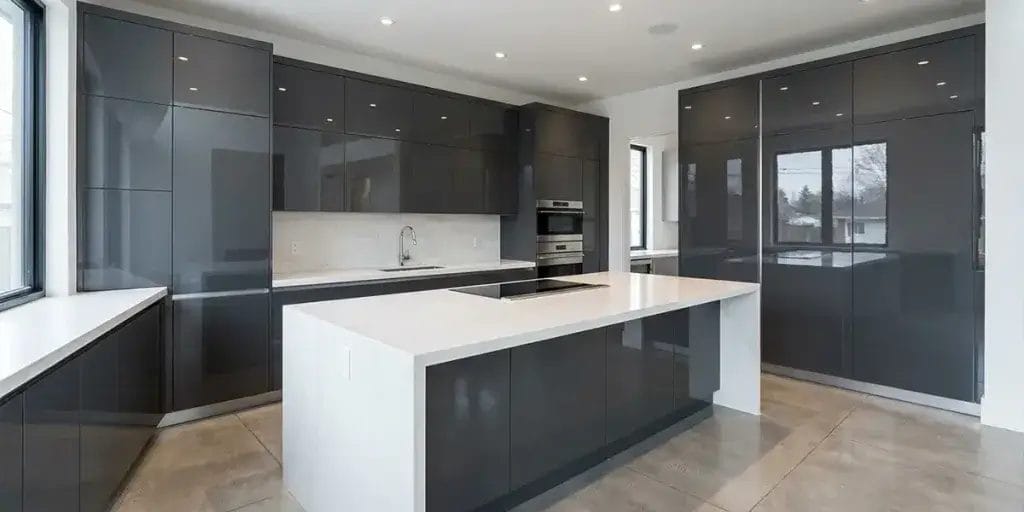
The main drawbacks are sensitivity to scratches, chips, and impact damage. High-gloss finishes can make fingerprints and minor surface marks more noticeable, while damaged areas may be difficult to touch up without creating a visible difference in sheen or color. Proper cleaning and careful everyday use can help preserve the finish.
When comparing lacquer cabinet doors, consider both the quality of the underlying door core and the coating system applied over it. A well-prepared MDF substrate and consistent finishing process can have a significant effect on the final appearance and long-term performance of the door.
Best for: contemporary kitchens, slab cabinet doors, smooth painted appearances, and homeowners who prefer matte, satin, or high-gloss finishes.
What Is the Best Material for Kitchen Cabinet Doors?
There is no single best material for every kitchen cabinet door. The right choice depends on whether you prioritize natural wood appearance, a smooth painted finish, easy maintenance, repairability, or a specific door style. The door core and the surface finish should always be considered together.
For a natural wood appearance and the ability to refinish the surface later, solid wood is usually the strongest choice. Oak, maple, cherry, and other wood species provide real grain variation that engineered materials cannot fully reproduce.
For painted Shaker cabinet doors and other routed profiles, MDF is often one of the most practical choices. Its smooth, consistent surface creates a good base for paint and does not show natural wood grain through the finish.
For homeowners who prioritize easy everyday cleaning and consistent color, thermofoil can be a practical option. Its wrapped surface works well over shaped MDF doors, although heat exposure and damage to the surface film should be considered.
For modern slab cabinet doors, melamine is often a good fit because it provides consistent colors, textures, and wood-grain patterns with relatively simple maintenance. Edge construction and moisture protection are especially important when comparing melamine doors.
For a smooth contemporary appearance in matte, satin, or high-gloss finishes, lacquer-finished MDF is another option. The finish can create a refined and uniform surface, but scratches, chips, and visible fingerprints may require more attention depending on the sheen.
The best cabinet door material should therefore be selected according to the complete door construction rather than the material name alone. Compare the core material, surface finish, edge construction, resistance to heat and moisture, cleaning requirements, repair options, and manufacturer specifications before making a final decision.
Once you know which cabinet door construction and finish suit your project, compare our RTA kitchen cabinets and pre-assembled kitchen cabinets to explore available door styles, finishes, colors, and cabinet configurations.
Final Thoughts on Cabinet Door Materials
Choosing the right kitchen cabinet door material is easier when you separate the core material from the surface finish. Solid wood is a strong choice for natural grain and refinishing potential, while MDF works especially well for smooth painted and routed cabinet doors. Thermofoil, melamine, and lacquer finishes each offer different advantages in appearance, maintenance, consistency, and everyday performance.
Rather than choosing cabinet doors by appearance alone, compare the complete construction, including the core material, surface finish, edge treatment, heat and moisture limitations, repair options, and manufacturer specifications. The best cabinet door material is ultimately the one that fits your preferred style, everyday kitchen use, maintenance expectations, and long-term priorities.
If you are ready to compare cabinet styles beyond door materials, browse our kitchen cabinets to see available colors, door designs, and assembly options.
Frequently Asked Questions About Cabinet Door Materials
What Are Kitchen Cabinet Doors Made Of?
Kitchen cabinet doors can be made from solid wood, MDF, particleboard, or other engineered wood products. These core materials may then be painted, lacquered, laminated, covered with melamine, or wrapped with thermofoil. Because the core material and surface finish affect different parts of the door’s performance, both should be checked when comparing cabinet doors.
Is MDF or solid wood better for cabinet doors?
Neither MDF nor solid wood is automatically better for every cabinet door. Solid wood is a strong choice when natural grain, repairability, and refinishing are priorities. MDF provides a smooth and consistent surface that works especially well for painted Shaker doors and routed profiles. The better option depends on the door style, finish, moisture exposure, maintenance expectations, and overall construction quality.
What Is the Difference Between Thermofoil and Melamine Cabinet Doors?
Thermofoil typically uses a flexible vinyl film that is formed over an MDF or engineered-wood door using heat and pressure. Melamine usually uses a resin-treated decorative surface bonded to particleboard or fiberboard. Both can provide consistent colors and easy-to-clean surfaces, but they differ in construction, edge treatment, heat resistance, appearance, and repair options.
What Is the Best Material for Kitchen Cabinet Doors?
The best material depends on what you want from the cabinet door. Solid wood is well suited to natural grain and refinishing, while MDF is often preferred for smooth painted and routed doors. Melamine works well for many modern slab designs, and thermofoil provides a consistent wrapped finish that is easy to clean. Compare the complete door construction rather than choosing by material name alone.
Which Cabinet Door Material Is Easiest to Maintain?
Thermofoil and many melamine surfaces are among the easier cabinet door options to clean because their smooth surfaces can usually be wiped with a soft damp cloth. Maintenance still depends on the quality of the finish, edge construction, exposure to heat and moisture, and the cleaning instructions provided by the manufacturer.
Is MDF a Good Material for Kitchen Cabinet Doors?
Yes, MDF can be a good material for kitchen cabinet doors, especially when a smooth painted finish or routed profile is desired. Its uniform surface works well for Shaker and other painted door styles. However, damaged or unfinished areas should be protected from excessive moisture because MDF can swell if water reaches the exposed core.


About author

Related posts

Kitchen cabinet quotes can look similar at first but include very different products and services. One quote may include plywood cabinet boxes, finished end panels,... Continue reading

A knee drawer is a specialized vanity cabinet component designed to add storage while creating comfortable open space underneath a bathroom countertop. Knee drawers are... Continue reading

A 33-inch farmhouse sink is a common choice for a 36-inch base cabinet, but it is not a universal rule. The correct fit depends on... Continue reading

A kitchen cabinet filler is a narrow finished strip used to close or manage the space between a cabinet and a wall, appliance, corner, or... Continue reading

Choosing RTA cabinets involves more than comparing door styles or headline prices. You need to evaluate cabinet-box construction, door materials, available sizes, hardware, shipping, assembly,... Continue reading





Add comment