No products in the cart.
Return To Shop.png?sharp=1)



9 Common Cabinet Installation Mistakes Homeowners Should Avoid
With the advancement of modern living standards, kitchens are now equipped with a wide range of tools and household products that make cooking more convenient. As a result, kitchen cabinets have become an essential part of home renovation, serving as the foundation of kitchen functionality. However, cabinet installation is far more complicated than many people expect and often requires professional workmanship. If details are overlooked, even small mistakes can affect long term usability. Below are some of the most common errors homeowners make during kitchen cabinet installation.
Table of Contents
What Are the Most Common Mistakes in Kitchen Cabinet Installation?
1. Lack of finished surface protection
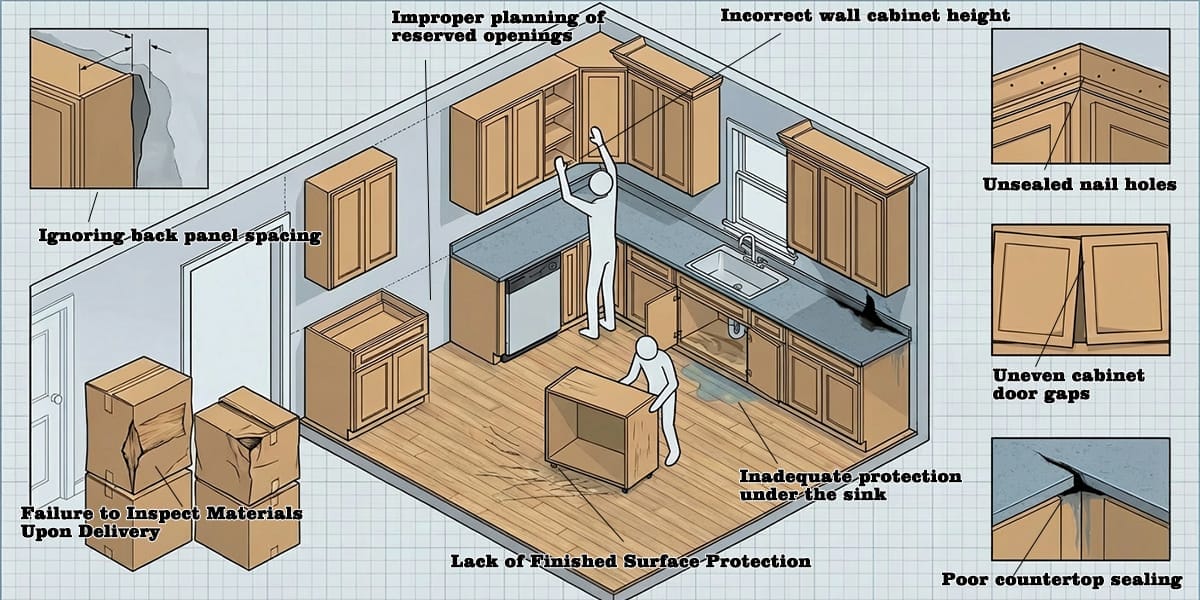
By the time cabinets are installed, wall and floor tiles are usually already completed. During delivery and installation, accidental impacts are hard to avoid. Without proper surface protection, tiles and floors are easily damaged. Laying down protective fabric before installation is a simple but effective way to prevent unnecessary losses.
2. Failure to inspect materials upon delivery
When cabinet materials arrive, homeowners should inspect them carefully, even if they are busy. Check for damage, missing parts, or incorrect sizes, and take photos as evidence. Installers are responsible for assembly, not inspection. If problems are discovered later, it is often difficult to determine responsibility.
3. Improper planning of reserved openings
Before installation begins, the positions of the range hood, sink, and cooktop must be fully confirmed. Some homeowners decide to change the sink later, but this must be communicated before openings are cut. Once holes are made, adjustments become complicated and costly.
4. Incorrect wall cabinet height.
Although custom cabinets come with design drawings, real life usage often differs from what looks good on paper. Wall cabinet height should be determined based on the height of the primary user. If cabinets are installed too high, daily use becomes inconvenient. Being present during installation allows for on site adjustments that can prevent long term discomfort.
5. Ignoring back panel spacing
The back panel of the cabinet should not be installed flush against the wall. Leaving a small gap allows for natural expansion and reduces pressure over time. Without this space, cabinets may warp or crack as materials react to changes in temperature and humidity.
6. Inadequate protection under the sink
Water damage is one of the biggest threats to cabinet durability. Even high quality materials can be ruined by prolonged moisture. Installing a waterproof protective layer under the sink helps prevent swelling and deformation if leaks occur.
7. Unsealed nail holes
During installation, nail holes are unavoidable. If left untreated, they may contribute to lingering odors over time. Proper sealing helps improve overall air quality inside the cabinet and enhances long term comfort.
8. Uneven cabinet door gaps
Door alignment is a clear indicator of installation quality. Uneven gaps affect both appearance and functionality. Homeowners should inspect door spacing immediately after installation and request adjustments on site if needed.
9. Poor countertop sealing
Countertop sealing is often done at the final stage, but it should never be rushed. Inadequate sealing can lead to water penetration and long term damage. Being present during this step ensures the work is completed properly.
What Should You Pay Attention to When Installing Cabinets?
Cabinet installation should be planned early, especially during water and electrical renovation. Determining cabinet placement in advance allows manufacturers to design accurately and helps prevent delays. Another important detail is the connection between base cabinets. Proper connectors should be used to ensure stability and alignment, rather than cost saving substitutes.
Hardware installation also requires attention. Faucets, pull out baskets, and hoses should be installed carefully, with all connections sealed properly. Poor sealing can lead to leaks and unnecessary repair costs later.
Beyond installation details, choosing a reliable cabinet brand plays an important role. A dependable brand not only offers quality products but also provides professional guidance and responsive after sales service. Even homeowners with little renovation experience can achieve a functional and visually pleasing kitchen with proper support.
In summary, cabinet installation involves many small but important details. From early planning to final inspection, each step affects durability and daily comfort. Careful preparation, on site supervision, and thorough acceptance checks are the most effective ways to avoid common installation mistakes and ensure a kitchen that remains practical and reliable for years to come.
For a structured final review, use our kitchen cabinet installation checklist to verify the most important items before final approval.


About author

Related posts

Kitchen cabinet quotes can look similar at first but include very different products and services. One quote may include plywood cabinet boxes, finished end panels,... Continue reading

A knee drawer is a specialized vanity cabinet component designed to add storage while creating comfortable open space underneath a bathroom countertop. Knee drawers are... Continue reading

A 33-inch farmhouse sink is a common choice for a 36-inch base cabinet, but it is not a universal rule. The correct fit depends on... Continue reading

A kitchen cabinet filler is a narrow finished strip used to close or manage the space between a cabinet and a wall, appliance, corner, or... Continue reading

Choosing RTA cabinets involves more than comparing door styles or headline prices. You need to evaluate cabinet-box construction, door materials, available sizes, hardware, shipping, assembly,... Continue reading





Add comment